2026年11月11日(水)(バックナンバー)
今日の日本文化
介護と鮭とめんの日
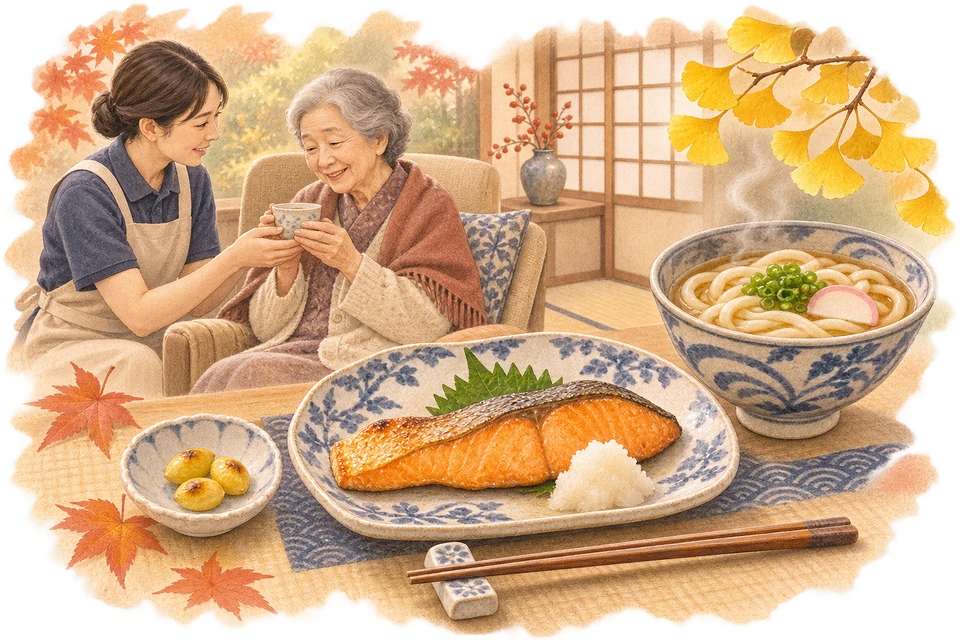
今日11月11日は、厚生労働省が定めた「介護の日」です。「鮭」という字に「十一十一」が隠れていることから「鮭の日」、細長い「1」を麺に見立てた「めんの日」でもあります。1が4つ並ぶ日は、語呂合わせや見立ての記念日がとても多い日です。
今日は何の日
-
2008年制定介護の日Caregiving Day
Japan's health and labor ministry made November 11th Caregiving Day in 2008. The date was the most popular choice when the ministry asked the public for ideas, partly because 11-11 can be read "ii hi, ii hi," or "a good day, a good day." It's a day to think about people who care for older or disabled family members, and about the shortage of care workers.
厚生労働省は2008年に、11月11日を「介護の日」と定めました。この日付は、厚生労働省が広く意見を募ったときにいちばん支持を集めたもので、11・11を「いい日、いい日」と読める語呂合わせも理由の一つです。高齢や障害のある家族を介護する人のことや、介護の仕事の人手不足について考える日です。
辞典でくわしく › -
鮭の日Salmon Day
Look closely at the kanji for salmon, 鮭. The right side, 圭, looks like 十一, the kanji for 11, written twice, one on top of the other. That's why today is Salmon Day. In Murakami, a salmon town in Niigata, people hold a ceremony on this day to thank the fish and honor their spirits.
「鮭」という漢字をよく見てください。右側の「圭」は、「十一」を2つ重ねた形に見えます。これが11月11日が鮭の日になった理由です。新潟県の鮭のまち・村上市では、この日に鮭への感謝を表し、その魂を供養する「鮭魂祭(けいこんさい)」が行われます。
辞典でくわしく › -
めんの日Noodle Day
A national group of noodle makers chose the 11th of every month as Noodle Day, because the number 11 looks like two long, thin noodles. November 11th has four of them in a row, so you could call it the biggest Noodle Day of the year. It's a good excuse for a bowl of soba or udon as the weather gets colder.
全国の製麺業者の団体が、毎月11日を「めんの日」と定めました。数字の11が、細長い麺が2本並んでいるように見えるからです。11月11日は1が4つ並ぶので、1年でいちばんの「めんの日」と言えるかもしれません。寒くなってきたこの時期、そばやうどんを食べるいいきっかけになります。
辞典でくわしく ›
今日の三択クイズ
11月11日が「鮭の日」とされているのは、なぜでしょう?
正解は「圭」が「十一十一」に見えるから、です。漢字の形から日付を決めた、ちょっと珍しい記念日です。新潟県村上市では、この日に鮭の魂を供養する「鮭魂祭」が行われます。外国の人には、The right side of the kanji for salmon looks like the kanji for 11, written twice. と言いながら紙に書いて見せると、すぐに分かってもらえます。
外国人に聞かれたら
Why does Japan need so many care workers?
なぜ日本では、介護の仕事をする人がそんなにたくさん必要なの?
Because Japan has one of the oldest populations in the world. Almost three in ten people are 65 or older, and many of them live alone or with a spouse who is also old. Since 2000, Japan has had a public long-term care insurance system, so people can get help at home or in care facilities. The problem is that there aren't enough workers, partly because the job is physically and mentally demanding and the pay is lower than in many other fields.
日本は、世界でもいちばん高齢化が進んだ国の一つだからです。人口のほぼ10人に3人が65歳以上で、その多くが一人暮らしか、同じく高齢の配偶者と二人で暮らしています。日本には2000年から公的な介護保険制度があり、自宅や施設で手助けを受けられます。問題は働く人が足りないことで、心身の負担が大きいことや、ほかの多くの仕事より給料が低いことが理由の一つになっています。
今日のひとこと英語
The right side of this kanji looks like 11 written twice in kanji.
この漢字の右側は、漢字の「十一」を2つ重ねたように見えるんです。
「〜に見える」は look like +名詞です。look は形容詞が続くとき(It looks old.)、look like は名詞が続くとき(It looks like a noodle.)と使い分けます。It looks a noodle. とは言いません。
今日の一文
November 11th has four ones in a row, so Japan has turned it into Caregiving Day, Salmon Day and Noodle Day. The salmon one comes from the kanji 鮭, whose right side looks like the kanji for 11 written twice.
11月11日は1が4つ並ぶので、日本では「介護の日」「鮭の日」「めんの日」になっています。鮭の日は、「鮭」の字の右側が「十一」を2つ重ねた形に見えることから来ています。
今日の読みもの
今日に関係する項目
- 現代の暮らし標準 介護kaigolong-term care, and the insurance system behind it 40歳になると保険料を払い始める。家族が全部抱えるのをやめるために作られた制度。
- 食べもの標準 新巻鮭aramakizakewhole salted salmon, a classic year-end gift 丸ごと1本、塩をした鮭。年の暮れに届く、ずしりと重い贈りもの。
- 食べもの標準 いくらikurasalmon roe 「いくら」はロシア語から。筋子をほぐして一粒ずつにしたのがいくら。
- 食べもの必修 そばとうどんsoba and udonthe two traditional Japanese noodles 東はそば、西はうどん。つゆの色を見れば、どこの店か分かる。
- 季節標準 銀杏ichothe ginkgo tree 秋に道路が黄色くなる木。ただし実は、とんでもない匂いがする。
- 食べもの標準 茶碗蒸しchawanmushisavory steamed egg custard 甘くない茶碗のプリン。スプーンで食べる出汁の料理。