銀杏いちょう
icho
the ginkgo tree
秋に道路が黄色くなる木。ただし実は、とんでもない匂いがする。
一言で言うと
これだけ覚えれば最低限伝わる一文
Icho, or the ginkgo, is Japan's most common street tree, spectacular in autumn and notorious for its smelly fruit.
銀杏とは、秋の黄葉が見事な一方、実の匂いで悪名高い、日本で最もよく見る街路樹です。
30秒で説明する
外国人に説明するときの標準サイズ
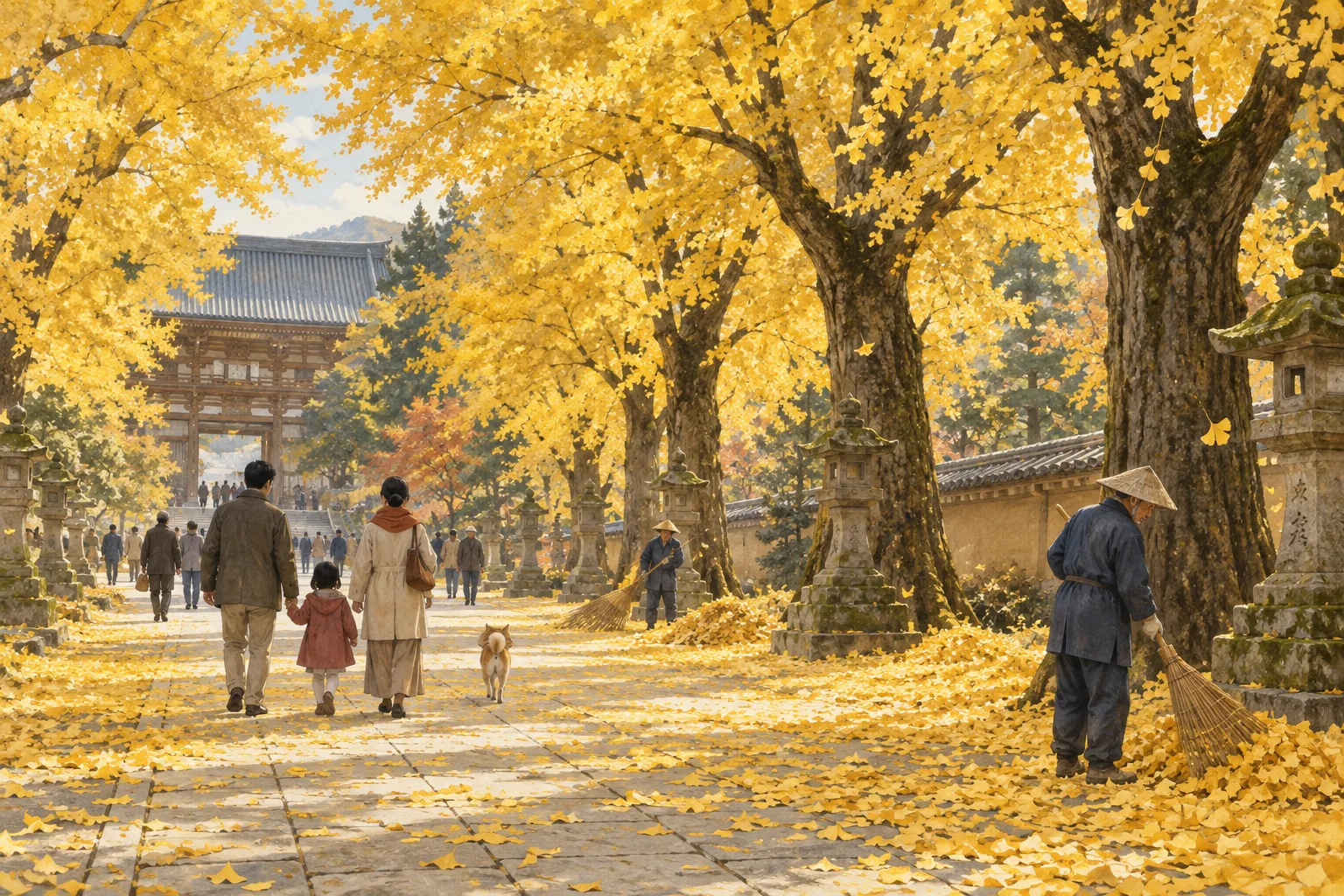
Ginkgo is planted along streets all over Japan because it tolerates pollution, is hard to kill, and resists fire. In November whole avenues turn bright yellow and become photography spots. The female trees drop a soft fruit with a powerful smell, inside which is the nut sold in autumn as a delicacy.
銀杏は日本各地の街路に植えられています。大気の汚れに強く、枯れにくく、火にも強いためです。11月には並木がまるごと鮮やかな黄色になり、撮影の名所になります。雌の木は強い匂いのするやわらかい実を落とし、その中の種が秋の珍味として売られる銀杏です。
スピーチ・英作文
通訳案内士の二次口述・大学入試の自由英作文に
The ginkgo is the tree you will see most often on a Japanese street. It is planted everywhere because it survives pollution and poor soil, rarely dies, and holds a lot of water in its trunk, which made it valued as a firebreak around temples.
In November, avenues of ginkgo turn a strong even yellow, and the famous ones draw crowds with cameras. The tree is also remarkable biologically: it is the sole surviving species of an ancient lineage, with no close living relatives, and specimens in Hiroshima that were close to the 1945 blast survived and are still alive.
There is a catch. Ginkgo trees are male or female, and the female drops a soft fleshy fruit in autumn with a smell that is genuinely awful. Inside it is the nut, roasted and eaten in autumn, sold in bars on a skewer. Cities increasingly plant male trees only.
銀杏は日本の街路で最もよく目にする木です。大気の汚れにも痩せた土にも耐え、めったに枯れず、幹が水を多く含むため、寺の周りの防火の木としても重んじられました。11月には銀杏の並木がむらなく強い黄色に染まり、名の知られた並木には写真を撮る人が集まります。
生き物としても際立っています。古い系統でただ一種だけ生き残ったもので、近縁の現生種がありません。広島で1945年の爆心地の近くにあった木が生き延び、今も生きています。難点もあります。
銀杏には雄の木と雌の木があり、雌は秋にやわらかい果肉のついた実を落とします。その匂いは本当にひどい。中にある種が秋に炒って食べられる銀杏で、居酒屋では串に刺して出されます。近年は雄の木だけを植える自治体が増えています。
こう聞かれたら
外国人から実際にされる質問と、その答え方。
What is that smell in autumn?
秋のあのにおいは何ですか。
The fallen fruit of female ginkgo trees. The flesh contains compounds that smell strongly rancid, and it gets worse when trodden on. The smell itself is not dangerous, but it is persistent and clings to shoe soles.
雌の銀杏の落ちた実です。果肉に強く鼻をつく成分が含まれていて、踏むとさらにひどくなります。匂い自体に害はありませんが、しつこく残り、靴の裏について離れません。
Can I collect and eat the nuts?
実を拾って食べてもいいのですか。
The nuts inside are edible roasted, and people do gather them, wearing gloves because the flesh irritates skin. Eat them in small numbers; ginkgo nuts contain a compound that causes problems in quantity, and children are more sensitive.
中の種は炒れば食べられ、実際に拾う人もいます。果肉は肌を刺激するので手袋をしてください。量は控えめに。銀杏には多く食べると不調を起こす成分が含まれており、子どもはとくに影響を受けやすいとされます。
そのまま使えるフレーズ
- The whole avenue turns yellow in November.11月には並木全体が黄色くなります。
- That smell is the fallen fruit.あの匂いは落ちた実です。
- Only the female trees drop fruit.実を落とすのは雌の木だけです。
- The nut inside is eaten in autumn.中の種は秋に食べます。
説明に使う語句
- street tree街路樹
- autumn leaves黄葉
- fallen fruit落ちた実
- male and female trees雄の木と雌の木
動画で見る
YouTube より豆知識
イチョウは一属一種で、近縁の現生種がないことから「生きた化石」と呼ばれます。東京都の木に指定されており、東京大学の徽章にも使われています。広島の爆心地周辺で生き残ったイチョウは被爆樹木として登録され、今も生育しています。銀杏並木では、明治神宮外苑や大阪の御堂筋が知られます。街路樹には実の落ちない雄株が選ばれることが増えましたが、苗の段階で雌雄を見分けるのは難しいとされます。
