2026年11月8日(日)(バックナンバー)
今日の日本文化
いい歯といい刃物の日
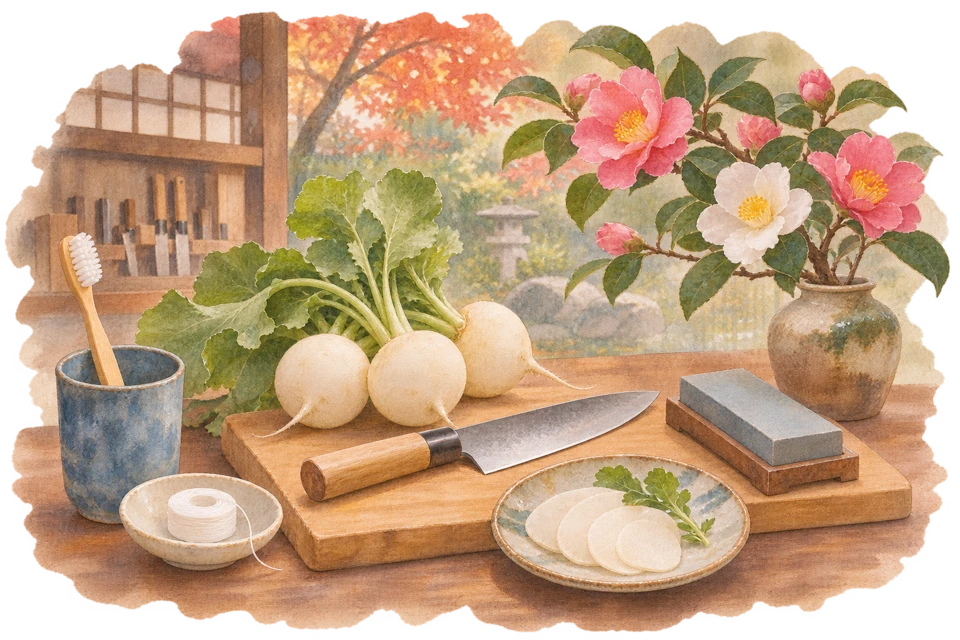
今日11月8日は、「いい(11)は(8)」の語呂合わせから、歯の記念日と刃物の記念日が重なる日です。岐阜県関市などでは、使い終わった包丁やはさみを供養する行事も行われます。暦は立冬を過ぎ、山茶花が咲きはじめる季節に入りました。
今日は何の日
-
1993年制定いい歯の日Good Teeth Day
November 8th is Good Teeth Day, set up in 1993 by the Japan Dental Association. It's a pun: 11 can be read "ii," meaning good, and 8 can be read "ha," meaning teeth. The day promotes the 8020 campaign, which encourages people to keep at least 20 of their own teeth at age 80. In a 2024 national survey, about 61.5% of people had reached that goal.
11月8日は、日本歯科医師会が1993年に定めた「いい歯の日」です。11を「いい」、8を「歯」と読む語呂合わせです。80歳になっても自分の歯を20本以上保とうという「8020運動」を広める日でもあります。2024年の国の調査では、この目標を達成している人は約61.5%でした。
-
刃物の日Blade Day
Today is also Blade Day, set by groups in Japan's knife-making industry. Besides the "ii-ha-mono" pun, it's linked to Fuigo Matsuri, an old festival where blacksmiths thank the gods of their trade. A fuigo is the bellows that keeps a forge fire hot. In Seki, Gifu, a famous knife-making town, people bring old knives and scissors to be honored in a memorial service before they are put to rest.
今日は、刃物の業界団体などが定めた「刃物の日」でもあります。「いい(11)は(8)もの」の語呂合わせに加えて、鍛冶職人が仕事の神様に感謝する昔の祭り「ふいご祭」に由来するとされます。ふいごは、炉に風を送って火を強める道具です。刃物の町として知られる岐阜県関市では、使い終わった包丁やはさみを持ち寄って供養する行事が行われます。
辞典でくわしく › -
七十二候「山茶始開(つばきはじめてひらく)」Sasanqua camellias begin to bloom
In the old calendar of 72 microseasons, November 7th to 11th is called "tsubaki hajimete hiraku." The kanji literally mean camellias, but the flower meant here is the sasanqua, or sazanka, which blooms in late autumn when most other flowers are gone. You'll see its pink and white flowers in hedges and gardens all over town.
七十二候では、11月7日から11日ごろを「山茶始開(つばきはじめてひらく)」と呼びます。読みは「つばき」ですが、ここで指す花は山茶花(さざんか)で、ほかの花がほとんど終わった晩秋に咲きます。町の生け垣や庭で、桃色や白の花が見られるころです。
今日の三択クイズ
「8020運動」の「20」は、何の数を表している?
8020運動は「80歳になっても自分の歯を20本以上保とう」という運動で、20本あればたいていのものをかんで食べられるとされています。2024年の厚生労働省の調査では、達成している人は約61.5%と推計されています。
外国人に聞かれたら
Why do people in Japan hold memorial services for old knives and needles?
日本ではなぜ、古い包丁や針の供養をするのですか。
It's a way of saying thank you to a tool that worked hard for you. Many Japanese people feel uneasy just throwing away something they used every day, like a kitchen knife or a sewing needle. So some shrines and temples hold events where you can bring them and have them honored before they're disposed of. Not everyone does it, but the feeling behind it is pretty common.
長く働いてくれた道具に「ありがとう」を言うやり方です。毎日使った包丁や縫い針のようなものを、ただ捨てるのは落ち着かないと感じる日本人は多いのです。そこで、神社やお寺の中には、それらを持っていくと供養してから処分してくれる行事を開くところがあります。みんながするわけではありませんが、その背景にある気持ちはかなり一般的です。
今日のひとこと英語
I need to get my kitchen knife sharpened.
包丁を研いでもらわないと。
「研ぐ」は sharpen。polish(磨く)とは言いません。人に研いでもらうときは get+物+過去分詞の形で get my knife sharpened と言います。
今日の一文
November 8th is both Good Teeth Day and Blade Day in Japan, thanks to a pun on the numbers 11 and 8. On days like this, people think about taking care of their teeth and thank the knives they've used for years.
日本では11月8日は、11と8の語呂合わせから、いい歯の日でもあり刃物の日でもあります。この日には、歯の手入れを考え、長年使ってきた包丁に感謝します。
今日の読みもの
今日に関係する項目
- 工芸標準 和包丁wabochoJapanese kitchen knives, many of them sharpened on one side only 観光客の人気みやげ。片側だけ研いだ刃と、持ち帰りの決まりまで話せるように。
- 年中行事応用 針供養hari kuyoa memorial service for broken needles 折れた針を豆腐に刺して供養する。道具にも礼を尽くす、という感覚が形になった行事。
- 工芸応用 刀鍛冶katana kajithe swordsmiths who still forge Japanese blades by hand いまも作られている。ただし、一人が作れる本数には決まりがある。
- 年中行事標準 立冬rittothe start of winter in the traditional calendar, around November 7th 11月の初めに「暦の上では冬」。寒くもないのに冬と呼ぶ理由がある。
- 工芸標準 砥石toishia Japanese whetstone for sharpening knives and tools 和包丁を買った人が、次に探すことの多いもの。濡らして、研いで、刃を育てる石。