2026年11月6日(金)(バックナンバー)
今日の日本文化
カニ漁の解禁と、暦の冬の前の日
11月6日は、山陰から北陸の日本海でズワイガニ漁が解禁される日です。七十二候では、もみじや蔦が色づく「楓蔦黄」の最後の日で、明日はもう暦の上の冬、立冬です。冬の味覚と季節の変わり目の話ができる一日です。
今日は何の日
-
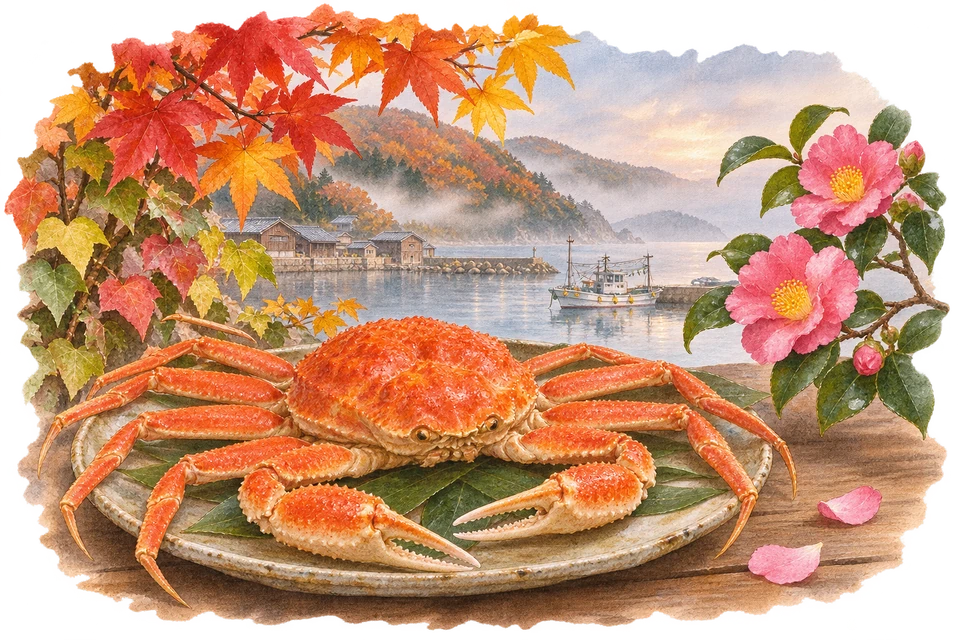
ズワイガニ漁の解禁(島根県〜富山県の日本海)Snow crab season opens
November 6th is opening day for snow crab on the Sea of Japan, from Shimane to Toyama. The date is fixed by government rules, so ports usually hold their first crab auctions on the same day every year. The same crab gets a different name in each area. In the San'in region it's Matsuba-gani, and in Fukui it's Echizen-gani.
11月6日は、島根県から富山県までの日本海でズワイガニ漁が解禁される日です。日付は国の決まりで定められているので、各地の港では例年同じ日にカニの初競りが行われます。同じカニでも、地域ごとに呼び名が変わります。山陰では「松葉ガニ」、福井では「越前ガニ」です。
辞典でくわしく › -
七十二候「楓蔦黄(もみじつたきばむ)」の最後の日Last day of "Maples and Ivy Turn Yellow"
The old calendar splits the year into 72 micro-seasons of about five days each. Today is the last day of Momiji Tsuta Kibamu, "maples and ivy turn yellow." In cities like Tokyo and Kyoto, though, the leaves are usually at their best later, from late November into early December. People still go momijigari, or "maple hunting," which just means going out to look at the leaves.
昔の暦では、一年を5日ほどずつの72の季節に分けます。今日は「楓蔦黄(もみじつたきばむ)」、もみじや蔦が色づくころの最後の日です。ただ、東京や京都などの都市では、紅葉の見ごろはたいていもう少しあと、11月の終わりから12月の初めにかけてです。紅葉を見に出かけることは、いまも「紅葉狩り」と呼ばれます。
辞典でくわしく › -
明日は立冬(暦の上の冬の始まり)Tomorrow is Ritto, the start of winter
Tomorrow, November 7th, is Ritto, the first day of winter in the traditional calendar of 24 solar terms. The calendar follows the sun, not the temperature, so winter is the three months with the shortest days. That's why it can still feel like fall. On the news, you'll hear people say it's winter "on the calendar."
明日の11月7日は、二十四節気で冬の初日にあたる立冬です。この暦は気温ではなく太陽に従うので、冬は一年でいちばん昼が短い3か月のことです。だから、まだ秋のように感じることもあります。ニュースでは「暦の上では冬」という言い方をよく耳にします。
辞典でくわしく ›
今日の三択クイズ
山陰地方では、雄のズワイガニを何と呼ぶ?
山陰では雄を「松葉ガニ」、雌を「親ガニ」と呼びます。「越前ガニ」は福井県での雄の呼び名、「香箱ガニ」は石川県などでの雌の呼び名です。名前は違っても、どれも同じズワイガニです。
外国人に聞かれたら
Why does crab season start on the same day every year?
なんでカニ漁は毎年同じ日に始まるの?
Because the season is set by government rules to protect the crabs. On the Sea of Japan from Shimane to Toyama, it opens on November 6th. Males can be caught until March 20th, and females only until January 20th. There's also a size limit and a yearly catch limit. So opening day turns into a big event, with first auctions and sometimes record prices.
カニを守るために、漁期が国の決まりで定められているからです。島根県から富山県までの日本海では、11月6日に解禁されます。雄は3月20日まで、雌は1月20日までしかとれません。大きさの決まりや、1年にとってよい量の上限もあります。だから解禁の日は、初競りがあり、ときには記録的な値段が付く、大きな行事になるのです。
今日のひとこと英語
Crab season opens today.
今日、カニ漁が解禁されます。
「解禁」を release と訳すのは誤りです。the ban is lifted でも意味は通じますが、漁や狩りの期間が始まるときは the season opens と言うのがふつうです。opening day(解禁日)もよく使います。
今日の一文
Today, crab season opens on the Sea of Japan, and tomorrow is the first day of winter on the old calendar. In Japan, many people feel the change of seasons through food as well as the weather.
今日は日本海でカニ漁が解禁され、明日は昔の暦で冬の初日です。日本では多くの人が、天気だけでなく食べものでも季節の移り変わりを感じます。
今日の読みもの
今日に関係する項目
- 食べもの標準 ズワイガニzuwaiganisnow crab, a long-legged crab eaten as a winter treat 松葉ガニも越前ガニも香箱ガニも、実は全部同じカニ。
- 年中行事標準 立冬rittothe start of winter in the traditional calendar, around November 7th 11月の初めに「暦の上では冬」。寒くもないのに冬と呼ぶ理由がある。
- 季節必修 紅葉koyoautumn leaves, and going to look at them 「紅葉狩り」という言葉がある。狩らないのに、なぜ狩りなのか。
- 年中行事標準 二十四節気nijushi sekkithe twenty-four solar terms of the traditional calendar 立春、夏至、冬至。太陽の位置で一年を二十四に割った、季節のものさし。
- 食べもの必修 鍋nabethe shared hot pot at the center of the table 冬の食卓の主役。一つの鍋を囲むこと自体に意味がある、という説明が効く。