茶碗蒸しちゃわんむし
chawanmushi
savory steamed egg custard
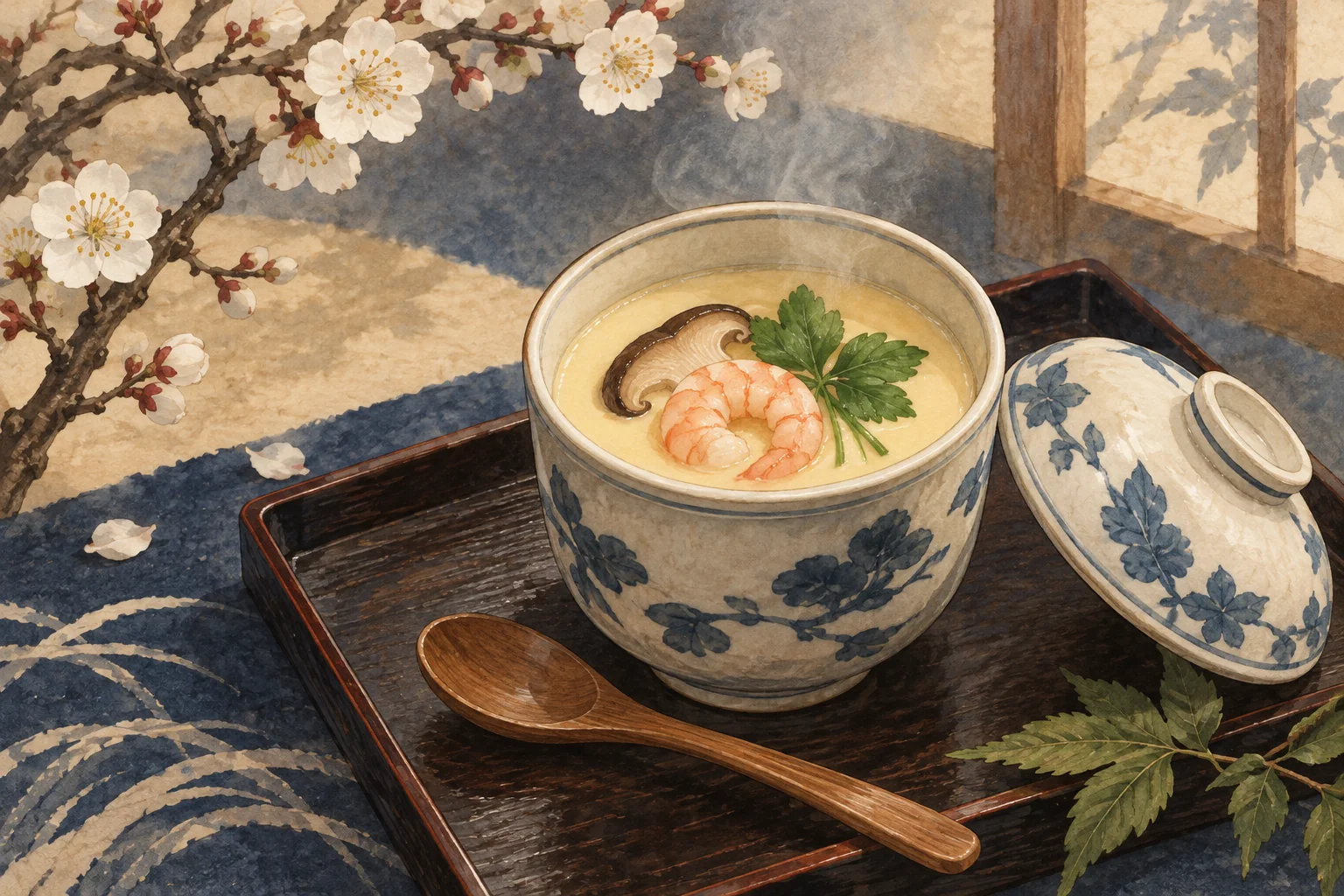
甘くない茶碗のプリン。スプーンで食べる出汁の料理。
一言で言うと
これだけ覚えれば最低限伝わる一文
Chawanmushi is a savory egg custard steamed in a cup and eaten with a spoon.
茶碗蒸しは、茶碗で蒸した甘くない卵の料理で、スプーンで食べます。
30秒で説明する
外国人に説明するときの標準サイズ
Chawanmushi is egg beaten with dashi stock and steamed until just set, with small pieces hidden inside: chicken, shrimp, mushroom, ginkgo nut. It arrives hot in a lidded cup and is eaten with a spoon. The texture is looser than a Western custard, closer to very soft tofu.
茶碗蒸しは、卵を出汁で溶いて、固まるぎりぎりまで蒸した料理です。中には鶏肉、えび、しいたけ、銀杏などの小さな具が沈んでいます。ふたつきの器で熱いまま出され、スプーンで食べます。口当たりは西洋のカスタードプリンよりゆるく、とてもやわらかい豆腐に近いものです。
スピーチ・英作文
通訳案内士の二次口述・大学入試の自由英作文に
Chawanmushi surprises people because it looks like a dessert and is not one. Egg is beaten with dashi, the stock made from kelp and dried fish, seasoned lightly with soy sauce and mirin, poured into a lidded cup with small pieces of chicken, shrimp, mushroom and sometimes a ginkgo nut, and steamed gently until it just sets.
It arrives hot, with a spoon, and the correct texture is barely holding together: too hot a steam and it turns grainy and full of holes, which cooks call the difference between a good and a bad chawanmushi. It appears as one course in a formal meal, as a side at a sushi counter, and in convenience stores as a chilled version. For a visitor it is an easy dish to like, and it is one of the clearest demonstrations of what dashi does, since almost nothing else is doing the work.
茶碗蒸しは、甘い菓子に見えるのにそうではない、という点で人を驚かせます。卵を出汁で溶き、醤油とみりんで軽く味をつけ、鶏肉、えび、しいたけ、ときに銀杏の入ったふたつきの器に注ぎ、固まるぎりぎりまで穏やかに蒸します。
熱いままスプーンを添えて出され、正しい口当たりは、かろうじてまとまっている状態です。蒸気が強すぎると、ざらついて穴だらけになります。料理人はそれを、よい茶碗蒸しとそうでないものの分かれ目と呼びます。
改まった食事の一品としても、寿司屋のカウンターの添えものとしても出され、コンビニには冷たいものもあります。訪日客にとっては好きになりやすい料理で、しかも出汁が何をしているかを最もはっきり示してくれます。ほかにほとんど何も働いていないからです。
こう聞かれたら
外国人から実際にされる質問と、その答え方。
Is it sweet?
甘いものですか。
No, it is savory, seasoned with dashi and a little soy sauce. The only sweetness comes from mirin, and some regional versions do add a little sugar, which surprises people from elsewhere in Japan too.
甘くありません。出汁と少量の醤油で味をつけた料理です。甘みはみりんから来るだけですが、砂糖を加える地域もあり、それはほかの土地の日本人も驚くところです。
What is the white nut inside?
中に入っている白い実は何ですか。
A ginkgo nut, the seed of the ginkgo tree, with a firm texture and slightly bitter taste. It is seasonal in autumn, and it is normal to eat only a few, since large amounts are not recommended.
銀杏です。イチョウの実の中の種で、もちっとした歯ごたえと、わずかな苦みがあります。秋の味覚で、たくさん食べるものではないとされており、少しだけ入っているのがふつうです。
Do I eat it with the lid on or off?
蓋は取って食べるのですか。
Lift the lid and put it face up beside the cup. Hold the cup with one hand if it is not too hot, and eat with the spoon from the top down.
ふたを取り、裏返して器の脇に置きます。熱くなければ器を手で支え、スプーンで上から食べます。
そのまま使えるフレーズ
- It's savory, not sweet.甘くありません。
- Careful, it's very hot.熱いので気をつけてください。
- There are things hidden inside.中に具が入っています。
- Put the lid beside the cup.ふたは器の横に置いてください。
- The stock is doing all the work.出汁が味の中心です。
説明に使う語句
- steamed egg custard茶碗蒸し
- to steam蒸す
- stock出汁
- ginkgo nut銀杏
- lidded cupふたつきの器
動画で見る
YouTube より豆知識
茶碗蒸しは、卵と出汁の割合と蒸し加減で仕上がりが決まります。卵一に対して出汁三から四が目安とされ、強い蒸気で加熱すると気泡が入り、す立ちと呼ばれる状態になります。長崎には具の多い大きな茶碗蒸しがあり、地域によっては甘みを加えるものや、うどんを入れる小田巻蒸しもあります。具の定番である銀杏は秋の味覚ですが、食べ過ぎないほうがよいとされ、少量が入ります。
