雪女ゆきおんな
yuki-onna
the snow woman
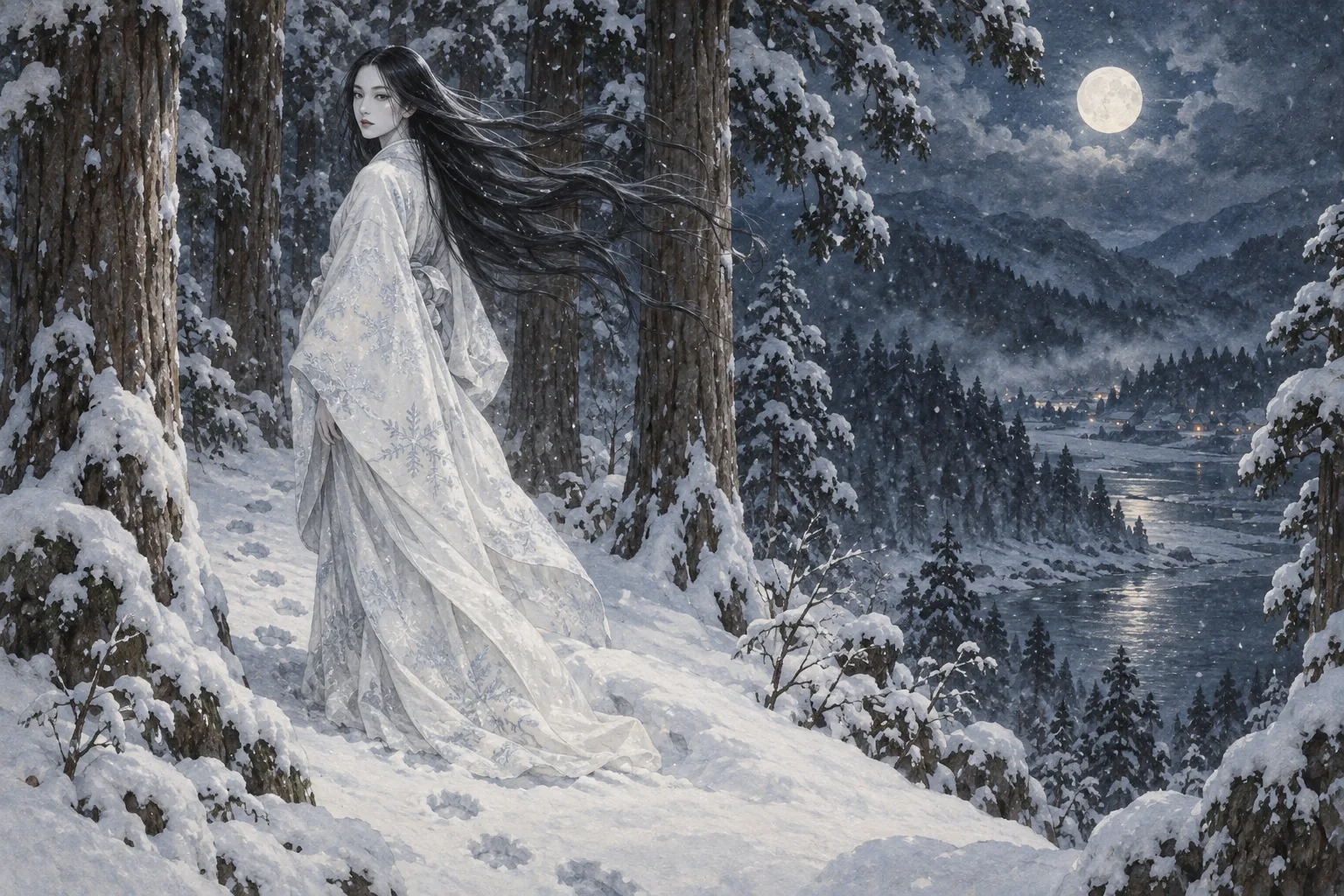
美しく、白く、話しかけてくる。そして息を吹きかけて凍らせる。
一言で言うと
これだけ覚えれば最低限伝わる一文
Yuki-onna is a spirit who appears to travelers in snowstorms as a beautiful woman in white.
雪女とは、吹雪の中で旅人の前に、白い装いの美しい女の姿で現れる妖怪です。
30秒で説明する
外国人に説明するときの標準サイズ
Yuki-onna appears in snow country folklore as a woman in white who meets travelers caught in a blizzard. In most versions she kills by freezing them with her breath, though in the best-known telling she spares a young man on condition he never speaks of her. The stories vary widely by region.
雪女は雪国の伝承に、吹雪に遭った旅人の前に現れる白い装いの女として登場します。多くの話では息を吹きかけて凍らせて殺しますが、最もよく知られた語りでは、自分のことを決して口にしないという約束と引き換えに若者を見逃します。話は地域によって大きく異なります。
スピーチ・英作文
通訳案内士の二次口述・大学入試の自由英作文に
Yuki-onna belongs to the folklore of Japan's snow country, and like the kappa she is best understood as a warning wearing a face. She appears to people caught out in a blizzard as a tall woman in white, beautiful, barefoot in the snow, and in most versions she kills, by breathing on the traveler and freezing them, or by luring them further from shelter.
The telling most people know comes from a collection published in 1904 by Lafcadio Hearn, a Western writer who settled in Japan: a woodcutter is spared on the condition that he never tell anyone what he saw, marries a mysterious pale woman years later, tells her the story one night, and she reveals herself and leaves. That version is now so dominant that many Japanese people assume it is the original folk tale, when regional versions differ considerably and are often much less romantic.
雪女は日本の雪国の伝承に属し、河童と同じく、顔を与えられた戒めとして読むのが最も分かりやすいでしょう。吹雪に閉じ込められた人の前に、白い装いの背の高い女として現れます。美しく、雪の上を裸足で歩き、多くの話では殺します。
旅人に息を吹きかけて凍らせるか、宿から遠くへ誘い出すのです。ほとんどの人が知っている語りは、1904年に出版された、日本に住み着いた西洋の作家ラフカディオ・ハーンの作品集から来ています。
木こりが、見たことを誰にも言わないという約束で見逃され、何年も後に色の白い不思議な女と所帯を持ち、ある夜その話をしてしまい、女が正体を明かして去るというものです。この形があまりに広まったため、これがもとの民話だと思っている日本人も多いのですが、地域ごとの話はかなり違い、ずっと情緒の薄いものも多くあります。
こう聞かれたら
外国人から実際にされる質問と、その答え方。
Is the famous version the original folk tale?
よく知られている話が、もとの民話なのですか。
Not exactly. The widely known telling comes from Lafcadio Hearn's 1904 collection, and he shaped it into a finished short story. Regional folk versions vary in what she does and why, and many have no romance in them at all.
厳密には違います。広く知られた語りはラフカディオ・ハーンの1904年の作品集のもので、彼が完成した短編に仕立てました。地域の民話では、彼女が何をなぜするかに幅があり、恋の要素がまったくないものも多くあります。
Where do the stories come from?
その話はどこから来ているのですか。
The snowy regions, above all the north and the Sea of Japan side, where being caught outside in a blizzard was a genuine way to die. Like many yokai, she is attached to a specific and real danger.
雪の多い地域、とりわけ北と日本海側です。そこでは吹雪の中で外にいることが、本当に死につながりました。多くの妖怪と同じく、彼女は具体的で現実の危険に結びついています。
そのまま使えるフレーズ
- She appears in a blizzard.吹雪の中に現れます。
- She freezes people with her breath.息を吹きかけて凍らせます。
- The famous version was written down in 1904.有名な形は1904年に書き留められたものです。
- The stories come from the snow country.雪国の話です。
説明に使う語句
- blizzard吹雪
- to freeze凍らせる
- folk tale民話
- to vanish消える
動画で見る
YouTube より豆知識
雪女の話は青森、新潟、長野など雪の多い地域を中心に伝わり、呼び名も雪女郎、雪姫などさまざまです。ラフカディオ・ハーンは小泉八雲の名で日本に帰化し、『怪談』に「雪女」を収めました。同書の話の多くは各地の伝承をもとに再構成されたものです。1964年の映画『怪談』でも映像化され、その姿が今日の雪女の像を決めたと言われます。地域によっては、雪女は子を抱いて現れ、それを受け取ると動けなくなるという形で語られます。
