河童かっぱ
kappa
river spirits with a dish on the head
頭の皿の水が乾くと力を失う。だから相手にお辞儀をさせる。
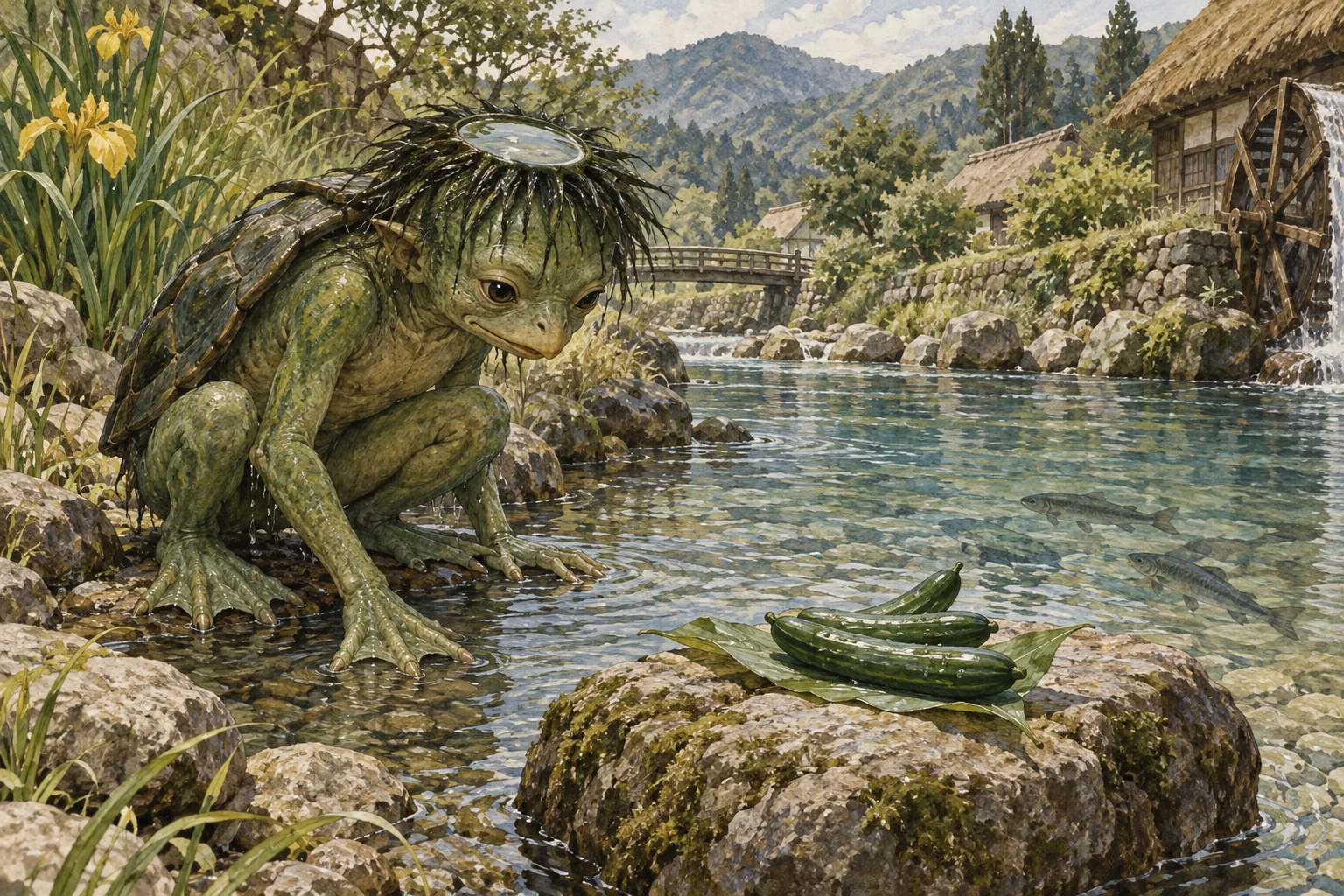
一言で言うと
これだけ覚えれば最低限伝わる一文
A kappa is a river spirit the size of a child, with a shell, a beak and a dish of water on its head.
河童とは、甲羅とくちばしを持ち、頭の皿に水をたたえた、子どもほどの大きさの川の妖怪です。
30秒で説明する
外国人に説明するときの標準サイズ
A kappa is a water spirit about the size of a child, usually drawn green, with a turtle-like shell, webbed hands and a hollow dish on top of its head that must stay filled with water. It is famous for loving cucumbers, for challenging people to sumo, and for pulling swimmers under. Most of the stories worked as warnings about rivers.
河童は子どもほどの大きさの水の妖怪で、たいてい緑色に描かれ、亀のような甲羅と水かきのある手、そして水で満たしておかなければならない頭の皿を持ちます。きゅうりを好み、人に相撲を挑み、泳ぐ人を引き込むことで知られます。その話の多くは、川についての戒めとして働いていました。
スピーチ・英作文
通訳案内士の二次口述・大学入試の自由英作文に
The kappa is probably Japan's most recognizable water spirit. It is roughly the size of a child, green, with a beak, webbed hands, a shell on its back, and a shallow dish on top of its head that has to stay filled with water.
Empty the dish and it loses its strength, which is the source of the classic advice: bow to a kappa, because it is polite and will bow back, and the water will spill. It loves cucumbers, which is why cucumber sushi rolls are called kappamaki, and it loves sumo wrestling and will challenge passers-by.
It also drags people and horses into rivers and drowns them. Reading the stories together, the pattern is hard to miss: many of them read like lessons taught to children in a country full of fast rivers and irrigation channels, dressed up as a creature. Today the kappa has been thoroughly softened, and towns with a kappa legend sell it as a friendly mascot.
河童はおそらく日本で最もよく知られた水の妖怪です。子どもほどの大きさで、緑色、くちばしと水かきのある手、背中の甲羅、そして頭のてっぺんに水を満たしておかなければならない浅い皿があります。皿を空にすれば力を失う。ここから古典的な知恵が生まれました。
河童に出会ったらお辞儀をせよ、礼儀正しい河童は必ず返すので、水がこぼれる、というものです。きゅうりを好むため、きゅうりの細巻きは河童巻きと呼ばれます。相撲も好きで、通りかかった人に挑みます。同時に、人や馬を川に引きずり込んで溺れさせます。
話をまとめて読めば、型が見えてきます。その多くは、流れの速い川や用水路だらけの国で子どもに教えた戒めを、生き物の姿に仕立てたもののように読めます。今日の河童はすっかり丸くなり、伝承のある町は愛らしいご当地キャラとして売り出しています。
こう聞かれたら
外国人から実際にされる質問と、その答え方。
Why do people say to bow to a kappa?
どうして河童にはお辞儀をしろと言うのですか。
Because the dish on its head must stay wet. A kappa is said to be strictly polite, so if you bow it will bow in return, the water spills, and it loses its power. It is a joke about excessive courtesy as much as a piece of folklore.
頭の皿が濡れていなければならないからです。河童は礼儀にきわめて厳格とされるので、こちらがお辞儀をすれば必ず返し、水がこぼれて力を失います。伝承であると同時に、礼儀が過ぎることへの冗談でもあります。
Is the cucumber connection real, or made up for the sushi?
きゅうりとの関わりは本当ですか、寿司のための作り話ですか。
The folklore came first. Kappa were said to love cucumbers, and in some areas cucumbers were floated down rivers as offerings. The rolled sushi took its name from that, not the other way round.
伝承のほうが先です。河童はきゅうりを好むとされ、地域によっては川にきゅうりを流して供える習わしがありました。細巻きの名はそこから来たもので、逆ではありません。
そのまま使えるフレーズ
- The dish on its head must stay full of water.頭の皿は水で満たしておかなければなりません。
- If you bow, it bows back and spills the water.お辞儀をすれば返してくれて、水がこぼれます。
- That's why cucumber rolls are called kappamaki.きゅうり巻きを河童巻きと呼ぶのはそのためです。
- The stories were warnings about rivers.あの話は川についての戒めでした。
説明に使う語句
- water spirit水の妖怪
- webbed hands水かきのある手
- to drown溺れる
- cautionary tale戒めの話
動画で見る
YouTube より豆知識
「河童の川流れ」は、泳ぎの達者な河童でも流されることがある、つまり名人でも失敗するという意味のことわざです。岩手県遠野は河童の伝承で知られ、川のほとりに河童を釣るための場所が観光地になっています。地域によって呼び名が異なり、九州では「がらっぱ」「ひょうすべ」などと呼ばれました。相撲を挑む話が多いのは、河童が水辺の神の零落した姿だとする説と結びつけて説明されることがあります。
