妖怪ようかい
yokai
Japanese supernatural creatures
「日本のモンスター」ではない。怖いものもいれば、ただ小豆を洗っているだけの妖怪もいる。
一言で言うと
これだけ覚えれば最低限伝わる一文
Yokai are the strange creatures and spirits of Japanese folklore, and most of them are not evil.
妖怪とは、日本の民間伝承に出てくる不思議な生きものや霊のことで、その多くは悪ではありません。
30秒で説明する
外国人に説明するときの標準サイズ
Yokai are the creatures of Japanese folklore: kappa, tengu, tanuki that change shape, umbrellas that grow one leg. Many were invented to explain something odd, a sound in an empty house or a child drowning in a river. They are not demons in the Western sense. Some are dangerous, many are mischievous, and a few are simply strange and harmless.
妖怪は日本の民間伝承に登場する存在です。河童、天狗、化ける狸、一本足になった傘。多くは、空き家の物音や川での水難など、説明のつかないことを説明するために生まれました。西洋的な意味での悪魔ではありません。危険なものもいれば、いたずら好きも多く、ただ奇妙で無害なだけのものもいます。
スピーチ・英作文
通訳案内士の二次口述・大学入試の自由英作文に
Yokai are the creatures of Japanese folklore, and the word covers a huge range. There is the kappa, a river creature with a dish of water on its head that pulls people under. The tengu, a long-nosed mountain spirit associated with pride. Tanuki and foxes that take human form.
And then there are the odd ones, like the yokai whose entire activity is washing red beans by a river at night. That last group is my favorite, because it shows what yokai really are. They are explanations. Before there were other answers, a strange noise, a missing child, a fire that started by itself all needed a cause, and the cause was given a name and a face.
Most are not evil. They are closer to weather: something you learn to live near. A folklorist named Kunio Yanagita collected these stories in the early twentieth century, and later the manga artist Shigeru Mizuki drew them, which is why many Japanese children can name quite a few.
妖怪は日本の民間伝承の存在で、その幅はとても広いです。頭に水の皿を載せ、人を川に引き込む河童。鼻の長い山の霊で、高慢と結びつけられる天狗。人に化ける狸や狐。そして、夜の川辺で小豆を洗うだけ、という妖怪のような変わり種もいます。
私はその最後の一群が好きです。妖怪とは何かがよく分かるからです。妖怪は説明なのです。ほかに答えのなかった時代、奇妙な物音、いなくなった子ども、ひとりでに起きた火事には原因が必要で、その原因に名前と顔が与えられました。
多くは悪ではありません。天気に近い存在で、そばで暮らすことを覚えるものです。柳田國男が20世紀初めにこうした話を集め、のちに水木しげるが漫画に描きました。多くの日本の子どもが妖怪の名前をいくつも挙げられるのは、そのためです。
こう聞かれたら
外国人から実際にされる質問と、その答え方。
Are yokai the same as ghosts?
妖怪は幽霊と同じですか。
No. A ghost, yurei, is a dead person who has not moved on, usually tied to one place or one grudge. A yokai is usually a kind of creature in its own right and was never human.
違います。幽霊は成仏していない死者で、たいてい場所や恨みに結びついています。妖怪は多くの場合、それ自体が一つの生きもののような存在で、もともと人間ではありません。
Do people still believe in them?
いまも信じている人はいるのですか。
Not literally, for the most part. But they are everywhere in manga, games and town mascots, and some places still hold festivals for a local yokai. Belief has turned into affection.
文字どおり信じている人はほとんどいません。ただ漫画・ゲーム・ご当地キャラにあふれており、地元の妖怪を祀る祭りが続く土地もあります。信仰が愛着に変わった形です。
What is a tsukumogami?
付喪神とは何ですか。
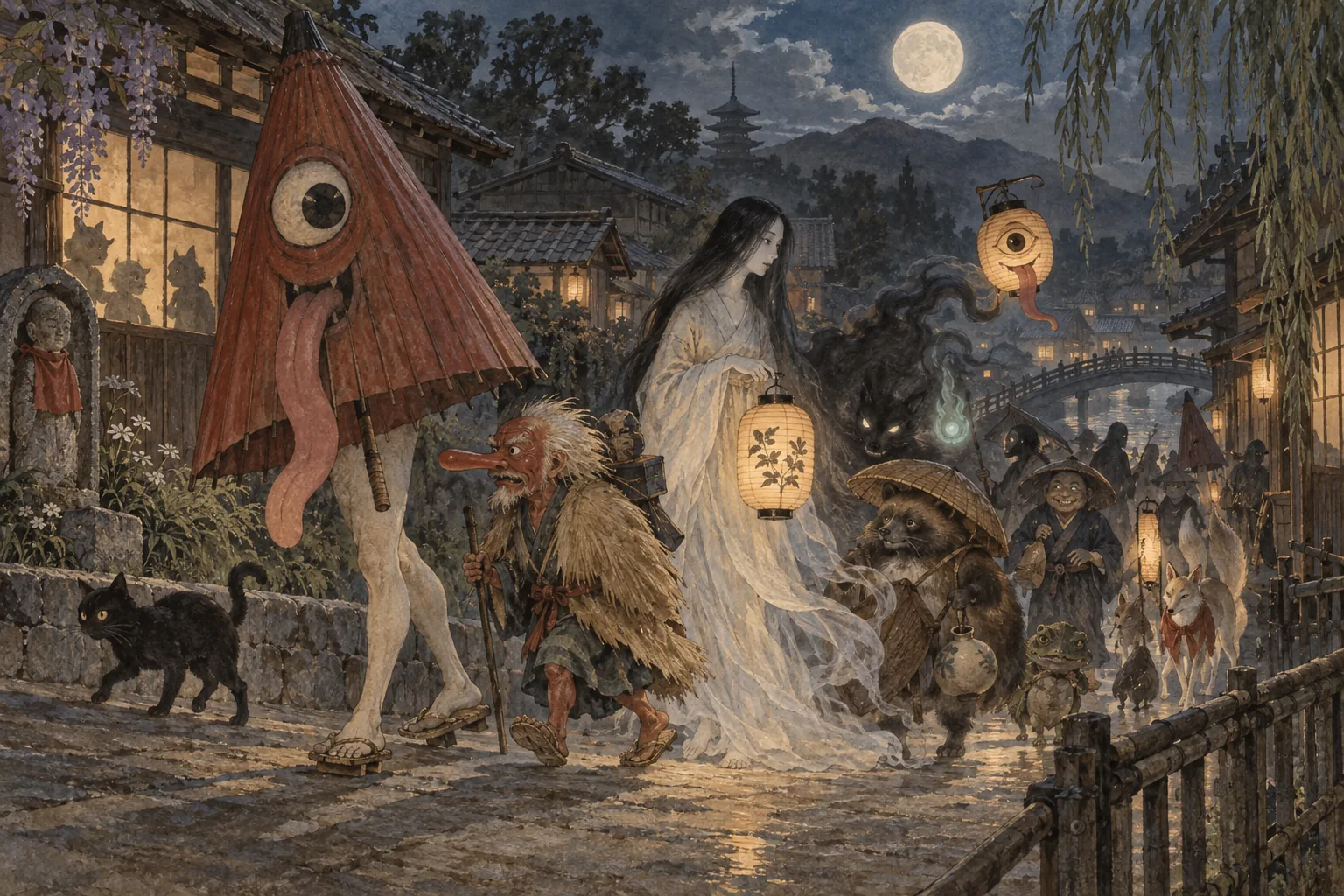
An object that has been used for a hundred years and becomes animate. An umbrella that grows a leg and an eye is the classic example. It is a folkloric argument for looking after your things.
百年使われた道具が命を持ったものです。足と目が生えた傘が典型例です。物を大事にせよ、という民話の形をした主張でもあります。
誤解されやすい
MYTHYokai are Japanese demons, equivalent to devils.
妖怪は日本の悪魔だと思われがちです。
FACTMost are neither good nor evil. They cause trouble, warn, trick or simply exist, and quite a few are affectionate or comic figures today.
多くは善でも悪でもありません。厄介ごとを起こし、警告し、だまし、あるいはただ存在します。今では親しみやすい、滑稽な存在も少なくありません。
そのまま使えるフレーズ
- Yokai aren't demons — most of them aren't evil at all.妖怪は悪魔ではありません。多くは悪ですらありません。
- A kappa lives in rivers and pulls people in.河童は川にいて、人を引き込みます。
- Ghosts are a separate category.幽霊は別の分類です。
- Objects are said to become yokai after a hundred years.道具も百年たつと妖怪になると言われます。
- Most of them started as explanations for strange events.多くは、不思議な出来事を説明するために生まれました。
説明に使う語句
- folklore民間伝承
- supernatural超自然的な
- shape-shifter化けるもの
- mischievousいたずら好きな
- haunted化けて出る、憑かれた
動画で見る
YouTube より豆知識
民俗学による妖怪研究の出発点の一つとされるのが柳田國男の『遠野物語』(1910年)で、岩手県遠野に伝わる河童や座敷童子の話を記録した。江戸時代には鳥山石燕が『画図百鬼夜行』などで妖怪を体系的に描き、多くの妖怪の姿はこの絵に由来する。現代の妖怪像を決定づけたのは水木しげるの『ゲゲゲの鬼太郎』で、鳥取県境港市の水木しげるロードには妖怪のブロンズ像が並ぶ。付喪神(つくもがみ)は「九十九神」とも書き、長く使われた道具に霊が宿るという考え方。小豆洗いは、夜の川辺で小豆を洗う音を立てるだけの妖怪で、実害はほとんどない。
