焼き鳥やきとり
yakitori
grilled chicken skewers
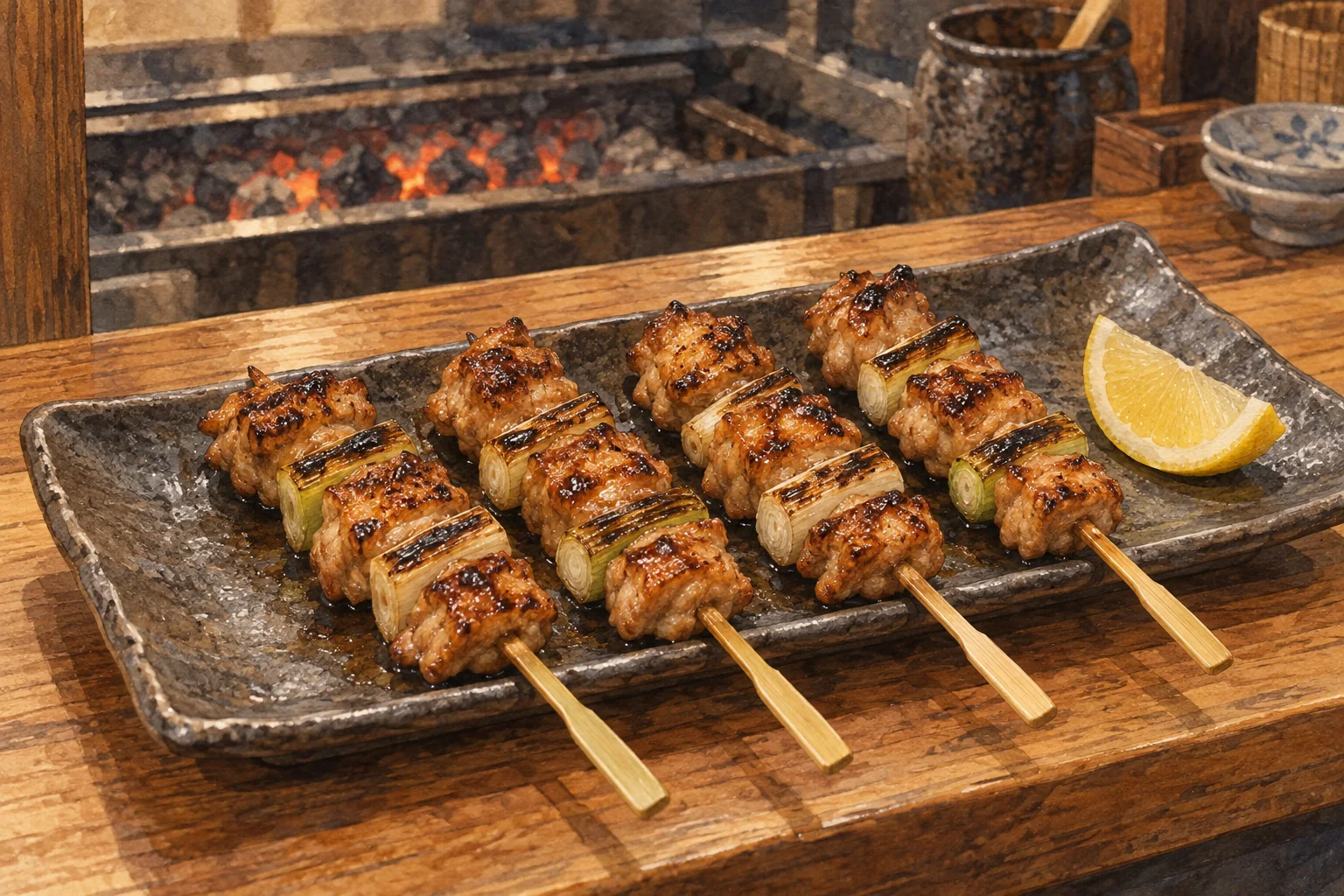
鶏の「どの部分か」で串が分かれている。捨てる部位がほとんどない。
一言で言うと
これだけ覚えれば最低限伝わる一文
Yakitori is chicken grilled on small skewers over charcoal, with each part of the bird served separately.
焼き鳥は、鶏を小さな串に刺して炭火で焼いたもので、部位ごとに串が分かれています。
30秒で説明する
外国人に説明するときの標準サイズ
Yakitori is bite-sized pieces of chicken threaded onto bamboo skewers and grilled over charcoal, seasoned either with salt or with a sweet soy glaze. What surprises visitors is the range of parts: not just thigh and breast but skin, liver, heart, gizzard, cartilage and tail. Each has its own name and its own texture, and almost nothing is discarded.
焼き鳥は、一口大の鶏肉を竹串に刺して炭火で焼いたもので、塩か甘辛いたれで味をつけます。外国の方が驚くのは部位の幅です。もも肉やむね肉だけでなく、皮、レバー、ハツ、砂肝、軟骨、ぼんじり。それぞれに名前と食感があり、捨てるところがほとんどありません。
スピーチ・英作文
通訳案内士の二次口述・大学入試の自由英作文に
Yakitori is grilled chicken on skewers, and the interesting part is how finely it is divided. A specialist shop will have fifteen or twenty different skewers, each a different part of the bird: thigh, breast, skin, liver, heart, gizzard, the soft cartilage from the breastbone, the tail, the oyster, a small nugget of meat near the thigh joint, even the skin around the neck.
Each has a name and each is cooked differently. You order either salt or the sweet soy glaze, and for most parts the chef has an opinion about which suits. The grilling is done over binchotan, a very hard charcoal that burns hot with almost no smoke or flame.
What I like about explaining yakitori is what it says about the approach to ingredients. Nothing is wasted, and a part that another cuisine would throw away is here given a name, a technique and its own place on the menu.
焼き鳥は串に刺して焼いた鶏ですが、面白いのはその分け方の細かさです。専門店には15種も20種も串があり、それぞれ鶏の別の部位です。もも、むね、皮、レバー、ハツ、砂肝、胸骨のやわらかい軟骨、ぼんじり、ソリレスと呼ばれるももの付け根の小さな肉、首の皮まで。
どれにも名前があり、焼き方も違います。注文は塩かたれかを選び、たいていの部位について職人はどちらが合うか意見を持っています。焼くのは備長炭。非常に硬く、煙も炎もほとんど出さずに高温で燃える炭です。
焼き鳥を説明していて好きなのは、それが素材への向き合い方を語っている点です。無駄にしない。他の料理なら捨てる部位に、ここでは名前と技法と、品書きの一行が与えられています。
こう聞かれたら
外国人から実際にされる質問と、その答え方。
Salt or sauce?
塩ですか、たれですか。
Salt lets you taste the part itself and suits breast, skin and cartilage; the glaze suits thigh, liver and anything richer. If you cannot decide, order the same part both ways and compare.
塩は素材の味が出て、むね・皮・軟骨に合います。たれはもも・レバーなど濃い部位に。迷ったら同じ部位を塩とたれで頼んで比べてください。
Should I take the meat off the skewer?
串から外して食べるのですか。
Usually not. Eat it straight off the skewer, working from the end. Groups sometimes slide the pieces off to share, which is common at casual places, but at a specialist shop many chefs would rather you didn't.
基本は外しません。端から串のまま食べます。大人数で分けるために外すことは気軽な店ではよくありますが、専門店ではそれを好まない職人も多いです。
What is negima?
ねぎまとは何ですか。
The most common skewer: chicken thigh alternating with pieces of Japanese leek. It is usually the first thing a shop recommends, and a fair test of how good the place is.
もも肉とねぎを交互に刺した、最も一般的な串です。店が最初にすすめることが多く、その店の実力がよく出ます。
そのまま使えるフレーズ
- Salt or sauce?塩にしますか、たれにしますか。
- Eat it straight off the skewer.串のまま召し上がってください。
- Every part of the chicken has its own name.鶏はどの部位にも名前があります。
- It's grilled over charcoal.炭火で焼きます。
- Start with negima if it's your first time.初めてなら、ねぎまから試してください。
説明に使う語句
- skewer串
- charcoal炭
- glaze / sauceたれ
- offal内臓
- cut (of meat)部位
動画で見る
YouTube より豆知識
焼き鳥が庶民の食べものとして広がったのは明治以降で、当時は鶏よりも安価だった臓物が中心だった。戦後、ブロイラーの普及で鶏肉が安くなり、現在の形が定着した。備長炭はウバメガシなどを焼いた白炭で、和歌山県の紀州備長炭がよく知られ、火力が安定し遠赤外線が強いことから焼き物に用いられる。部位の名称は店によって異なることがあり、「ソリレス」はフランス語の sot-l'y-laisse(愚か者はこれを残す)に由来する呼び方。串を刺す作業は「串打ち三年」と言われ、専門店では仕込みの技術として重視される。焼き鳥屋は居酒屋の一形態として、仕事帰りの定番の場所になっている。
