冬至とうじ
toji
the shortest day, with a yuzu bath and pumpkin
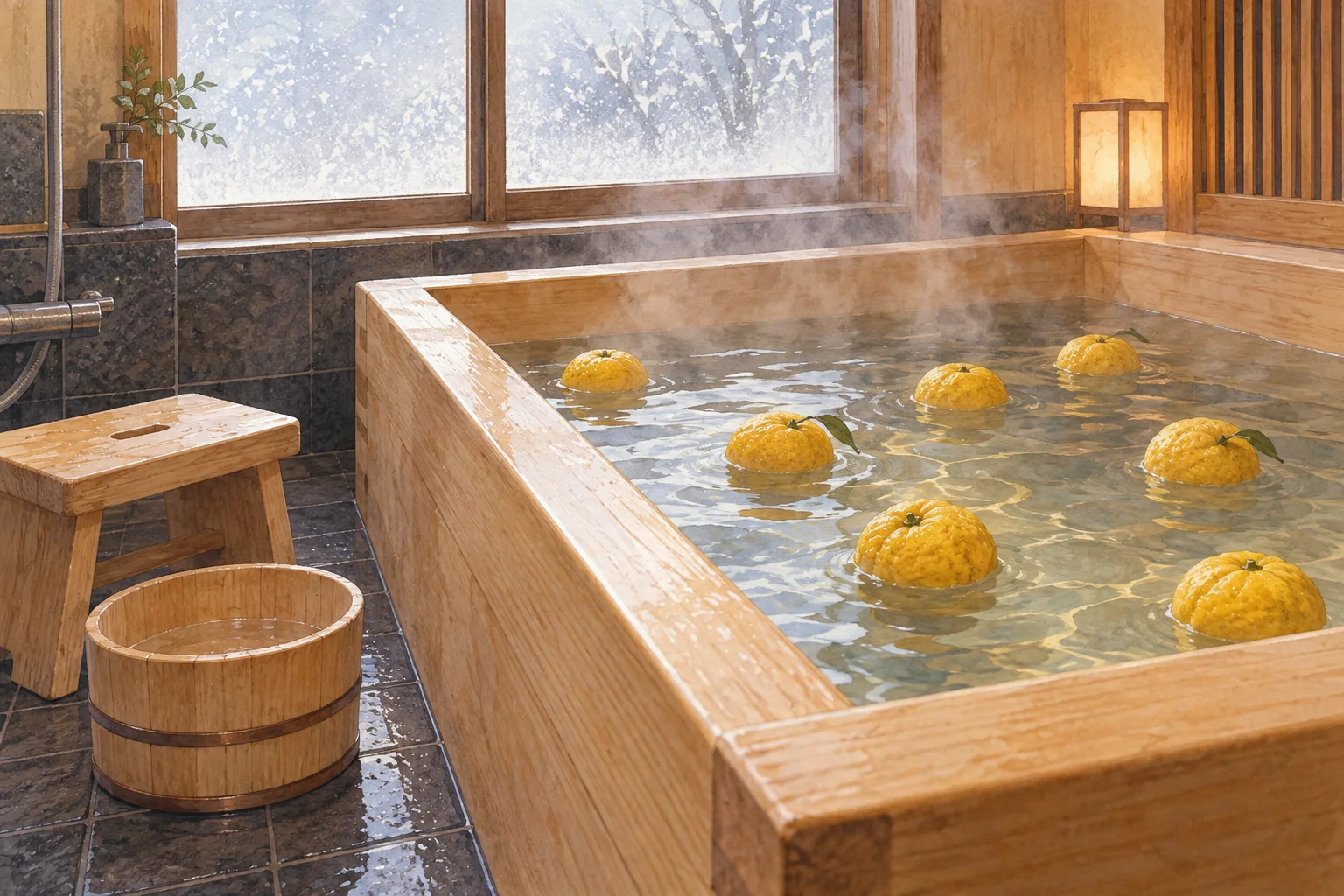
一年でいちばん昼が短い日。柚子を浮かべた風呂に入り、かぼちゃを食べて冬を越す。
一言で言うと
これだけ覚えれば最低限伝わる一文
Toji, the winter solstice, is when many families take yuzu citrus baths and eat pumpkin to get through winter.
冬至とは、多くの家庭で柚子湯に入り、かぼちゃを食べて冬を乗り切る日です。
30秒で説明する
外国人に説明するときの標準サイズ
Toji, the winter solstice around December 22nd, is the shortest day of the year and one of the twenty-four seasonal points on the old calendar. The customs are domestic and cozy: float whole yuzu citrus in the hot bath for their scent, and eat kabocha pumpkin, a vegetable that keeps through winter. Both are said to ward off colds. Public baths and even zoo animals get yuzu baths, which makes the evening news every year.
冬至は十二月二十二日ごろで、一年でいちばん昼が短い日であり、旧暦の二十四節気の一つです。習慣は家庭的でほっとするものです。熱い風呂に柚子を丸ごと浮かべて香りを楽しみ、冬を越して保存できる野菜であるかぼちゃを食べます。どちらも風邪を防ぐと言われます。銭湯や、動物園の動物まで柚子湯に入り、毎年夕方のニュースになります。
スピーチ・英作文
通訳案内士の二次口述・大学入試の自由英作文に
The winter solstice is not a holiday in Japan, but it is a day with its own small rituals that many families keep. Toji falls around December 22nd, when the sun is lowest and the day is shortest, and the old calendar treats it as the point where the light begins to return. The evening bath is the center of it.
You float a few whole yuzu, a fragrant yellow citrus, in the hot water and soak; the scent fills the bathroom and the oils are believed to warm the body and prevent colds. Public bathhouses do the same on a grand scale, and the news shows monkeys and capybaras at zoos soaking in yuzu baths.
For dinner there is kabocha pumpkin, simmered sweet and soft, because it stores well and gives vitamins in a season when little grows, along with red bean porridge in some regions. I think the appeal is that on the darkest day, the house is warm and smells of citrus.
冬至は日本では祝日ではありませんが、多くの家庭が守る小さな儀式のある日です。冬至は十二月二十二日ごろで、太陽が最も低く昼が最も短く、旧暦ではここから光が戻り始める節目とされます。その中心は夜の風呂です。
香りのよい黄色い柑橘である柚子を丸ごといくつか熱い湯に浮かべてつかります。香りが浴室に満ち、皮の油が体を温めて風邪を防ぐと信じられています。銭湯も大がかりに同じことをし、ニュースは動物園で柚子湯につかる猿やカピバラを映します。
夕飯には甘くやわらかく煮たかぼちゃです。保存がきき、育つものの少ない季節にビタミンを与えてくれるからで、地域によっては小豆粥も食べます。いちばん暗い日に家が暖かく柑橘の香りがする、そこが魅力だと私は思います。
こう聞かれたら
外国人から実際にされる質問と、その答え方。
Why yuzu, of all fruits?
数ある果物の中で、どうして柚子なのですか。
Yuzu ripens in early winter, so it is in season, and its strong fragrance was thought to drive away bad luck and illness. There is also a pun: toji sounds like the word for a hot-spring cure, and yuzu sounds like a word meaning things go smoothly. Japanese customs love a pun.
柚子は初冬に熟すので旬であり、その強い香りが厄や病を追い払うと考えられました。語呂合わせもあります。冬至は「湯治」に、柚子は「融通」に通じるのです。日本の習慣は語呂合わせが大好きです。
Do I cut the yuzu or leave it whole?
柚子は切るのですか、丸のまま入れるのですか。
Either. Whole fruit keeps the water clean and lasts longer; cut or pierced fruit releases more scent but also more oil, which can sting sensitive skin. Some people put slices in a cloth bag. Do not eat the fruit afterward.
どちらでも。丸ごとなら湯が汚れず長持ちし、切ったり穴を開けたりすると香りは強くなりますが油も多く出て、敏感な肌にはしみることがあります。切ったものを布の袋に入れる人もいます。使ったあとの実は食べないでください。
Why pumpkin in winter?
どうして冬にかぼちゃなのですか。
Before refrigeration, kabocha harvested in summer or early autumn could be stored for months, so it was one of the few vegetables left by late December. Eating it at the solstice was practical nutrition that became a custom. Some regions also favor foods whose names contain the sound n, for luck.
冷蔵のなかった時代、夏から初秋に収穫したかぼちゃは何か月も保存でき、十二月下旬に残る数少ない野菜の一つでした。冬至に食べるのは実用的な栄養補給で、それが習慣になりました。地域によっては縁起をかついで「ん」のつく食べ物を好みます。
そのまま使えるフレーズ
- Today's the shortest day of the year.今日は一年でいちばん昼が短い日です。
- We put yuzu in the bath tonight.今夜は風呂に柚子を入れます。
- The scent is supposed to keep colds away.香りが風邪を防ぐと言われています。
- We eat pumpkin on the solstice.冬至にはかぼちゃを食べます。
- From tomorrow the days get longer.明日から日が長くなります。
説明に使う語句
- solstice至点(冬至・夏至)
- yuzu citrus柚子
- kabocha squash / pumpkinかぼちゃ
- ward off追い払う・防ぐ
- daylight hours日照時間
動画で見る
YouTube より豆知識
冬至は二十四節気の一つで、太陽の高さが最も低く昼が最も短い日です。「一陽来復」といって、この日を境に陽の気が戻るとする考えが中国から伝わり、日本でも節目として意識されてきました。柚子湯は江戸時代の銭湯で始まったとされ、「冬至」と「湯治」、「柚子」と「融通」を掛けた語呂合わせが由来として語られますが、確かな記録は限られています。かぼちゃは「南瓜(なんきん)」とも呼ばれ、「ん」が二つつく縁起物として、れんこん、にんじん、ぎんなん、きんかん、かんてん、うどんと合わせて「冬至の七種」と数える地域もあります。北海道などでは小豆と一緒に煮た「いとこ煮」を食べる習慣があります。毎年冬至の日には各地の銭湯や温泉施設、動物園で柚子湯が催され、季節の風物詩として報道されます。
