湯治とうじ
toji
staying at a hot spring to recover
一泊二日ではない。もともとは一週間単位で滞在するものだった。
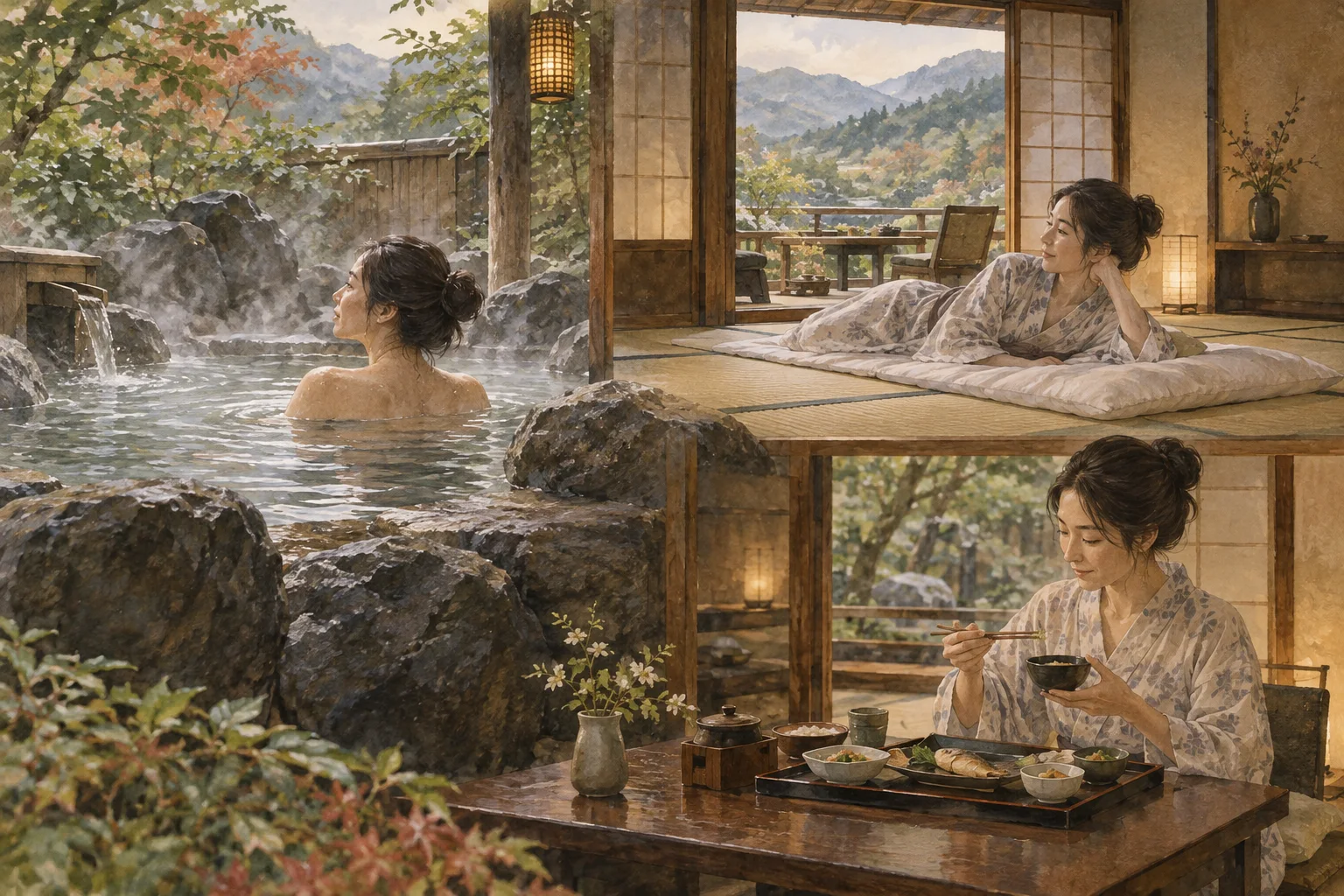
一言で言うと
これだけ覚えれば最低限伝わる一文
Toji means staying at a hot spring for a long period to recover health, not for a weekend break.
湯治とは、週末の旅行ではなく、体を治すために温泉に長く滞在することです。
30秒で説明する
外国人に説明するときの標準サイズ
Toji is the old practice of staying at a hot spring for an extended period to recover from illness, injury or exhaustion. Guests stayed a week or more, often cooking their own meals in a simple lodging, and bathed several times a day. Farmers went in the gaps between seasons. Some inns still offer this style, at much lower rates than a normal stay.
湯治とは、病気や怪我、疲れを癒すために温泉に長く滞在する古い習慣です。客は一週間かそれ以上泊まり、簡素な宿で自分で食事を作ることも多く、一日に何度も湯に入りました。農家は農閑期に出かけました。今もこの形の宿泊を、通常よりずっと安い料金で受ける宿があります。
スピーチ・英作文
通訳案内士の二次口述・大学入試の自由英作文に
Toji is what hot springs were originally for. Rather than one night with a big dinner, people came for a week, two weeks, sometimes a month, to recover from an illness, an injury or simply a punishing season of farm work.
The lodging was plain, often a room with a shared kitchen where guests cooked their own rice and vegetables, and the daily routine was to bathe several times, rest and walk. Counting in units of seven days was common, and people spoke of doing one round, two rounds.
The practice declined as medicine changed and as leisure travel became short, but it has not disappeared. Some hot springs, particularly in the Tohoku region, still keep toji buildings with cooking facilities and weekly rates far below a normal inn. Recently the idea has come back in a different form, as people look for long stays that are cheap and quiet.
湯治こそが、もともと温泉が果たしていた役目です。豪華な夕食つきで一泊するのではなく、人々は一週間、二週間、ときに一か月滞在し、病気や怪我、あるいはただ過酷な農作業の季節から回復しました。宿は簡素で、多くは共同の炊事場のついた部屋で、客は自分で米や野菜を煮ました。
日課は一日に何度か湯に入り、休み、歩くことです。七日を一区切りとして数えるのが一般的で、人は「ひと回り」「ふた回り」と言いました。医療が変わり、旅が短くなるにつれてこの習慣は衰えましたが、消えてはいません。
とくに東北の温泉には、炊事のできる湯治棟と、通常の宿よりはるかに安い週単位の料金を今も残す場所があります。近年は、安くて静かな長期滞在を求める人たちの間で、別の形でこの考え方が戻ってきています。
こう聞かれたら
外国人から実際にされる質問と、その答え方。
Can a foreign visitor do a toji stay?
外国から来た人でも湯治はできますか。
Yes, but check what is provided. Toji lodgings often have no meals, no daily cleaning and shared kitchens, and staff may speak only Japanese. They are cheap because they are basic, not because they are a bargain version of a normal inn.
できますが、何が付いているか確かめてください。湯治の宿は食事なし、清掃なし、炊事場は共同ということが多く、職員が日本語しか話さない場合もあります。安いのは簡素だからで、ふつうの宿の格安版という意味ではありません。
Does hot spring water have real medical effects?
温泉に本当に医学的な効果はあるのですか。
National guidelines classify certain springs as therapeutic based on temperature and mineral content, and signs list conditions each spring is said to suit. The evidence varies by claim, and warm bathing and rest themselves account for a good deal of the benefit.
国の指針は温度と成分によって一部の泉を療養泉と定めており、掲示にはその泉が適するとされる症状が並びます。根拠の強さは主張によって異なり、温まって休むこと自体による部分も大きいと考えられます。
誤解されやすい
MYTHA hot spring trip has always meant one luxurious night with a banquet dinner.
温泉旅行は昔から豪華な夕食つきの一泊だったと思われがちです。
FACTThat style is modern. The older pattern was a long, plain, self-catered stay aimed at recovery, and some hot springs still run on it.
その形は近代のものです。古い形は、回復を目的とした長く簡素な自炊の滞在で、今もその形で営む温泉があります。
そのまま使えるフレーズ
- People used to stay for a week or more.昔は一週間以上滞在しました。
- There's a shared kitchen. Guests cook for themselves.共同の炊事場があり、客は自炊します。
- The weekly rate is much cheaper.週単位の料金はずっと安いです。
- Farmers came between the busy seasons.農家は農閑期に来ました。
説明に使う語句
- to recuperate療養する
- self-catering自炊
- long stay長期滞在
- therapeutic spring療養泉
動画で見る
YouTube より豆知識
湯治では七日を「ひと回り」と数え、三回りで三週間滞在するといった言い方をしました。東北には今も自炊のできる湯治棟を備えた温泉があり、青森の酸ヶ湯や岩手の松川温泉などが知られます。温泉法は源泉の温度が25度以上、または定められた成分を一定量含むものを温泉と定めており、そのうち療養に適するとされるものが療養泉です。効能の掲示は法律に基づく記載で、宣伝文句ではありません。
