学級担任がっきゅうたんにん
tannin
the homeroom teacher who teaches everything
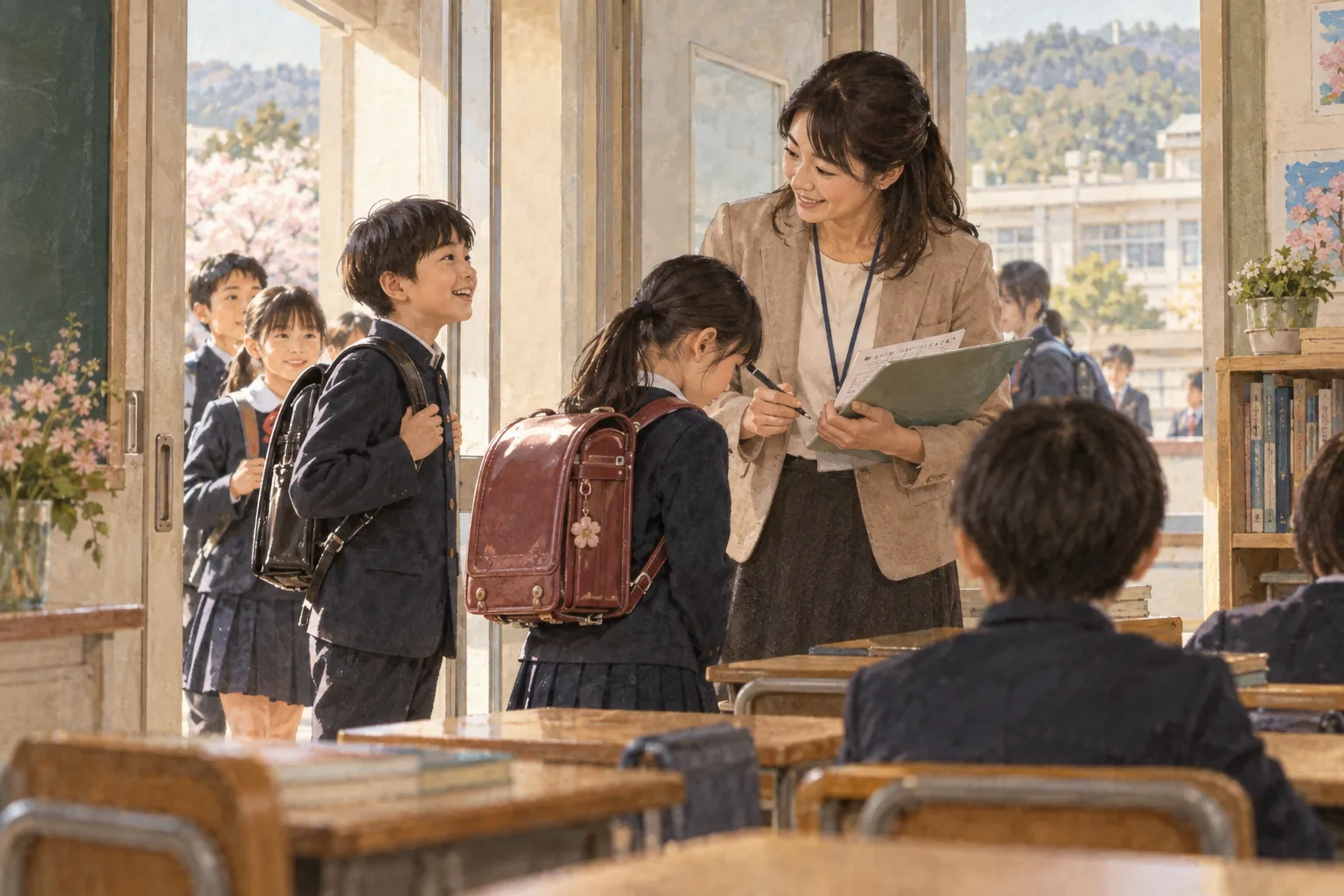
小学校では一人の先生がほぼ全教科を教え、生活も見る。
一言で言うと
これだけ覚えれば最低限伝わる一文
Tannin, or a homeroom teacher, is the one teacher who teaches a Japanese primary class nearly every subject.
学級担任とは、日本の小学校でほぼ全教科を教え、学級の生活も受け持つ一人の先生です。
30秒で説明する
外国人に説明するときの標準サイズ
In Japanese primary schools, one homeroom teacher teaches most subjects to the same class all year, and also handles discipline, lunch, cleaning and relationships between children. Secondary schools have subject teachers, but each class still has a tannin who is the family's main point of contact.
日本の小学校では、一人の学級担任が同じクラスにほぼすべての教科を一年間教え、生活指導、給食、掃除、子どもどうしの関係まで見ます。中学と高校では教科ごとに教員がつきますが、各クラスには担任がおり、家庭にとっての第一の窓口であることに変わりはありません。
スピーチ・英作文
通訳案内士の二次口述・大学入試の自由英作文に
The homeroom teacher is the center of a Japanese child's school life. In primary school, one teacher takes the same class for the year and teaches most subjects: Japanese, arithmetic, science, social studies and often music and art as well.
The same person eats lunch with the class, supervises cleaning, runs the morning meeting, sorts out arguments, and writes the report card comments. Families contact this teacher about anything. In junior high and high school, subjects are taught by specialists, but every class still has a tannin who handles guidance, careers and contact with home.
The strength of the system is that one adult sees the whole child; the weakness is workload, since Japanese teachers also run club activities and administrative work, and international surveys have repeatedly found their working hours among the longest. Reform has begun, including subject teaching in the upper primary years and outsourcing of club supervision.
学級担任は、日本の子どもの学校生活の中心にいます。小学校では一人の先生が同じクラスを一年受け持ち、国語、算数、理科、社会、多くの場合は音楽や図工まで教えます。同じ人が給食を一緒に食べ、掃除を見守り、朝の会を進め、けんかを収め、通知表の所見を書きます。
家庭は何かあればこの先生に連絡します。中学と高校では教科ごとに専門の教員が教えますが、各クラスには担任がいて、生活指導、進路、家庭との連絡を受け持ちます。この仕組みの強みは、一人の大人が子ども全体を見られることです。
弱みは仕事量です。日本の教員は部活動の指導や事務の仕事も担い、国際的な調査では勤務時間の長さが繰り返し指摘されてきました。見直しは始まっており、小学校高学年での教科担任制や、部活動の指導を学校の外に委ねる動きがあります。
こう聞かれたら
外国人から実際にされる質問と、その答え方。
Do students stay with the same classmates all year?
一年を通して同じ顔ぶれのクラスなのですか。
Yes. The class is a fixed group that moves together through the year, and classes are often reshuffled at the start of the next year, or every two years at some schools, with the new lists announced on the first day.
同じです。学級は一年を通して動く固定の集団で、多くの学校では翌年度に、学校によっては二年ごとにクラス替えがあり、初日に掲示される名簿で発表されます。
How do parents communicate with the teacher?
保護者は担任とどうやり取りするのですか。
Through a communication notebook in primary school, phone calls, and individual meetings once or twice a year. Home visits by the teacher were once standard and still happen in some areas.
小学校では連絡帳、それに電話、年に一、二度の個人面談です。教員が各家庭を訪ねる家庭訪問はかつて標準で、今も行っている地域があります。
Why do teachers work such long hours?
どうして先生の勤務時間が長いのですか。
Club supervision after school and at weekends, administrative work, and the breadth of non-teaching duties. Measures to reduce this include external club coaches and limits on activity days.
放課後や週末の部活動の指導、事務の仕事、そして授業以外の役割の広さです。外部指導者の導入や活動日数の上限といった対策が進められています。
そのまま使えるフレーズ
- Who is your homeroom teacher this year?今年の担任の先生はどなたですか。
- I wrote it in the communication notebook.連絡帳に書いておきました。
- The class lists go up on the first day.クラス分けは初日に掲示されます。
- There's a parent meeting next week.来週、個人面談があります。
- She teaches almost every subject.先生はほぼ全教科を教えています。
説明に使う語句
- homeroom teacher担任
- class, homeroom学級
- class reshuffleクラス替え
- communication notebook連絡帳
- parent-teacher meeting個人面談
動画で見る
YouTube より豆知識
小学校では長く学級担任がほぼ全教科を教える形がとられてきましたが、専門性と教員の負担を考え、高学年で一部の教科を教科担任が受け持つ仕組みの導入が進められています。担任は授業のほか、朝の会と帰りの会、給食と掃除の指導、行事の準備、通知表の所見、家庭との連絡を担います。経済協力開発機構の国際教員指導環境調査では、日本の教員の勤務時間の長さと、授業以外の業務の比率の高さが繰り返し示されてきました。
