通知表つうちひょう
tsuchihyo
the school report card
成績だけではない。「行動の記録」に生活態度まで書かれる。
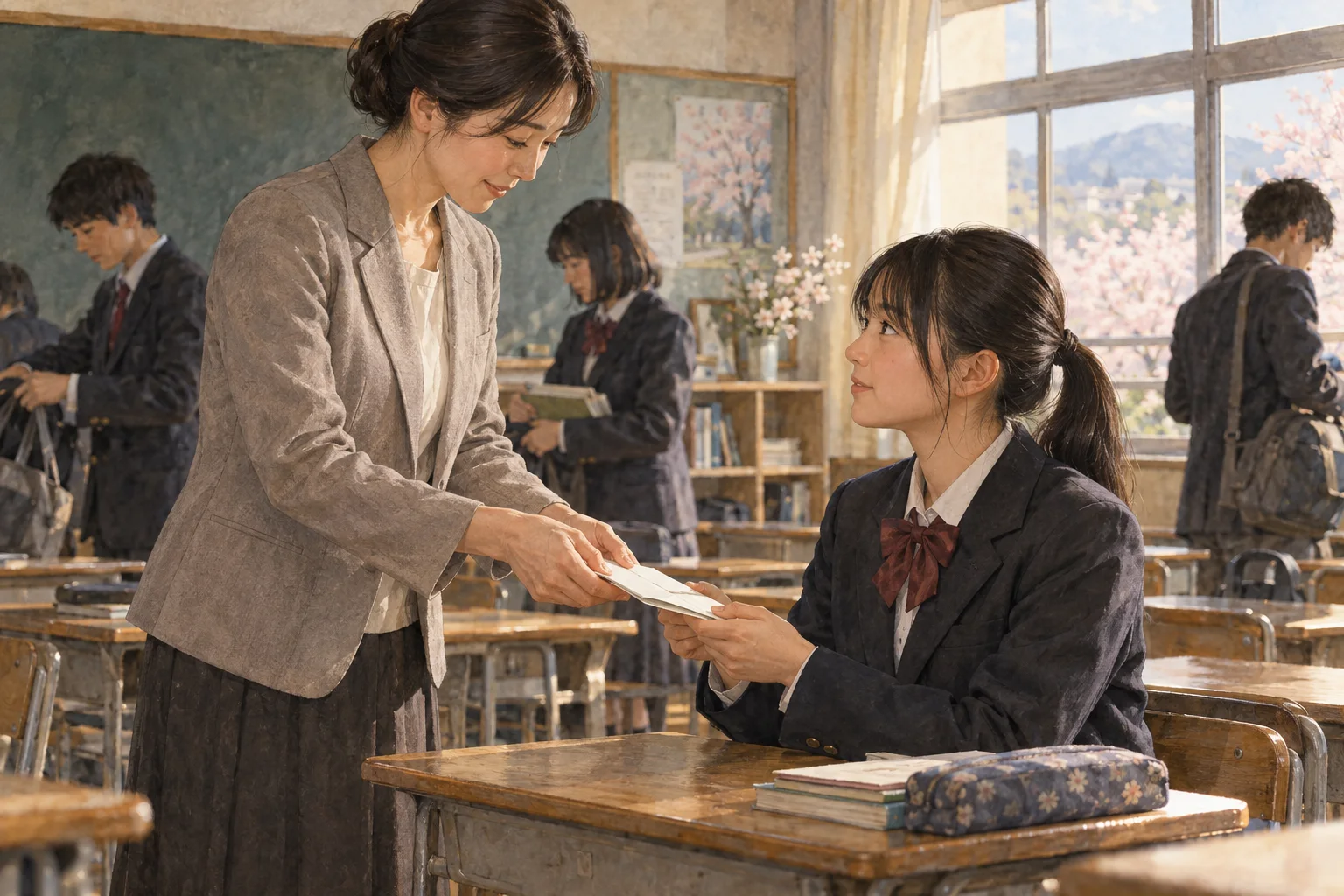
一言で言うと
これだけ覚えれば最低限伝わる一文
A tsuchihyo is the school report card, which grades subjects and also records behavior and attitude.
通知表とは学校の成績表で、教科の評価に加えて、生活態度や行動の記録も載ります。
30秒で説明する
外国人に説明するときの標準サイズ
Japanese report cards are issued at the end of each term. Besides subject grades they carry a section on conduct, with items like responsibility, cooperation and diligence, and a written comment from the homeroom teacher. At many schools, parents stamp or sign it and the student returns it to school, so the card itself travels back and forth.
日本の通知表は学期ごとに渡されます。教科の評定に加えて行動の記録の欄があり、責任感・協力・勤勉さといった項目が並び、担任の所見が書かれます。多くの学校では保護者が印を押して学校へ返すので、通知表そのものが行き来します。
スピーチ・英作文
通訳案内士の二次口述・大学入試の自由英作文に
A Japanese report card is handed out at the end of each term, and it contains more than subject grades. There is a section recording conduct, with items such as taking responsibility, cooperating with others, being considerate and working diligently, usually marked with a circle if the student stands out.
Then there is a written comment from the homeroom teacher, which describes the student rather than the grades, and parents often read that part first. At many schools the card is not kept by the family. Parents read it, put their seal or signature on it to confirm they have seen it, and the student brings it back to school, so the same booklet moves between home and school for years.
One thing worth explaining is what the grades mean. Japanese schools have moved toward assessing against stated objectives rather than ranking students against each other, so a grade is meant to say how far a student met the goals, not where they sit in the class.
日本の通知表は学期の終わりに渡され、教科の評定だけではありません。行動の記録の欄があり、責任感、協力、思いやり、勤勉さといった項目が並び、とくに目立つ場合に丸がつきます。そして担任の所見があります。
成績ではなく、その生徒について書かれた文章で、保護者はまずそこを読むことが多いものです。多くの学校では、通知表は家庭が持ち続けるものではありません。保護者が読み、見たことを示す印を押し、生徒が学校へ持ち帰ります。同じ冊子が何年も家と学校を行き来するわけです。
説明しておく価値があるのは、評定の意味です。日本の学校は、生徒同士を順位づけるのではなく、示された目標にどれだけ到達したかで評価する方向へ移ってきました。評定は、クラスの中の位置ではなく、目標にどこまで届いたかを表すものとされています。
こう聞かれたら
外国人から実際にされる質問と、その答え方。
Is it graded on a curve?
相対評価なのですか。
Not as policy. Assessment against stated learning objectives replaced relative ranking, so grades are meant to show whether a student met the goals rather than how they compare with classmates.
方針としては違います。相対評価から、示された目標への到達度で見る絶対評価へ移りました。評定は他の生徒との比較ではなく、目標に届いたかどうかを示すものとされています。
Why does it go back to school?
どうして学校に戻すのですか。
Because the parent's seal confirms they have seen it, and the same booklet is used across years so the record accumulates. Losing it is a genuine small crisis for a child.
保護者の印が、見たことの確認になるからです。同じ冊子を何年も使うので記録が積み上がります。なくすと、子どもにとっては本当に小さな危機です。
Does the conduct section matter?
行動の記録の欄は重要ですか。
For high school admission it can. A separate document, the school report sent to the receiving school, draws on the same kind of assessment and carries weight alongside the entrance exam.
高校入試では影響します。進学先に送られる調査書、いわゆる内申書は同じ種類の評価に基づいており、入試の点数と並んで重みを持ちます。
そのまま使えるフレーズ
- Report cards come at the end of each term.通知表は学期末に渡されます。
- There's a section on conduct, not just grades.成績だけでなく、行動の記録の欄もあります。
- The teacher writes a comment about you.担任が所見を書いてくれます。
- Your parents sign it and you take it back.保護者が押印して、学校へ持ち帰ります。
- Grades measure whether you met the objectives.評定は、目標に届いたかどうかを示します。
説明に使う語句
- report card通知表
- term学期
- conduct行動
- assessment評価
- seal / signature印、署名
動画で見る
YouTube より豆知識
通知表は法令で様式が定められた文書ではなく、各学校が作成する任意の書類である。法令上の記録は「指導要録」で、学校が保存する公的な記録にあたる。評価は2002年度以降、相対評価から目標に準拠した評価(いわゆる絶対評価)へ移行した。高校入試で用いられる「調査書」(内申書)は指導要録に基づいて作成され、評定が点数化されて選抜に用いられる。所見欄の記述には時間がかかるため、教員の業務負担として議論の対象になっており、近年は所見の記載を簡素化したり、デジタル化したりする自治体も増えている。
