精霊馬しょうりょううま
shoryo uma
the cucumber horse and eggplant cow made for Obon
きゅうりの馬で早く来てもらい、なすの牛でゆっくり帰ってもらう。
一言で言うと
これだけ覚えれば最低限伝わる一文
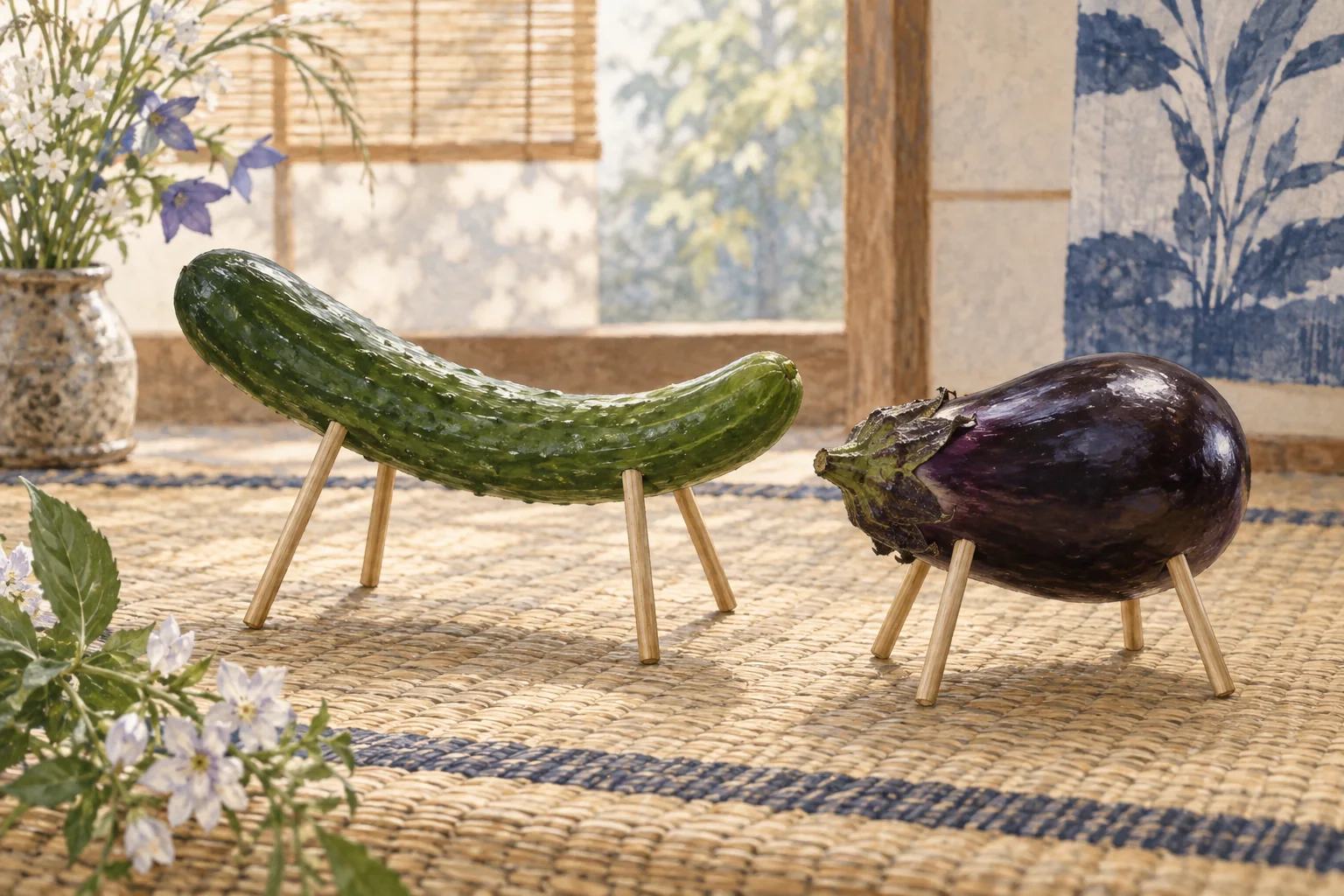
Shoryo uma, or spirit horses, are a cucumber horse and eggplant cow made at Obon for the spirits to ride.
精霊馬とは、お盆に帰ってくる先祖が乗るように作る、きゅうりの馬となすの牛です。
30秒で説明する
外国人に説明するときの標準サイズ
At Obon, when the dead are said to return home, many households stand a cucumber and an eggplant on four short legs of split chopsticks. The cucumber is a horse, so the spirits can come quickly, and the eggplant is a slow cow for the journey back, so they linger. They are set out by the household altar and taken away at the end of the days.
死者が家に帰るとされるお盆に、多くの家がきゅうりとなすに割り箸の足を四本つけて立てます。きゅうりは馬で、先祖に早く来てもらうため。なすは牛で、帰り道はゆっくりしてもらうためです。仏壇のそばに置き、盆が明けると片づけます。
スピーチ・英作文
通訳案内士の二次口述・大学入試の自由英作文に
If you visit a Japanese home in mid-August you may find two vegetables standing on little legs beside the household altar. They are shoryo uma, the vehicles of the returning dead. A cucumber, long and lean, is a horse, so that the spirits can travel home quickly at the start of Obon.
An eggplant, heavy and round, is an ox, which is slow, so that on the last day they go back unhurried, and can carry the offerings with them. The legs are usually four pieces of a split disposable chopstick, and children are often given the job of making them.
As with much of Obon, the details change from place to place: some regions reverse the meanings, some use only one of the two, some make them from straw instead, and plenty of households do not make them at all. At the end they are taken to a river or a temple, or simply wrapped in paper and put out with the trash, which is generally not considered disrespectful.
八月の半ばに日本の家を訪ねると、仏壇のそばに小さな足をつけた野菜が二つ立っていることがあります。精霊馬、帰ってくる死者の乗り物です。細長いきゅうりは馬。盆の入りに、先祖に早く帰ってきてもらうためです。重く丸いなすは牛。
足が遅いので、盆の明けにはゆっくり戻ってもらい、供えものも一緒に運んでもらえます。足には割り箸を四本使うのがふつうで、作るのは子どもの役目になっていることがよくあります。お盆の多くのことと同じように、細かいところは土地によって変わります。
意味が逆の地域もあれば、どちらか一方しか作らない地域、藁で作る地域もあり、そもそも作らない家も多くあります。盆が明けると、川や寺に納めるか、紙に包んでそのままごみに出します。それが失礼だとは、ふつう考えられていません。
こう聞かれたら
外国人から実際にされる質問と、その答え方。
Why a cucumber and an eggplant?
どうしてきゅうりとなすなのですか。
Because they were what most households had on hand in summer. The shapes suit the animals, they were in the garden or cheap at the shop, and the custom took hold before anyone would have bought something specially.
夏にたいていの家にあったものだからです。形が動物に合い、畑にあるか店で安く手に入りました。わざわざ買う発想が生まれるより前に、この習慣が定着しました。
Is the meaning the same everywhere?
意味はどこでも同じですか。
No. The horse-in, cow-out reading is the common one, but some regions reverse it so that the spirits leave quickly, and in parts of the country the custom does not exist at all.
同じではありません。来るときは馬、帰るときは牛、という読みが一般的ですが、逆にする地域もあります。この習慣そのものがない地方もあります。
What do you do with them afterwards?
あとはどうするのですか。
Traditionally they were floated on a river or burned, but that is now discouraged for environmental reasons. Most households wrap them in paper with a little salt and dispose of them as burnable trash, or take them to a temple that accepts them.
昔は川に流したり燃やしたりしましたが、今は環境の面から控えるよう言われています。多くの家は、紙に包んで塩を少し添え、燃やすごみとして出すか、受け付けてくれる寺に納めます。
そのまま使えるフレーズ
- The cucumber is a horse.きゅうりは馬です。
- The eggplant is a slow cow.なすは足の遅い牛です。
- Come quickly, go home slowly.早く来て、ゆっくり帰ってもらいます。
- The legs are made from chopsticks.足は割り箸で作ります。
- Not every family makes them.作らない家もあります。
説明に使う語句
- spirit vehicle精霊馬
- household Buddhist altar仏壇
- disposable chopsticks割り箸
- the returning dead帰ってくる先祖
- the end of Obon盆明け
動画で見る
YouTube より豆知識
精霊馬は、お盆に先祖を迎え送るための乗り物に見立てた供えもので、きゅうりを馬、なすを牛とするのが一般的です。早く帰ってきてもらうために足の速い馬、帰りは供物とともにゆっくり戻ってもらうために足の遅い牛、と説明されます。足には割り箸やおがらを使います。意味を逆にする地域や、作らない地域もあり、東日本に濃く見られる習慣とされます。盆明けの処分は、かつては川や海に流しましたが、現在は紙に包んで燃やすごみに出すか、寺に納めるのが一般的です。
