賽銭さいせん
saisen
the offering you throw in
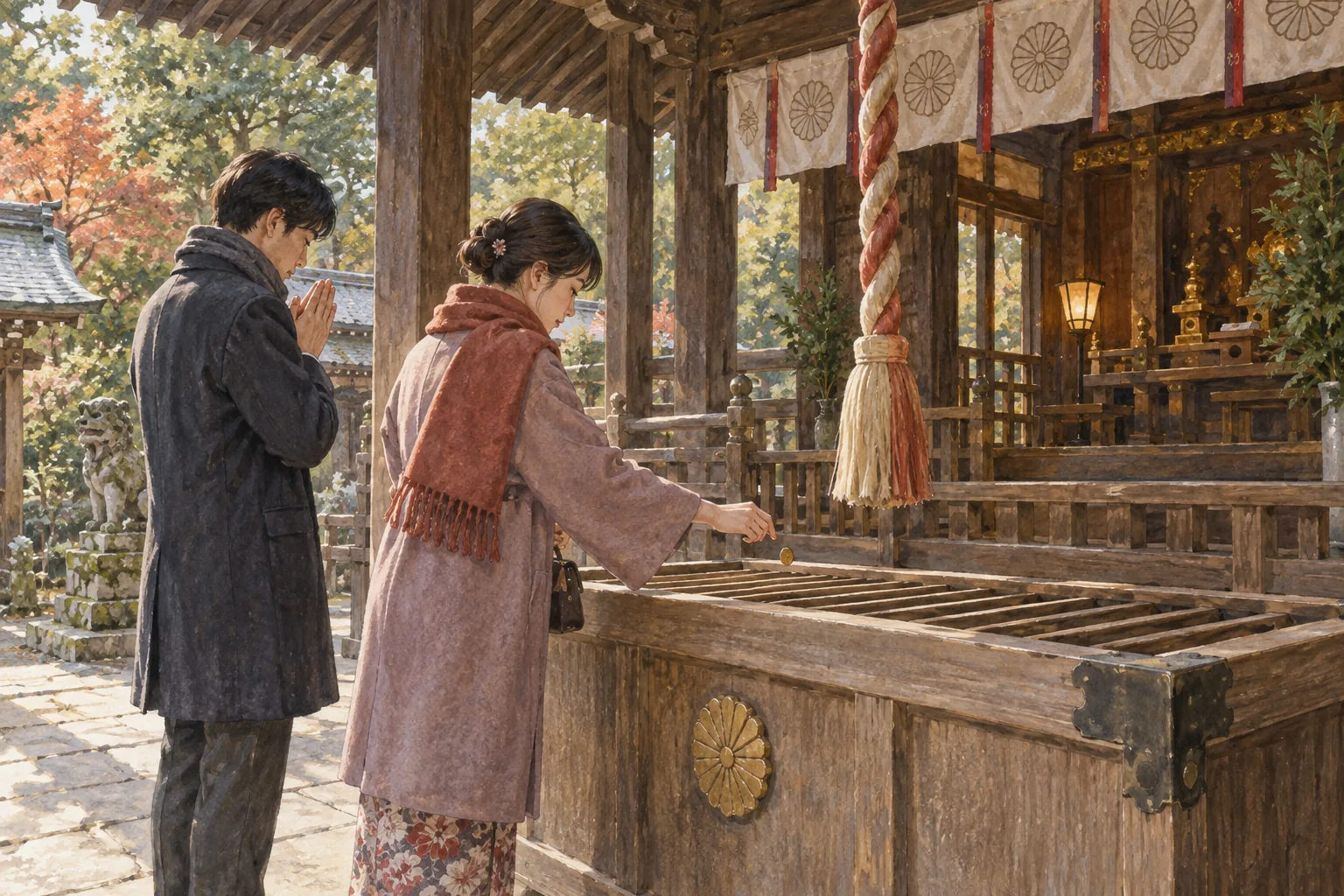
五円玉がいいと言われるのは、「ご縁」と同じ音だから。それだけの理由。
一言で言うと
これだけ覚えれば最低限伝わる一文
Saisen is the coin you throw into the box at a shrine or temple before praying.
賽銭とは、神社や寺で参拝する前に箱へ入れる小銭のことです。
30秒で説明する
外国人に説明するときの標準サイズ
Saisen is the money offered at a shrine or temple, dropped into a slatted wooden box in front of the hall. There is no set amount. A five yen coin is often suggested because the word for five yen sounds like the word for a good connection, which is wordplay rather than doctrine. Put the coin in gently rather than hurling it.
賽銭とは神社や寺で供えるお金で、拝殿の前の格子のついた木の箱に入れます。決まった額はありません。五円玉がよいとよく言われるのは、五円が「ご縁」と同じ音になるからで、教えというより言葉遊びです。投げつけずに、そっと入れてください。
スピーチ・英作文
通訳案内士の二次口述・大学入試の自由英作文に
Saisen is the offering you make at a shrine or temple, dropped into a large wooden box with slats across the top. Visitors always ask how much, and the honest answer is that there is no rule.
A five yen coin is commonly recommended because five yen, go-en, sounds the same as a word meaning a good connection or tie, which is a pun rather than a religious teaching, but people enjoy it. Any amount is acceptable, and what you offer is not supposed to change what you receive.
The older practice was to offer rice rather than coins, and the wooden box and the coins came later as a money economy spread. One point of manners: the box is not a target. Put the coin in rather than throwing it hard, because at a busy shrine people are standing close and a flung coin can hit someone. At a shrine, you then bow twice, clap twice, pray, and bow once more.
賽銭は神社や寺で供えるお金で、上に格子のついた大きな木の箱に入れます。訪れた人は必ず金額を尋ねますが、正直に言えば決まりはありません。五円玉がよく勧められるのは、五円が良い縁を意味する語と同じ音になるからで、これは宗教の教えではなく語呂合わせですが、人はそれを楽しんでいます。
どの額でもかまいませんし、供えた額で受け取るものが変わるとは考えられていません。古い習わしでは、貨幣ではなく米を供えました。木の箱と小銭は、貨幣経済が広がってから後のことです。作法をひとつ。
あの箱は的ではありません。強く投げずに入れてください。混んだ神社では人が近くに立っていて、投げた硬貨が当たることがあります。神社なら、そのあと二度礼をし、二度手を打ち、祈って、もう一度礼をします。
こう聞かれたら
外国人から実際にされる質問と、その答え方。
How much should I put in?
いくら入れればいいですか。
Whatever you like. Small coins are normal, and most people put in somewhere between five and a hundred yen on a casual visit. Some people put in notes too, but for a larger offering it is more usual to put it in an envelope and hand it in at the shrine office.
いくらでもかまいません。小銭がふつうで、気軽な参拝なら五円から百円ほどを入れる人が多いです。紙幣を入れる人もいますが、まとまった額を納めるなら、封筒に入れて社務所に渡すのが一般的です。
What if I'm not religious? Should I still do it?
信仰がない場合でも、お参りしていいのですか。
You are welcome either way. Many Japanese visitors are not believers in any strict sense and take part as a custom. If you would rather not offer money, you can still bow at the gate and walk through the grounds respectfully.
どちらでも歓迎されます。日本の参拝者の多くも、厳密な意味での信仰者ではなく習慣として行っています。お金を納めたくなければ、鳥居で礼をして境内を静かに歩くだけでもかまいません。
Is the money used for anything specific?
そのお金は何かに使われるのですか。
It goes toward the upkeep of the buildings and grounds, festivals and the staff. Larger shrines publish the categories of expenditure, and at small local shrines it may be the main source of income for repairs.
建物や境内の維持、祭りの費用、職員の人件費などに充てられます。大きな神社は用途の区分を公表していますし、小さな地域の社では修繕の主な財源になっていることもあります。
誤解されやすい
MYTHThere is a correct amount, and a bigger offering gets a better result.
正しい金額があり、多く入れるほどよい結果になると思われがちです。
FACTThere is no set amount and no doctrine linking the sum to the outcome. The five yen recommendation is a play on words.
決まった額はなく、額と結果を結びつける教えもありません。五円がよいというのは語呂合わせです。
そのまま使えるフレーズ
- There's no set amount.決まった金額はありません。
- A five yen coin is a play on words.五円玉は語呂合わせです。
- Put it in gently, don't throw it.投げずにそっと入れてください。
- Two bows, two claps, pray, one bow.二礼二拍手一礼です。
説明に使う語句
- offering供え物
- offering box賽銭箱
- to bow礼をする
- to clap拍手を打つ
動画で見る
YouTube より豆知識
賽銭箱が広まる以前は、米を紙に包んで供える「おひねり」の形が一般的でした。「賽」は神仏に報いるという意味の字です。参拝の作法として広く教えられる二礼二拍手一礼は、近代に整えられた形で、社によっては拍手の数が異なります。出雲大社では四拍手が作法です。寺では拍手を打たず、静かに手を合わせます。近年は現金を持たない人のために、電子決済で賽銭を受ける社寺も現れていますが、まだ少数です。
