人口減少と過疎じんこうげんしょうとかそ
jinko gensho to kaso
a shrinking, aging country
2008年ごろをピークに人口が減り続けている。空き家、廃校、消えるバス路線の話。
一言で言うと
これだけ覚えれば最低限伝わる一文
Jinko gensho to kaso, population decline and depopulation, is Japan's fall in population since around 2008, fastest in rural towns.
人口減少と過疎とは、2008年ごろをピークに日本の人口が減り続け、特に地方の町から人が減っていることです。
30秒で説明する
外国人に説明するときの標準サイズ
Japan's population peaked around 2008 and has fallen almost every year since, because births have dropped well below the level needed to replace the population and immigration remains comparatively small. The effects are visible outside the big cities: closed schools, empty houses, bus routes cut, shops shuttered. Tokyo and a few other cities keep growing by drawing young people in, which speeds up the emptying of everywhere else.
日本の人口は2008年ごろをピークに、それ以降ほぼ毎年減っています。出生数が人口を保つのに必要な水準を大きく下回り、移民の受け入れは比較的少ないままだからです。その影響は大都市の外で目に見えます。閉じた学校、空いた家、廃止されたバス路線、閉まった店。東京など一部の都市は若者を吸い寄せて増え続け、それが他の地域の空洞化を速めています。
スピーチ・英作文
通訳案内士の二次口述・大学入試の自由英作文に
If you travel outside Japan's big cities you will see the shape of its biggest long-term problem. The population peaked around 2008 and has declined almost every year since, and it is aging at the same time, so there are fewer workers supporting more retired people. In the countryside the effects are physical.
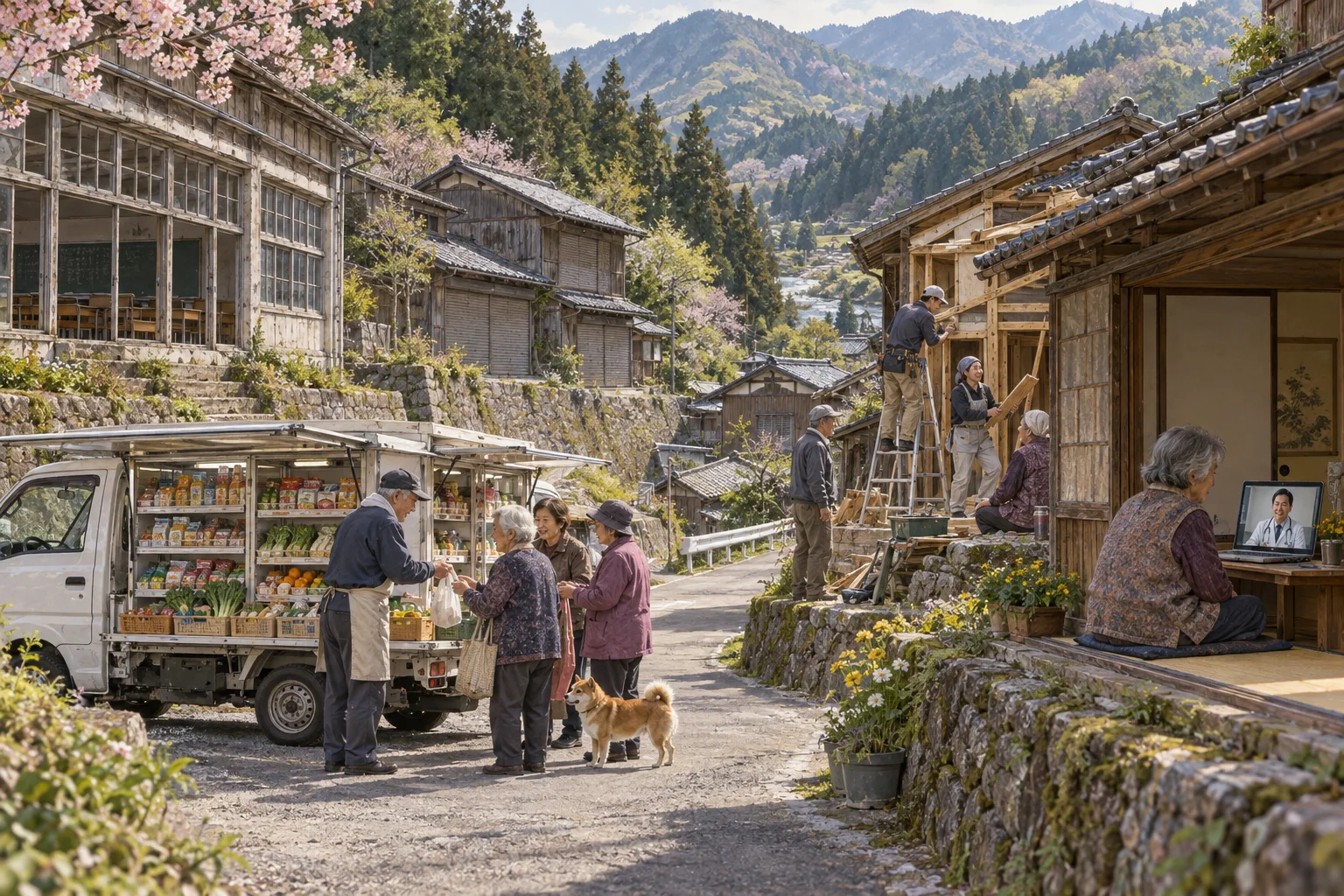
You pass elementary schools closed and turned into community centers, houses standing empty because the owner died and the heirs live in Osaka, and bus timetables with three services a day. Places that have lost much of their population are described with the word kaso, depopulation.
Meanwhile Tokyo keeps growing, because young people move there for work and study, which drains the places they left. Governments have tried subsidies for childbirth, support for families moving to the countryside, and looser rules for foreign workers, and the decline has continued anyway. I think this is the honest backdrop to almost every other topic on this site.
日本の大都市の外を旅すると、この国の最大の長期的な問題の輪郭が見えてきます。人口は2008年ごろをピークにそれ以降ほぼ毎年減り、同時に高齢化しているので、より多くの引退した人をより少ない働き手が支えています。
地方ではその影響が目に見える形で現れます。閉校して公民館になった小学校、持ち主が亡くなり相続人は大阪に住んでいるために空いたままの家、一日三本のバスの時刻表。人口が大きく減った地域は「過疎」という言葉で語られます。その一方で東京は増え続けます。
若者が仕事や進学のために移るからで、それが出ていった土地をさらに細らせます。国や自治体は出産への補助、地方への移住の支援、外国人労働者の受け入れの緩和などを試みてきましたが、減少は続いています。これは、このサイトの他のほとんどの話題の、正直な背景だと私は思います。
こう聞かれたら
外国人から実際にされる質問と、その答え方。
Why doesn't Japan just accept more immigrants?
どうして日本はもっと移民を受け入れないのですか。
It has been loosening the rules, and the number of foreign residents and workers has risen substantially. But the programs are built around fixed-term work rather than settlement, and the political debate about permanent immigration remains cautious. Whether the current approach can offset the decline is genuinely contested.
制度の緩和は進んでいて、在留外国人と外国人労働者の数はかなり増えました。ただし制度は定住よりも期間を定めた就労を軸に組まれていて、恒久的な移民をめぐる政治的な議論は慎重なままです。今のやり方で減少を埋められるかは、本当に意見の分かれるところです。
What does kaso actually mean?
過疎とは具体的に何を指すのですか。
Depopulation, used for municipalities that have lost a large share of their population and can no longer maintain basic services on their own tax base. There is a law that designates such areas and gives them financial support. Roughly half of all Japanese municipalities are designated.
過疎とは、人口が大きく減って、自前の税収では基本的な行政サービスを維持できなくなった市町村を指す言葉です。そうした地域を指定して財政的に支援する法律があり、全国の市町村のおよそ半数が指定されています。
Is this visible to a tourist?
旅行者にも分かりますか。
Very. Ride a local train an hour from any regional city and count the shuttered shops along the station street. Empty houses, some with the roof falling in, are common, and you will notice how few children you see. Hot spring towns where many inns have closed are another clear sign.
はっきり見えます。地方都市から各駅停車で一時間乗り、駅前通りの閉じた店を数えてみてください。屋根が落ちかけたものも含めて空き家はよくあり、子どもの姿の少なさにも気づくはずです。多くの旅館が廃業した温泉街も、分かりやすい印です。
そのまま使えるフレーズ
- The population has been falling since around 2008.人口は2008年ごろから減り続けています。
- The school closed because there weren't enough children.子どもが足りなくて学校が閉まりました。
- There are three buses a day now.今はバスが一日三本です。
- Young people leave for Tokyo and don't come back.若い人は東京へ出て、戻ってきません。
- That house has been empty for years.あの家は何年も空き家です。
説明に使う語句
- population decline人口減少
- depopulation過疎
- aging society高齢化
- birth rate出生率
- vacant house空き家
- rural / regional地方の
動画で見る
YouTube より豆知識
日本の総人口は2008年ごろをピークに減少に転じ、以後ほぼ一貫して減り続けています。背景には出生数の落ち込みと、比較的少ない移民の受け入れがあります。過疎地域を対象にした法律は1970年から名前を変えながら続いていて、指定された市町村には財政上の特例が設けられます。指定を受ける自治体の数は増え続け、現在は全国の市町村のおよそ半数に達しています。地方では小中学校の統廃合、路線バスの減便や廃止、鉄道のローカル線の存廃議論、空き家の増加といった形で影響が現れます。一方で東京圏への人口の集中は続いており、地方から人を集める都市と、集められる側の地域という構図が、政策の論点になっています。
