失われた30年うしなわれたさんじゅうねん
ushinawareta sanjunen
the long stagnation after the bubble
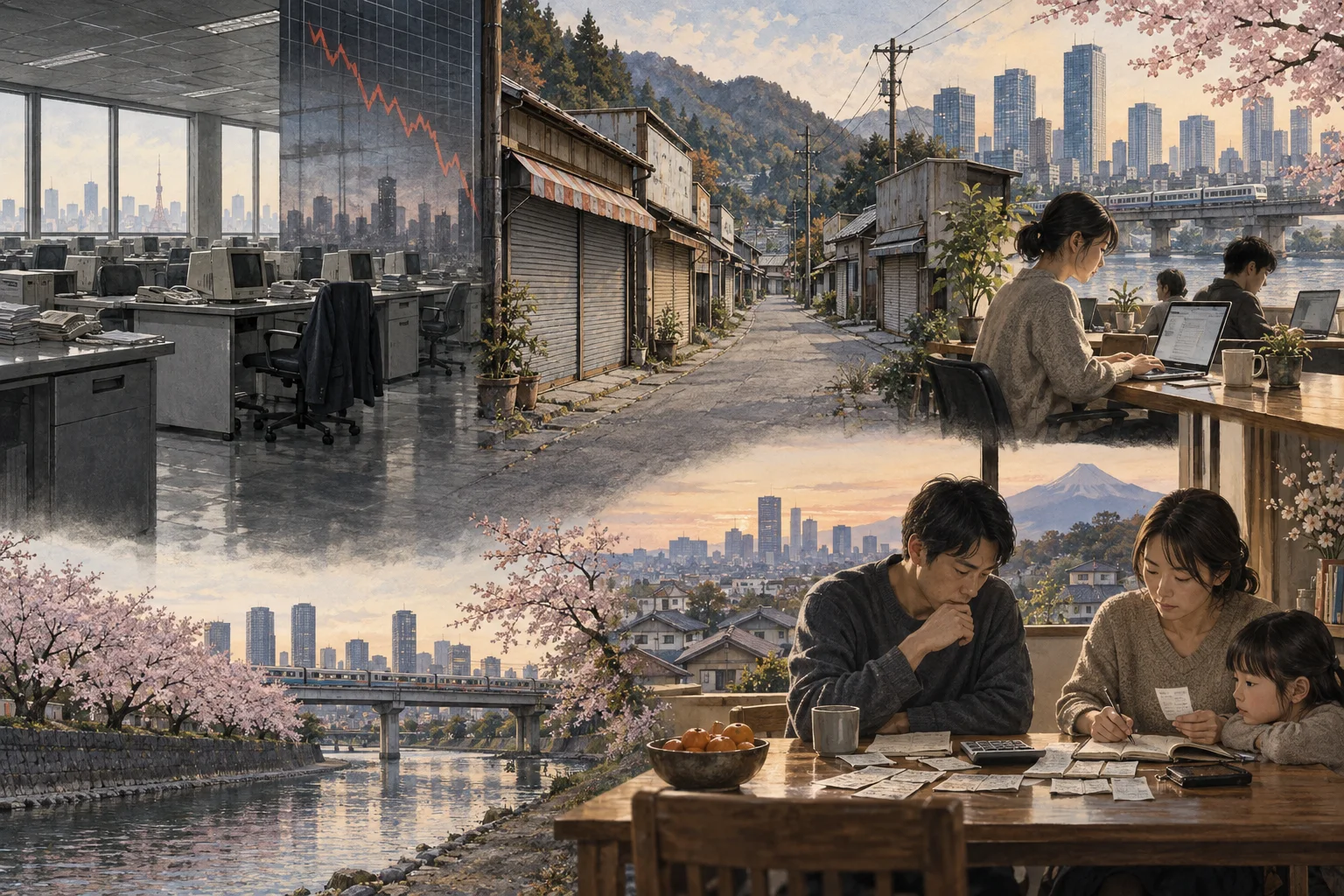
1989年末の日経平均の最高値を再び超えるまでに、34年かかった。
一言で言うと
これだけ覚えれば最低限伝わる一文
Ushinawareta sanjunen, or the lost thirty years, is the long period of flat growth and wages after Japan's bubble collapsed.
失われた30年とは、バブル崩壊のあとに続いた、成長も賃金も伸びない長い期間のことです。
30秒で説明する
外国人に説明するときの標準サイズ
Japan's asset bubble burst at the start of the 1990s, and what followed was not a sharp crash but a long flatness: weak growth, falling or stagnant prices, and wages that barely moved for a generation. It was first called the lost decade, then the lost two decades, and now commonly the lost thirty years. The Nikkei stock index took until February 2024 to pass the level it reached at the end of 1989.
日本の資産バブルは1990年代の初めに崩れ、その後に来たのは急な崩壊ではなく長い平坦さでした。成長は弱く、物価は下がるか横ばいで、賃金は一世代のあいだほとんど動きませんでした。はじめは「失われた10年」、次に「失われた20年」と呼ばれ、今では「失われた30年」と言うのが一般的です。日経平均株価が1989年末の水準を超えるのに、2024年2月までかかりました。
スピーチ・英作文
通訳案内士の二次口述・大学入試の自由英作文に
If you want one number that explains how Japanese people feel about the last thirty years, take the stock market. The Nikkei average closed at 38,915 yen on the 29th of December 1989, at the height of the bubble, and it did not close above that level again until the 22nd of February 2024, thirty-four years and two months later.
The bubble in land and share prices burst at the start of the 1990s, banks were left with bad loans, and instead of a sharp recession the country settled into a long flatness. Prices stopped rising and sometimes fell, which sounds pleasant but discourages spending and investment.
Wages barely moved for a generation, companies hired fewer regular employees and more contract and agency staff, and the young people who graduated into that job market are still called the employment ice age generation. The phrase has grown with time: the lost decade became two, then three. Whether it has ended is argued about every time prices or wages move.
この三十年について日本人がどう感じているかを一つの数字で説明したいなら、株式市場を見てください。日経平均株価はバブルの絶頂だった1989年12月29日に38,915円で引け、その水準を終値で超えるのは、34年2か月後の2024年2月22日でした。
土地と株のバブルは1990年代の初めに崩れ、銀行には不良債権が残り、急激な不況ではなく長い平坦さが国に居座りました。物価は上がらなくなり、ときに下がりました。心地よく聞こえますが、それは消費と投資を鈍らせます。
賃金は一世代のあいだほとんど動かず、企業は正社員の採用を減らして契約や派遣を増やし、その就職市場で卒業した若者は今も「就職氷河期世代」と呼ばれます。言い方は時とともに伸びました。失われた10年が20年になり、30年になりました。それが終わったかどうかは、物価や賃金が動くたびに議論されます。
こう聞かれたら
外国人から実際にされる質問と、その答え方。
Was it really a disaster? Japan still looks prosperous.
本当に危機だったのですか。日本はいまも豊かに見えますが。
That is the honest complication. Unemployment stayed low, streets are safe, public services work, and life expectancy is long. What stalled was growth in income and in opportunity, especially for people entering the workforce, and Japan's relative position among economies fell. Stagnation is not the same as collapse.
そこが正直に言って難しいところです。失業率は低いままで、街は安全で、公共サービスは機能し、寿命は長い。止まったのは所得と機会の伸びで、特に働き始める人にとってそうでした。そして各国の中での相対的な位置が下がりました。停滞は崩壊とは違います。
What is the employment ice age generation?
就職氷河期世代とは何ですか。
People who graduated roughly between the mid-1990s and the mid-2000s, when companies cut new hiring sharply. Many never got onto the regular-employment track and have carried lower pay and less security through their whole careers. Governments have run programs aimed specifically at this group.
おおよそ1990年代半ばから2000年代半ばに卒業した人たちで、企業が新卒採用を大きく絞った時期にあたります。多くは正社員の道に乗れないまま、低い賃金と不安定な立場を職業人生を通じて抱えてきました。政府はこの世代に的を絞った支援策を行っています。
Is it over now?
それはもう終わったのですか。
Opinions differ. Prices and wages have started to move again and the stock market passed its 1989 level in 2024, which some read as the end of the period. Others point out that real wages, adjusted for prices, have been slow to follow. It is safer to describe the debate than to call it.
意見が分かれます。物価と賃金は再び動き始め、株価は2024年に1989年の水準を超えました。これを時代の終わりと読む人もいます。一方で、物価を差し引いた実質賃金の回復は鈍いと指摘する人もいます。結論を出すより、議論があると説明するほうが安全です。
誤解されやすい
MYTHJapan's economy collapsed in the 1990s.
1990年代に日本経済は崩壊した、と思われがちです。
FACTThere was no collapse; there was a long period of very low growth with low unemployment, which is why the damage shows up in wages and opportunity rather than in visible ruin.
崩壊は起きていません。失業率が低いまま成長がきわめて鈍い長い停滞で、だから傷は目に見える荒廃ではなく、賃金と機会に現れています。
そのまま使えるフレーズ
- The bubble burst at the start of the 1990s.バブルは1990年代の初めに崩壊しました。
- Wages barely moved for thirty years.賃金は三十年ほとんど動きませんでした。
- The stock market took until 2024 to recover.株価が戻るのに2024年までかかりました。
- My parents' generation had it easier.親の世代のほうが楽でした。
- People argue about whether it's over.終わったかどうかは意見が分かれます。
説明に使う語句
- stagnation停滞
- deflationデフレ・物価の下落
- bad loans不良債権
- real wages実質賃金
- non-regular employment非正規雇用
- generation世代
動画で見る
YouTube より豆知識
日経平均株価は1989年12月29日に終値38,915円87銭をつけ、これがバブル期の最高値でした。この終値を上回ったのは2024年2月22日で、34年2か月ぶりの更新として大きく報じられました。バブル崩壊後は、銀行の不良債権処理の遅れ、物価の下落、企業の雇用と投資の抑制が重なり、「失われた10年」と呼ばれた期間がのびて「失われた20年」「失われた30年」という言い方が定着しました。1990年代半ばから2000年代半ばに学校を出た世代は新卒採用の絞り込みに直面し、「就職氷河期世代」と呼ばれて、その後の所得や雇用の安定に影響が残ったと指摘されています。近年は物価と賃金が動き始めていますが、実質賃金の回復の度合いについては評価が分かれています。
