檀家離れだんかばなれ
danka banare
the modern trend of families cutting formal ties to their household's Buddhist temple
先祖代々の寺との縁を、墓じまいという形で断つ家が増えている。
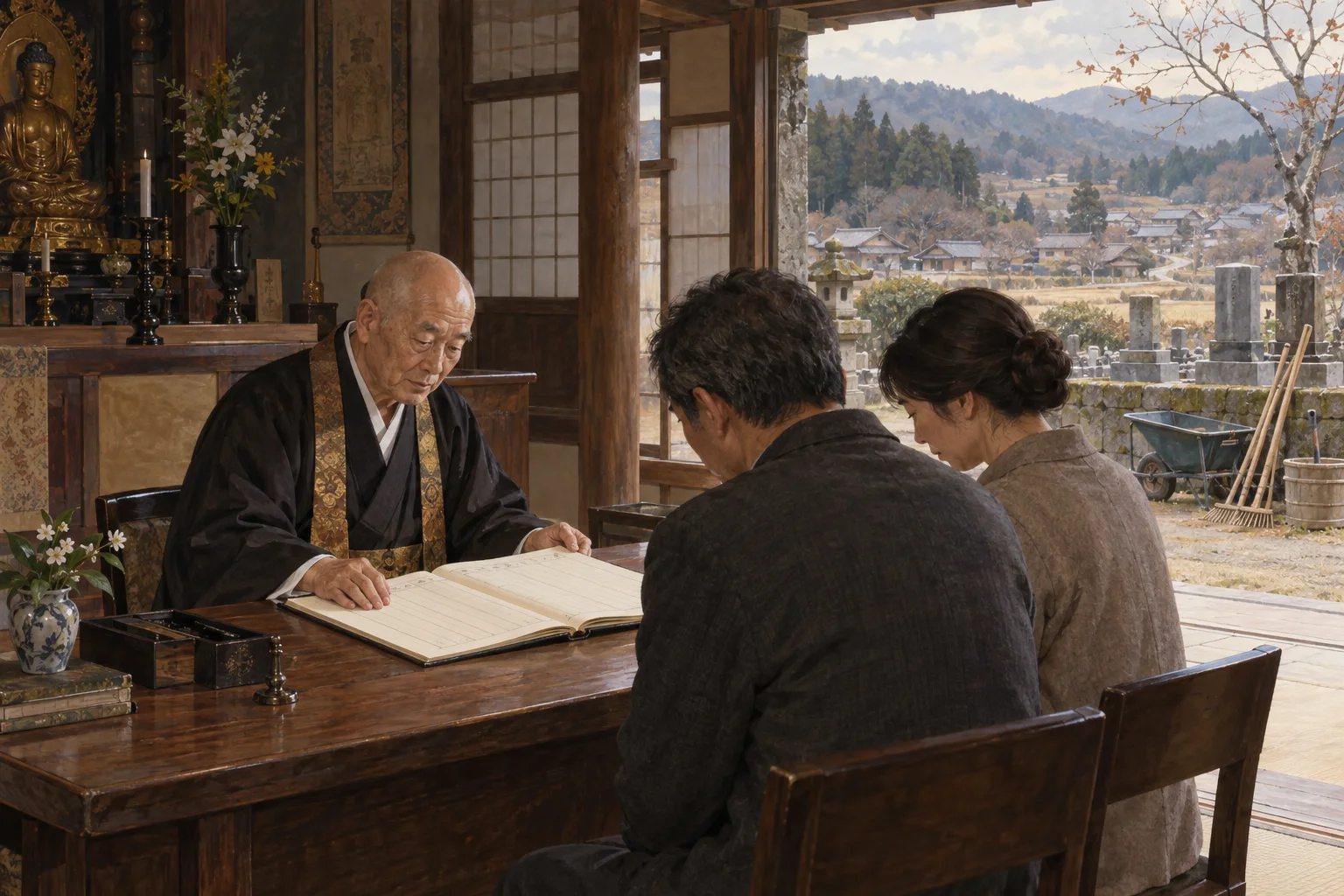
一言で言うと
これだけ覚えれば最低限伝わる一文
Danka-banare is the trend of families formally ending their long-standing registration with the Buddhist temple that handled their ancestors' funerals.
檀家離れとは、先祖の葬儀を担ってきた菩提寺との檀家関係を、家族が正式に解消していく動きのことです。
30秒で説明する
外国人に説明するときの標準サイズ
For centuries, most Japanese households were registered as danka, formal supporters of one Buddhist temple that held their family grave and performed funerals and memorial services. Danka-banare describes families now ending that relationship, often by closing the family grave, a process called hakajimai, and moving ashes to a shared memorial or a plot nearer where they actually live. Urban migration, shrinking families and the cost of upkeep are the main drivers, and it has become a serious financial problem for temples in depopulating rural areas.
何世紀ものあいだ、日本の多くの家庭は一つの寺の「檀家」として登録され、その寺が家の墓を守り、葬儀や法要を担ってきました。檀家離れとは、家族がこの関係を終わらせていく動きを指し、多くの場合「墓じまい」と呼ばれる形でお墓を閉じ、遺骨を合祀墓や、実際に暮らす場所の近くの墓地に移すことを伴います。都市への人口移動、家族の縮小、維持費の負担が主な要因で、人口が減る地方の寺にとっては深刻な財政問題になっています。
スピーチ・英作文
通訳案内士の二次口述・大学入試の自由英作文に
For centuries, most Japanese households were registered as danka, formal supporters of a single Buddhist temple that held the family grave and handled funerals and memorial services generation after generation. Danka-banare, moving away from that arrangement, describes a now-common shift: families formally ending the relationship, often through hakajimai, closing the family grave, having the remains transferred to a communal memorial or a plot closer to where they actually live, and stopping the annual donations that supported the temple.
The reasons are mostly practical rather than religious. Younger generations have moved to cities for work, the eldest son who traditionally inherited responsibility for the grave often lives far away or has no children to pass it on to, and the cost of maintaining a plot and paying annual fees can burden a small, scattered family.
The consequence for many rural temples has been serious. Their income has traditionally depended on individual danka households, so a wave of hakajimai can push a small, old temple toward closure, a trend reported on for years without an obvious fix.
何世紀ものあいだ、日本の多くの家庭は一つの寺の檀家として登録され、その寺が代々にわたって家の墓を守り、葬儀や法要を担ってきました。檀家離れとは、この関係から離れていく今では珍しくない動きを指し、多くの場合「墓じまい」と呼ばれる手続きを通じて、家族が正式に関係を終わらせます。
墓を閉じ、遺骨を合祀墓や、実際に暮らす場所に近い墓地へ移し、それまで寺を支えてきた年会費や寄付を止めます。理由はたいてい信仰の問題というより、実務的なものです。若い世代は仕事のために都市へ移り、伝統的に墓の管理を引き継いできた長男が遠方に住んでいたり、子どもがいなかったりすることも多く、小さくなった家族にとって、墓の維持費と年会費は重い負担になりえます。
多くの地方の寺にとって、この結果は深刻です。寺の収入は昔から個々の檀家に支えられてきたため、墓じまいが相次ぐと、小さな古い寺は廃寺に近づいていきます。はっきりした解決策のないまま、何年も報じられ続けている問題です。
こう聞かれたら
外国人から実際にされる質問と、その答え方。
What exactly is hakajimai?
墓じまいとは具体的に何をすることですか。
It means legally and physically closing a family grave, removing the remains, and either moving them to a new location, such as a communal memorial, or scattering or interring them elsewhere. It requires paperwork with the local government as well as agreement with the temple.
家の墓を法的にも物理的にも閉じ、中の遺骨を取り出して、合祀墓など新しい場所へ移すか、散骨や別の場所への納骨を行うことを意味します。自治体への届け出と、寺との合意の両方が必要になります。
Do temples resist this?
寺はこの動きに抵抗するのですか。
Some do, since it directly affects their income and can feel like a family abandoning a centuries-long relationship, and there have been reported disputes over closing fees. Many temples, though, now offer their own communal memorial options specifically to keep some connection with families who can no longer maintain an individual grave.
収入に直結し、何世紀も続いた関係を家族が手放すように感じられるため、抵抗する寺もあり、離檀料をめぐるトラブルが報じられたこともあります。一方で、個別の墓を維持できなくなった家族ともつながりを保とうと、寺自身が合祀墓のような選択肢を用意する例も増えています。
Is this only happening in the countryside?
これは地方だけで起きていることなのですか。
The financial impact is worst in depopulating rural areas, but the underlying choice, families deciding not to maintain a distant ancestral grave, happens just as often among urban residents whose family temple is now hours away from where they actually live.
財政的な打撃がいちばん深刻なのは人口が減る地方ですが、遠く離れた先祖の墓を維持しないという選択そのものは、実家の菩提寺が今住んでいる場所から何時間も離れている都市部の住民にも同じくらい多く見られます。
そのまま使えるフレーズ
- We closed the family grave and moved to a communal one.家の墓を閉じて、合祀墓に移しました。
- It's called hakajimai, closing the family grave.これを墓じまいと呼びます。
- Many rural temples are struggling financially because of this.この影響で経営に苦しむ地方の寺が多くあります。
- Nobody in the family lives near the old temple anymore.もう家族の誰も昔の寺の近くには住んでいません。
- We still pay our respects, just in a different way.供養の気持ちは変わりませんが、方法を変えただけです。
説明に使う語句
- temple membership檀家
- closing a family grave墓じまい
- communal memorial合祀墓
- annual temple fee護持会費
- depopulation過疎化
動画で見る
YouTube より豆知識
檀家制度は江戸幕府の寺請制度に由来し、明治以降は法的な義務ではなくなったが、慣習として長く残った。近年は都市への人口移動と少子化により、地方の寺院で檀家数の減少が経営上の課題として指摘されている。墓じまいの件数は市区町村への改葬許可申請の統計から把握でき、近年は年間十数万件規模で推移しているとされる。寺との関係を解消する際に高額な離檀料を請求されたという相談が消費生活センターに寄せられる例も報告されている。
