こけしこけし
kokeshi
wooden dolls from the north
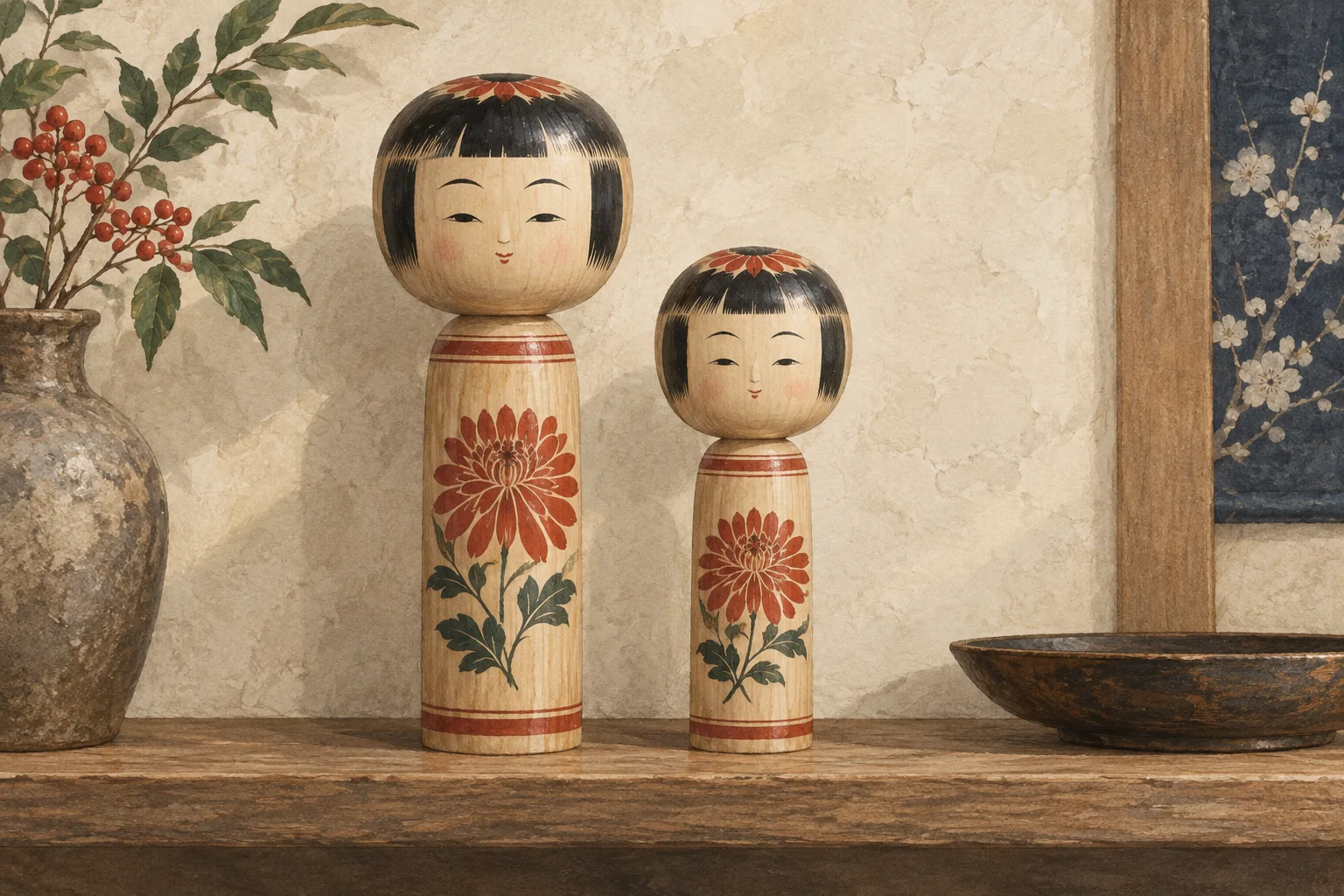
手も足もない。温泉地の木地師が土産に作ったのが始まりとされる。
一言で言うと
これだけ覚えれば最低限伝わる一文
Kokeshi are simple wooden dolls from northern Japan, with a round head and a plain cylindrical body.
こけしとは、丸い頭と円筒形の胴だけでできた、東北の素朴な木の人形です。
30秒で説明する
外国人に説明するときの標準サイズ
Kokeshi are turned wooden dolls from the Tohoku region, with no arms or legs: a head, a body and a painted face. They are thought to have started as souvenirs made by woodworkers in hot spring towns in the nineteenth century. Each area has its own shape and pattern, and collectors can usually name the district from the doll alone.
こけしは東北地方でろくろを使って作られる木の人形で、手も足もなく、頭と胴と描かれた顔だけでできています。19世紀に温泉地の木地師が土産として作り始めたと考えられています。地域ごとに形と模様が決まっていて、収集家はたいてい人形だけで産地を言い当てられます。
スピーチ・英作文
通訳案内士の二次口述・大学入試の自由英作文に
Kokeshi are wooden dolls from the Tohoku region in northern Japan. They have a round head, a straight body, a painted face and no arms or legs at all. The usual account is that woodworkers who made bowls and trays for hot spring towns began turning these dolls as souvenirs in the nineteenth century, and the craft settled into ten or so regional styles.
Those styles are strict. One district gives the doll a wide flat head and a thin body, another paints chrysanthemums, another fits the head so it turns and squeaks. Experienced collectors can often identify a maker from the face alone, and dolls are signed on the base.
The name is written in kana rather than characters, and there are folk explanations of it that connect the dolls to lost children, but these are not supported and the craft community generally rejects them.
こけしは日本の北、東北地方の木の人形です。丸い頭、まっすぐな胴、描かれた顔があり、手も足もまったくありません。ふつう語られるのは、温泉地向けに椀や盆を作っていた木地師が、19世紀に土産としてこの人形をろくろで挽き始めたという経緯で、やがて十ほどの地域ごとの様式にまとまりました。
その様式は厳密です。ある系統は平たく広い頭に細い胴をつけ、別の系統は菊を描き、また別の系統は頭を差し込んで回すと鳴るようにします。慣れた収集家は顔だけで作者を見分けることも多く、人形の底には作者の名が入ります。
名は漢字ではなく仮名で書かれます。失われた子どもと結びつける俗説がありますが、裏づけはなく、産地の側はおおむねこれを否定しています。
こう聞かれたら
外国人から実際にされる質問と、その答え方。
Is it true the name refers to dead children?
その名前が亡くなった子どもを指すというのは本当ですか。
That story circulates, but there is no historical evidence for it and makers' associations reject it. The name is written in kana, so no characters fix a meaning, and older local words for wooden dolls vary from district to district.
その話は流布していますが、歴史的な根拠はなく、産地の組合も否定しています。名は仮名で書かれるので漢字が意味を決めることもなく、木の人形を指す古い方言は地域ごとに違っていました。
How do I tell the styles apart?
様式はどう見分けるのですか。
Look at the head shape, how the head joins the body, and the pattern. Some styles fit the head in so it turns, some carve head and body from one piece, and the painted motifs differ. Museums in the region display them grouped by district.
頭の形、頭と胴のつなぎ方、模様を見てください。頭を差し込んで回る様式もあれば、頭と胴を一本の木から削り出す様式もあり、描かれる文様も異なります。地元の資料館では産地ごとに並べて展示しています。
そのまま使えるフレーズ
- They have no arms or legs at all.手も足もまったくありません。
- Each region has its own style.地域ごとに様式が決まっています。
- The maker signs the base.底に作者の名が入っています。
- They started as hot spring souvenirs.温泉地の土産として始まりました。
説明に使う語句
- wooden doll木の人形
- latheろくろ
- to carve削る
- souvenir土産
動画で見る
YouTube より豆知識
こけしは宮城、山形、福島、岩手、秋田、青森の温泉地を中心に作られ、鳴子、遠刈田、土湯、弥治郎など十ほどの系統に分けられます。作るのは木地師と呼ばれる職人で、材にはミズキやイタヤカエデが使われます。江戸時代後期から明治にかけて成立したと考えられていますが、記録が少なく起源には諸説あります。名を仮名で書く習わしは、1940年に開かれた愛好家の会合で統一されたとされます。近年は伝統の様式によらない創作こけしも作られています。
