暖房器具だんぼうきぐ
danbo kigu
how Japanese homes are heated
家全体ではなく、人のいる部屋だけを暖める考え方。
一言で言うと
これだけ覚えれば最低限伝わる一文
Japanese homes heat the room people are in rather than the whole house.
日本の家は、家全体ではなく、人のいる部屋だけを暖めます。
30秒で説明する
外国人に説明するときの標準サイズ
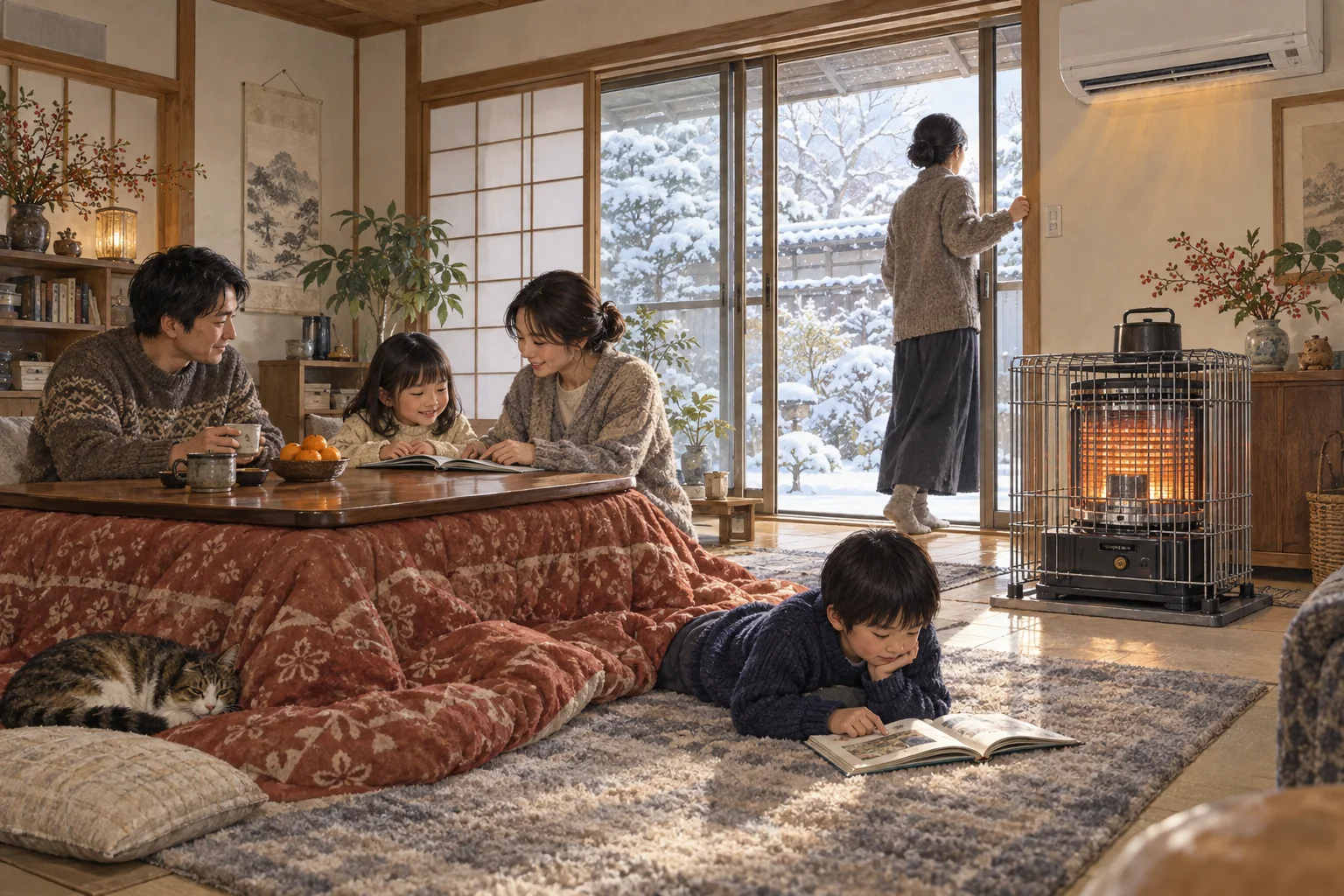
Central heating is rare outside Hokkaido. Most homes use a wall-mounted air conditioner with a heating mode, a kerosene or gas heater, an electric carpet and a kotatsu, heating only the occupied room. Corridors, bathrooms and toilets stay cold, which matters more than it sounds.
北海道以外では、家全体を暖める仕組みはまれです。多くの家は、暖房のついた壁のエアコン、石油やガスのストーブ、電気カーペット、こたつを使い、人のいる部屋だけを暖めます。廊下、脱衣所、トイレは寒いままで、これは聞こえる以上に重い問題です。
スピーチ・英作文
通訳案内士の二次口述・大学入試の自由英作文に
Heating in Japan works on a different principle from northern Europe or North America. Outside Hokkaido, where proper central heating and insulation are standard, homes heat the room that people are in.
The main appliance is a wall-mounted air conditioner running in heating mode, supplemented by a kerosene or gas heater in colder regions, an electric carpet, and the kotatsu, a low table with a heater underneath and a quilt over it. Everything else in the house stays close to the outdoor temperature, and this is not merely uncomfortable.
The temperature difference between a heated living room and a cold bathroom causes a blood pressure shock known here as heat shock, which is linked to deaths among older people during winter bathing, and public health campaigns now advise heating the changing room and the bathroom before use. If you rent here, check what heating the apartment has before winter: an apartment with no air conditioner in the bedroom is a cold apartment.
日本の暖房は、北欧や北米とは違う考え方で成り立っています。しっかりした全館暖房と断熱が標準の北海道を除けば、家は人のいる部屋を暖めます。中心になるのは暖房のついた壁掛けのエアコンで、寒い地域では石油やガスのストーブが加わり、電気カーペットや、天板の下に熱源を入れて布団をかけたこたつが使われます。
家のほかの場所は、外に近い温度のままです。これは単に不快なだけではありません。暖かい居間と寒い浴室の温度差は血圧を急に変動させ、ここではヒートショックと呼ばれます。
冬の入浴中の高齢者の死亡と結びつけられており、公衆衛生の呼びかけでは、脱衣所と浴室を先に暖めるよう勧められています。ここで部屋を借りるなら、冬が来る前にどんな暖房があるかを確かめてください。寝室にエアコンのない部屋は、寒い部屋です。
こう聞かれたら
外国人から実際にされる質問と、その答え方。
Why is central heating so rare?
どうして家全体を暖める暖房が少ないのですか。
Housing was built for humid summers, insulation standards were low until recently, and the habit of heating one room at a time persisted. Newer homes built to current energy standards are considerably better.
住宅が蒸し暑い夏に合わせて作られ、断熱の基準も近年まで低く、一部屋ずつ暖める習慣が残ったからです。今の省エネの基準で建てられた新しい住宅は、かなり改善されています。
Are kerosene heaters safe indoors?
石油ストーブを室内で使っても安全ですか。
They are common and sold everywhere, but they consume oxygen and must be used with regular ventilation. Alarms and automatic shut-offs are standard, and the instruction to air the room every hour is serious.
広く使われ、どこでも売られていますが、酸素を消費するため、定期的な換気が必要です。警報や自動停止の機能は標準になっています。一時間ごとに換気するという注意書きは、本気で守るべきものです。
What is heat shock?
ヒートショックとは何ですか。
The sudden blood pressure change from moving between a warm room and a cold bathroom, then into a hot bath. It is a recognized winter risk for older people, and warming the changing area first reduces it.
暖かい部屋から寒い脱衣所へ移り、熱い湯に入ることで血圧が急に変動することです。高齢者にとって冬の危険として知られており、脱衣所を先に暖めることで和らげられます。
そのまま使えるフレーズ
- Only this room is heated.暖房はこの部屋だけです。
- Please ventilate every hour.一時間ごとに換気してください。
- Warm the changing room first.先に脱衣所を暖めてください。
- Come under the kotatsu.こたつに入ってください。
- The corridor is freezing.廊下は冷えます。
説明に使う語句
- heating暖房
- kerosene heater石油ストーブ
- electric carpet電気カーペット
- ventilation換気
- insulation断熱
動画で見る
YouTube より豆知識
日本の住宅では、部屋ごとに暖める個別暖房が主流で、エアコンの暖房運転、石油ファンヒーター、ガスファンヒーター、電気カーペット、こたつが使われます。北海道や東北の一部では、断熱と全館暖房が普及しています。住宅の断熱については省エネ基準が段階的に引き上げられ、2025年度からは新築住宅に省エネ基準への適合が義務づけられました。冬の入浴時の急激な温度差による健康被害は、ヒートショックとして注意が呼びかけられています。
