廃藩置県はいはんちけん
haihan-chiken
the abolition of the feudal domains
一日で、三百近くあった藩が消え、県になった。
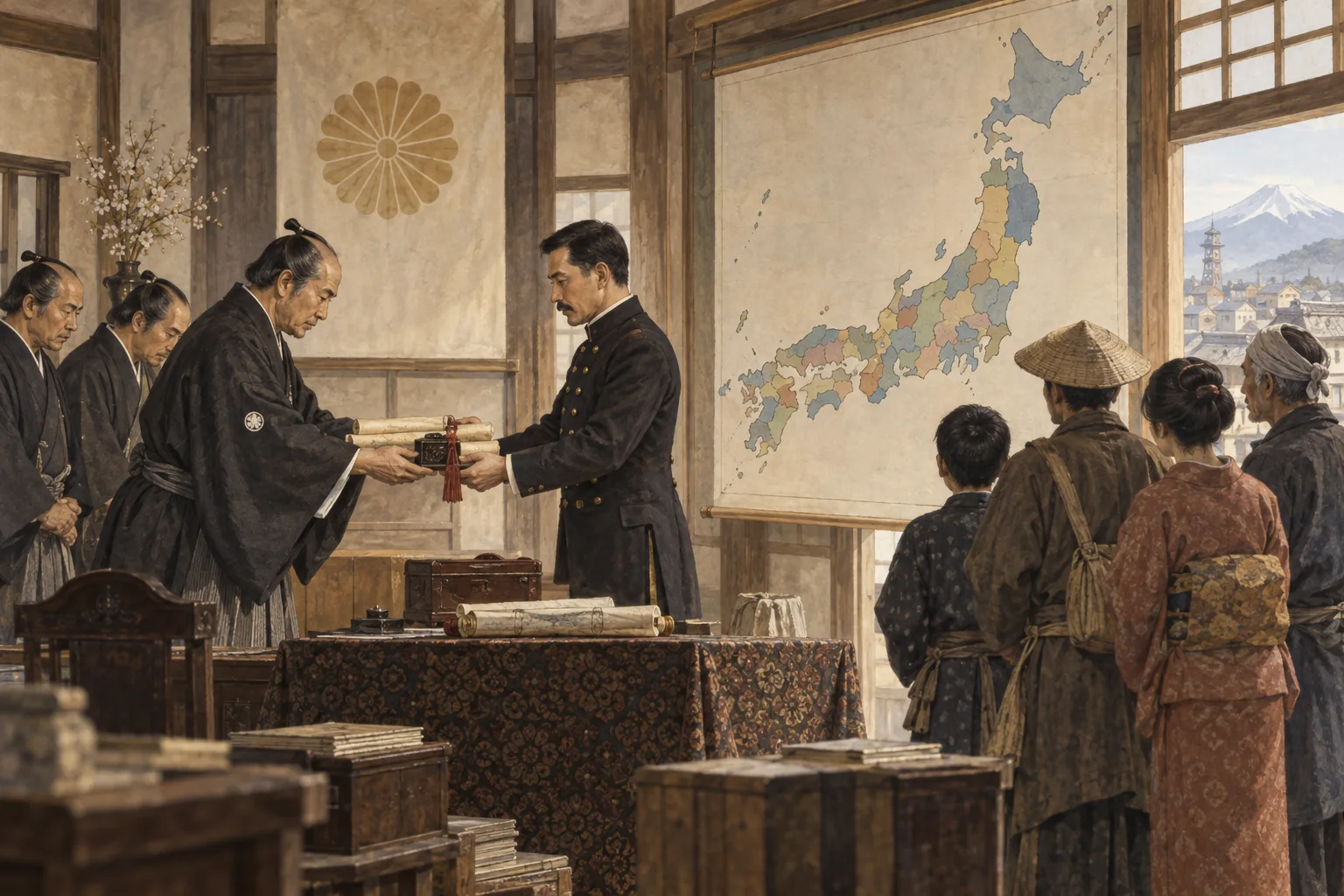
一言で言うと
これだけ覚えれば最低限伝わる一文
Haihan-chiken was the 1871 reform that abolished Japan's feudal domains and replaced them with centrally run prefectures.
廃藩置県とは、1871年に藩を廃止し、中央が治める県に置き換えた改革のことです。
30秒で説明する
外国人に説明するときの標準サイズ
In the summer of 1871, the Meiji government abolished every remaining feudal domain and replaced them with prefectures answering directly to Tokyo. Former domain lords lost their hereditary rule and were reassigned or pensioned off, while governors appointed by the central government took over. The country initially had over three hundred units, consolidated within months to a much smaller number. It ended the domain system that had organized Japan for centuries.
1871年(明治4年)の夏、明治政府はまだ残っていた藩をすべて廃止し、東京の中央政府に直属する県に置き換えました。かつての藩主は世襲の支配を失い、他の役職に移されたり手当を受けたりする立場となり、中央から任命された県令や知事が代わって治めました。当初は三百を超える数だった単位は、数か月のうちにずっと少ない数へまとめられます。これにより、何世紀も日本を組織してきた藩の仕組みが終わりました。
スピーチ・英作文
通訳案内士の二次口述・大学入試の自由英作文に
Haihan-chiken, abolishing the domains and establishing prefectures, is the reform that actually finished off Japan's feudal system, and it happened astonishingly fast. Two years earlier, in 1869, domain lords had already handed their land registers back to the emperor in a step called hanseki-hokan, but they stayed on as governors of their own former domains, so the old power structure was mostly intact underneath a new title. In the summer of 1871, the government went further and simply abolished the domains outright, replacing all of them with prefectures run by governors appointed from the center, with no hereditary claim to the post.
There were over three hundred of these units at first, a number reflecting the old patchwork of domain borders, and within months the government consolidated them down to a much smaller number that more closely resembles today's map. Former lords were compensated with a stipend and had already been given a place in the new aristocracy, the kazoku, created in 1869, which is part of why the change happened with less resistance than you might expect for the end of a centuries-old system.
廃藩置県、すなわち藩を廃止して県を置く改革は、日本の封建制を実質的に終わらせた改革であり、それが驚くほど短い期間で実行されました。二年前の1869年、藩主はすでに版籍奉還という形で土地と戸籍の台帳を天皇に返していましたが、そのまま自分の旧藩の知藩事として留まっており、肩書きは変わっても、その下の権力の構造はおおむねそのままでした。
1871年(明治4年)の夏、政府はさらに踏み込み、藩そのものを廃止して、世襲の権利を持たない、中央から任命された県令が治める県にすべて置き換えます。当初は三百を超える数の単位があり、それは旧来の藩の境界が入り組んでいたことを反映していましたが、数か月のうちに、今の都道府県の姿にずっと近い、はるかに少ない数へと整理されました。
旧藩主には手当が与えられ、1869年に設けられた華族という新しい身分にもすでに列せられていました。これも、何世紀も続いた仕組みの終わりにしては抵抗が少なかった理由の一つとされます。
こう聞かれたら
外国人から実際にされる質問と、その答え方。
Why didn't the domain lords fight back?
藩主たちはなぜ反発しなかったのですか。
Many domains were financially strained after years of upheaval, and the government offered compensation, a stipend and status in the new aristocracy, which softened the loss. There was resistance in some places, but no nationwide uprising against the reform itself.
多くの藩は長く続いた混乱で財政が苦しく、政府は手当や新しい華族の身分を用意して埋め合わせをしました。地域によっては反発もありましたが、改革そのものに対する全国的な反乱にはなりませんでした。
Was this the same thing as the domains returning their land in 1869?
1869年に藩が土地を返したのと同じことなのですか。
No, that was an earlier and gentler step called hanseki-hokan, where lords handed back their land registers but kept governing as appointed officials. Haihan-chiken in 1871 removed them from power entirely and replaced the domains with prefectures.
違います。それは1869年の版籍奉還という、より緩やかな前段階で、藩主は土地の台帳を返しても、任命された役人として統治を続けていました。1871年の廃藩置県は、彼らを完全に権力の座から外し、藩そのものを県に置き換えるものでした。
How many prefectures were there right after the reform?
改革の直後は、いくつの県があったのですか。
Initially over three hundred, since the new units mostly followed old domain boundaries. The government merged them into seventy-five within the same year, and further mergers over the next two decades brought the number close to today's forty-seven.
当初は三百を超えていました。新しい単位が、おおむね旧来の藩の境界を引き継いでいたためです。政府は同じ年のうちにこれを3府72県に統合し、その後二十年ほどの統合を経て、今の47都道府県に近い数になりました。
そのまま使えるフレーズ
- The domains were abolished and replaced with prefectures.藩は廃止され、県に置き換えられました。
- The old lord lost his hereditary rule.旧藩主は世襲の支配を失いました。
- A governor was appointed from the center.中央から知事が任命されました。
- This ended centuries of the domain system.これにより何世紀も続いた藩の仕組みが終わりました。
- The number of units shrank within months.その単位の数は数か月で減りました。
説明に使う語句
- feudal domain藩
- prefecture県
- appointed governor県令
- domain lord藩主
- centralization中央集権
動画で見る
YouTube より豆知識
廃藩置県は明治4年7月14日(1871年8月29日)に断行され、藩はいったんすべて県となり、当初は3府302県が置かれた。同年末までに府県の統合が進み、3府72県に整理された。前段階にあたる1869年の版籍奉還では、藩主は土地と戸籍の台帳を天皇に返上したものの、知藩事としてそのまま藩政を担っており、廃藩置県によって初めて藩主による統治そのものが終わった。旧藩主には家禄が与えられ、1869年に設けられた華族の身分に列せられていた。
