団地だんち
danchi
postwar public housing estates
戦後の憧れの住まい。今はその住民が高齢化している。
一言で言うと
これだけ覚えれば最低限伝わる一文
Danchi are the concrete housing estates built after the war to house Japan's growing cities.
団地とは、戦後に増える都市の人口を受け止めるために建てられた、鉄筋コンクリートの集合住宅群です。
30秒で説明する
外国人に説明するときの標準サイズ
Danchi are blocks of public or semi-public apartments built from the 1950s onward, when cities were short of housing. They introduced the modern Japanese apartment layout, with a dining kitchen, a flush toilet and a private bath. Once aspirational, many are now aging along with their residents.
団地は、都市の住宅が足りなかった1950年代以降に建てられた、公的な集合住宅の一群です。ダイニングキッチン、水洗トイレ、各戸の浴室という、現在に続く日本の住まいの間取りを広めました。かつては憧れの住まいでしたが、今は建物も住民も高齢化しています。
スピーチ・英作文
通訳案内士の二次口述・大学入試の自由英作文に
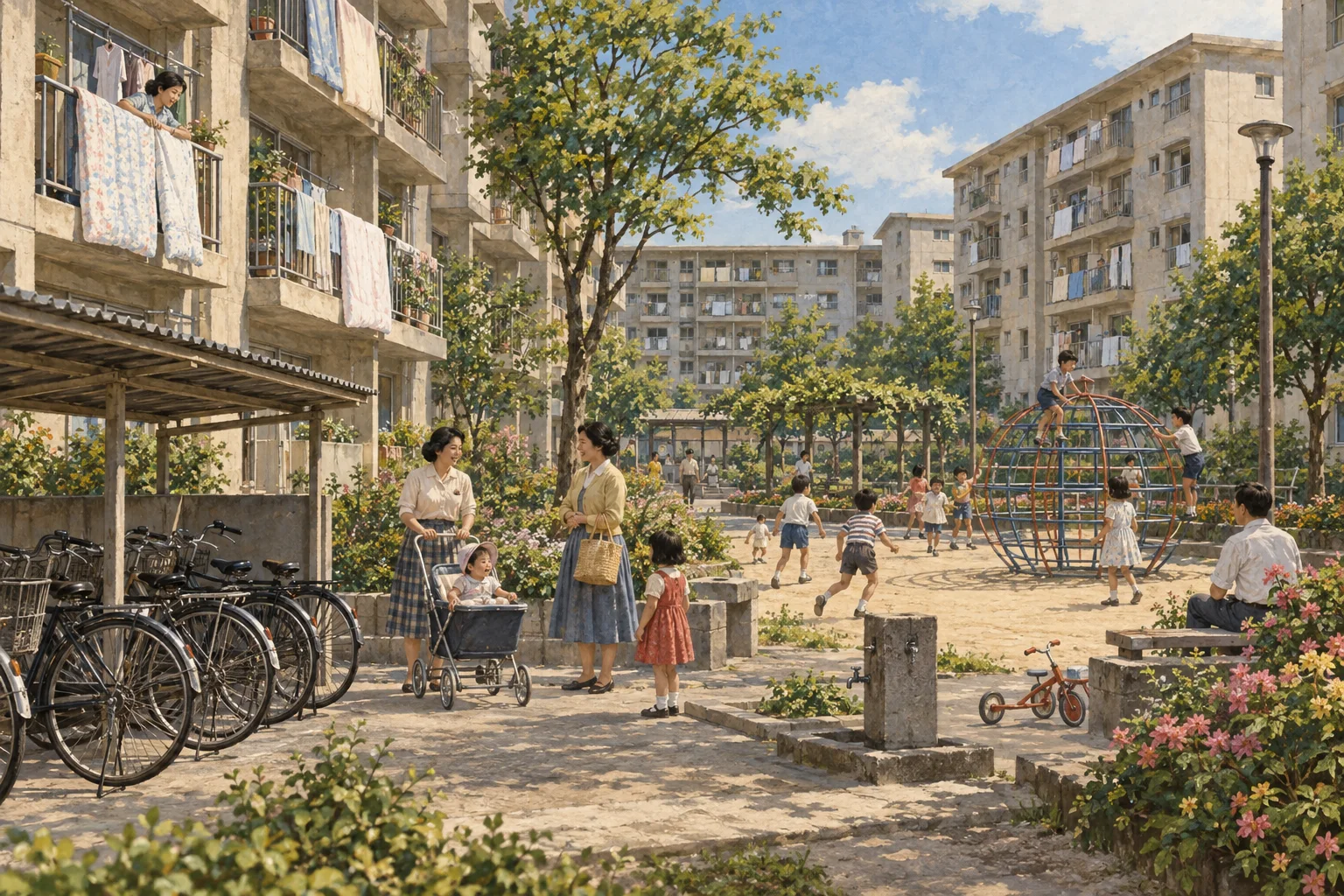
Danchi are the apartment estates that housed Japan's postwar urban boom. A public corporation set up in 1955 built them at speed on the edges of growing cities: identical concrete blocks, four or five stories, arranged around open ground.
What they offered was genuinely new for most families, including a private bath, a flush toilet, and a room where you both cooked and ate, which was labeled on the plans as a dining kitchen and gave Japanese the letters DK that still appear in apartment listings today. Moving into one was a step up, and the lottery for a unit could be heavily oversubscribed.
Seventy years later the picture has changed. Many estates are aging, elevators were never installed in the older blocks, and residents who arrived as young couples are now in their eighties. Some estates have been renovated or opened to students and foreign residents, and the danchi has become a subject of photography and nostalgia.
団地は、戦後の都市の膨張を受け止めた集合住宅の群れです。1955年に設立された公団が、育ちつつある都市の外縁に急いで建てました。同じ形の鉄筋の棟が四、五階建てで並び、その間に空き地が取られています。そこにあったものは、当時の多くの家族にとって本当に新しいものでした。
各戸の浴室、水洗トイレ、そして料理をして食事もする部屋です。図面にはダイニングキッチンと記され、今も賃貸の広告に並ぶDKという記号はここから来ています。団地に移ることは暮らしの前進であり、入居の抽選は何倍もの倍率になることがありました。
七十年が過ぎ、光景は変わりました。多くの団地で建物が古くなり、古い棟にはそもそも昇降機がなく、若い夫婦として入居した住民は八十代になっています。改修して学生や外国人の住民に開いた団地もあり、団地そのものが写真や懐かしさの対象になりました。
こう聞かれたら
外国人から実際にされる質問と、その答え方。
Are danchi public housing for low-income families?
団地は低所得者向けの公営住宅ですか。
Not originally. The postwar corporation housing was aimed at ordinary salaried families and required a steady income. Separate municipal housing with income limits also exists, and the two are often confused.
もとはそうではありません。公団の住宅は、ふつうの給与所得の家族に向けたもので、安定した収入が必要でした。所得の制限がある公営住宅は別にあり、この二つはよく混同されます。
What does DK or LDK mean?
DKやLDKとはどういう意味ですか。
The number is the count of rooms, and the letters mean dining kitchen or living dining kitchen. The abbreviation spread with danchi floor plans and is still the standard way to describe an apartment.
数字は部屋の数、記号はダイニングキッチン、リビングダイニングキッチンを表します。この書き方は団地の間取り図とともに広まり、今も住まいを言い表す標準の方法です。
Can I rent in one now?
今でも借りられますか。
Often yes, and some are notably easy to rent because they charge no key money, no renewal fee and no guarantor in certain schemes. The trade-off is age, stairs in older blocks, and distance from the station.
借りられることが多く、制度によっては礼金も更新料も保証人も不要なので、かえって入りやすい場合があります。引き換えになるのは、建物の古さ、古い棟の階段、そして駅からの距離です。
そのまま使えるフレーズ
- This estate was built in the 1960s.この団地は1960年代に建てられました。
- There's no elevator in this block.この棟には昇降機がありません。
- The layout is two rooms plus a dining kitchen.間取りは2DKです。
- Many residents have lived here for decades.何十年も住んでいる方が多いです。
- The rent is low for the size.広さのわりに家賃が安いです。
説明に使う語句
- housing estate団地
- floor plan間取り
- dining kitchenダイニングキッチン
- aging of residents住民の高齢化
- renovation改修
動画で見る
YouTube より豆知識
日本住宅公団は1955年に設立され、都市の住宅不足に応えて大規模な団地を建てました。台所と食事の場をひとつにしたダイニングキッチンの間取りはここで広まり、住まいを1DK、2LDKのように記す方法が定着しました。ステンレスの流し台、ベランダ、水洗トイレは当時の新しさの象徴でした。その後、公団の事業は組織の改編を経て引き継がれています。近年は空き住戸を改修して若い世代を呼び込む試みや、団地の建て替えが各地で進んでいます。
