2026年11月15日(日)(バックナンバー)
今日の日本文化
七五三と昆布とかまぼこの日
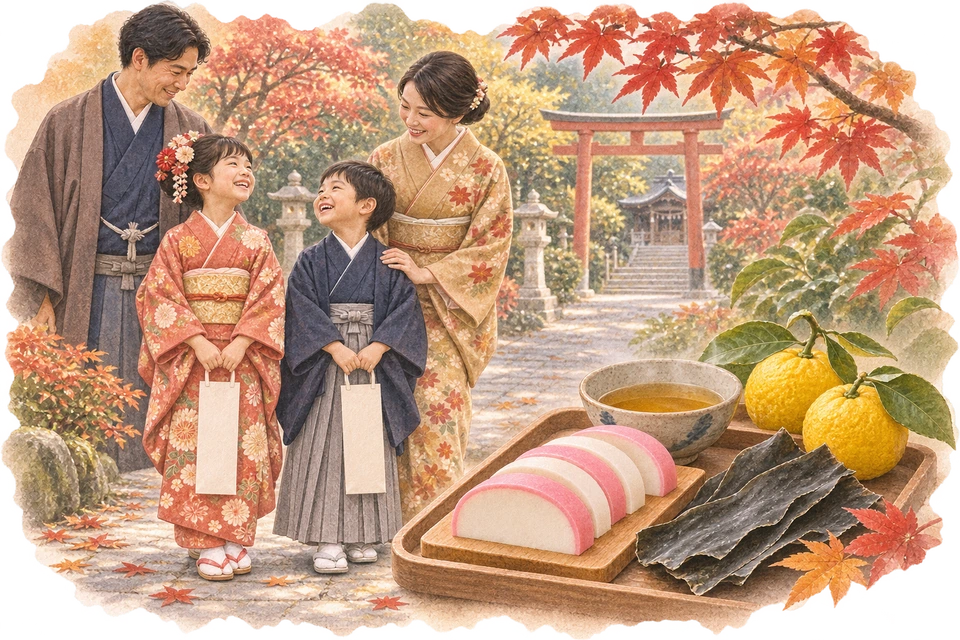
今日11月15日は七五三の日です。この日に合わせて、昆布やかまぼこ、着物の業界も記念日を定めています。子どもの成長を祝う日に、縁起のよい食べものと晴れ着がそろう一日です。
今日は何の日
-
七五三Shichi-Go-San
Shichi-Go-San means "seven-five-three." Families take children of those ages to a shrine to give thanks and pray for their health. November 15th is the traditional date, but many families now go on a weekend in October or November. Girls often wear kimono, and boys often wear hakama, a formal pleated skirt.
七五三は「7・5・3」という意味です。その年ごろの子どもを家族が神社に連れて行き、成長に感謝し、健康を祈ります。昔からの日付は11月15日ですが、いまは10月や11月の週末に出かける家庭が多くなっています。女の子は着物、男の子はひだの入った正装の袴を身につけることがよくあります。
辞典でくわしく › -
1982年制定昆布の日Kombu Day
The Japan Kombu Association chose this date in 1982. They wanted children to get into the habit of eating kombu, or kelp, so they matched it with Shichi-Go-San. It's also the time of year when the new season's kombu reaches the market. Kombu is the base of dashi, the soup stock behind so much Japanese cooking.
日本昆布協会が1982年にこの日を定めました。子どもたちに昆布を食べる習慣をつけてほしいと考え、七五三に合わせたのです。新しい昆布が市場に出回る時期でもあります。昆布は、日本料理の多くを支えるだしのもとです。
辞典でくわしく › -
かまぼこの日Kamaboko Day
Kamaboko is a fish cake made from ground white fish, often shaped into a half-round loaf on a small wooden board. According to the national kamaboko makers' association, it first appears in writing in 1115, as part of a celebration meal. The numbers 11 and 15 gave them today's date. Red and white kamaboko is a must in osechi, the special food for New Year.
かまぼこは、白身魚のすり身で作る練り物で、小さな板の上に半円形に盛り上げたものがよく知られています。かまぼこの業界団体によると、かまぼこが初めて文献に出てくるのは1115年で、祝いの膳の一品としてでした。この11と15から、今日が記念日になりました。紅白のかまぼこは、おせち料理に欠かせません。
辞典でくわしく › -
きものの日Kimono Day
The kimono industry also marks November 15th as Kimono Day. The idea is said to be simple: on Shichi-Go-San, the whole family can put on kimono and go out together, not just the child. Today many Japanese people wear kimono only on special occasions, such as Shichi-Go-San, coming-of-age ceremonies, and weddings.
着物の業界も、11月15日を「きものの日」としています。七五三の日には、子どもだけでなく家族そろって着物で出かけてほしい、という思いからとされます。いまでは、着物を着るのは七五三や成人式、結婚式などの特別な日だけ、という日本人が多くなっています。
辞典でくわしく ›
今日の三択クイズ
11月15日が「かまぼこの日」になったのは、かまぼこが初めて文献に出てくる年にちなんでいます。それは何年でしょう?
正解は1115年(永久3年)、平安時代の後期です。かまぼこの業界団体によると、この年の祝宴の膳の中に、かまぼこが初めて記録されています。昔のかまぼこは竹の棒にすり身をつけて焼いたものだったとされ、その形が水辺の植物「蒲(がま)」の穂に似ていたことが名前の由来と言われます。今でいう、ちくわに近い姿です。
外国人に聞かれたら
I saw kids in kimono at a shrine today. Was it a special day?
今日、神社で着物を着た子どもたちを見たよ。何か特別な日だったの?
Yes, that was probably Shichi-Go-San. It's a celebration for kids aged three, five, and seven, and November 15th is the traditional day for it. Families dress the kids up, visit a shrine to pray for their health, and often have professional photos taken. Many kids also get chitose-ame, a long stick of candy that stands for a long life.
うん、たぶん七五三だね。3歳・5歳・7歳の子どものお祝いで、11月15日が昔からの日なんだ。子どもに晴れ着を着せて、神社で健康を祈って、写真館で記念写真を撮ることも多いよ。千歳飴をもらう子も多いんだ。長生きを表す、細長い棒の飴だよ。
今日のひとこと英語
She's wearing a kimono for Shichi-Go-San.
あの子は七五三で着物を着ているんです。
「着物を着ている」は wear a kimono または be in a kimono。put on は「着る動作」なので、着ている状態には使いません。kimono は英語でも数えられる名詞として扱うことが多く、1着なら a kimono と a を付けます。
今日の一文
November 15th is all about kids growing up healthy. Families visit shrines for Shichi-Go-San, and the kombu, kamaboko, and kimono industries all chose this date for their own days.
11月15日は、子どもが元気に育つことを願う日です。家族は七五三で神社にお参りし、昆布やかまぼこ、着物の業界も、そろってこの日を自分たちの記念日に選びました。
今日の読みもの
今日に関係する項目
- 冠婚葬祭標準 七五三shichi-go-santhe festival for children aged seven, five and three なぜ7・5・3なのか。子どもが育つことが当たり前ではなかった時代の名残。
- 着物標準 七五三の晴れ着shichigosan no haregithe special outfit children wear for the Shichi-Go-San ceremony 3歳・5歳・7歳の子が着る特別な晴れ着。今は写真館とレンタルがセットに。
- 食べもの標準 千歳飴chitose-amelong red-and-white candy sticks given to children at shichi-go-san 七五三の写真に必ず写る、紅白の細長い飴。長さそのものが「長生き」の願い。
- 食べもの必修 昆布konbuthe kelp that gives Japanese stock its savory depth 「うま味」は、この昆布のだしから見つかった。1908年のことである。
- 食べもの標準 かまぼこkamabokosteamed fish cake, often served on a small wooden board 板の上の、ぷりっとした白と赤。文献に出てから900年以上になる、魚のすり身の練り物。
- 着物必修 着物kimonothe traditional Japanese garment 日常着ではない。「日本人は毎日着ているの?」に、どう答えるか。