2026年11月12日(木)(バックナンバー)
今日の日本文化
洋服と皮膚と霜柱の日
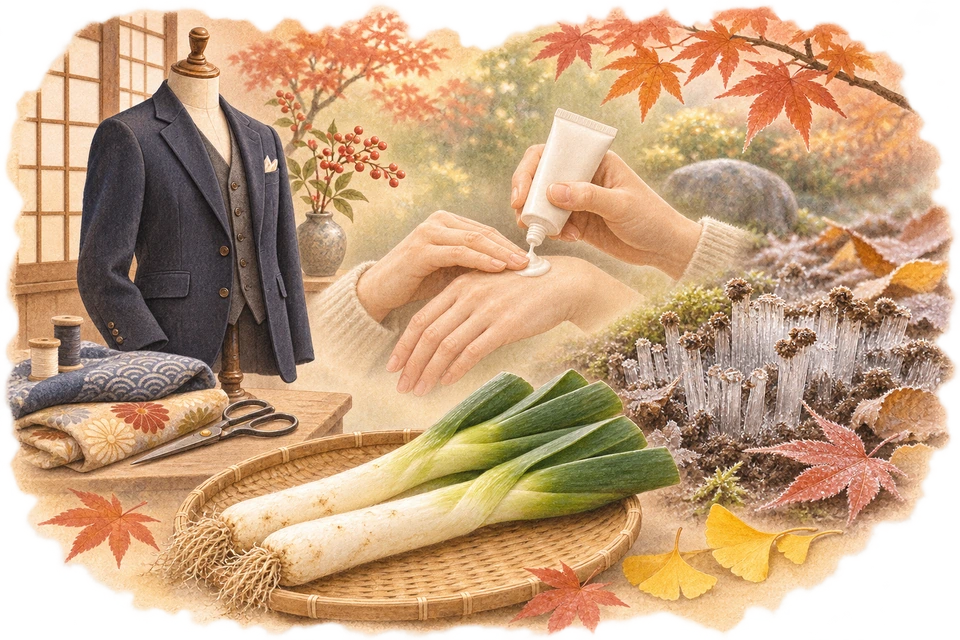
今日11月12日は「洋服記念日」です。明治のはじめ、役人が儀式で着る礼服が、和服から洋服に切り替えられたことにちなみます。「いい(11)ひ(1)ふ(2)」で「皮膚の日」でもあり、暦の上ではこのころから、大地が凍りはじめる「地始凍(ちはじめてこおる)」に入ります。
今日は何の日
-
洋服記念日Western Clothing Day
In 1872, the new Meiji government decided that officials would wear Western-style formal dress at ceremonies instead of traditional court robes. The order came out on the 12th day of the 11th month by the old calendar, so tailors in Japan later made November 12th Western Clothing Day. Most ordinary people, though, kept wearing kimono for decades after that.
1872年、明治の新しい政府は、役人が儀式で着る礼服を、それまでの伝統的な装束から洋服に改めると決めました。この布告が出たのが旧暦の11月12日だったことから、のちに日本の洋服の仕立て業者が、11月12日を洋服記念日としました。ただし、一般の人の多くは、その後も何十年も着物を着続けました。
辞典でくわしく › -
1989年制定皮膚の日Skin Day
In 1989, an association of Japanese dermatologists named November 12th Skin Day. The reason is a pun: 11-12 can be read "ii hifu," which means "good skin." It's good timing, too. The air in much of Japan gets very dry from now on, and many people start using hand cream and moisturizer every day.
1989年、日本臨床皮膚科医会が11月12日を「皮膚の日」と定めました。理由は語呂合わせで、11・12を「いいひふ」と読めるからです。時期もちょうどいいのです。日本の多くの地域では、ここから空気がとても乾燥し、ハンドクリームや保湿クリームを毎日使いはじめる人が増えます。
-
七十二候「地始凍(ちはじめてこおる)」"The Ground Begins to Freeze" (one of the 72 microseasons)
The old calendar splits the year into 72 short seasons of about five days each. The one that starts around now is called "The ground begins to freeze." In colder parts of Japan, the soil freezes at night, and thin columns of ice called shimobashira, or frost needles, push up from the ground. They make a crunching sound when you step on them.
昔の暦は、1年をおよそ5日ずつ、72の短い季節に分けています。このころから始まるのが「地始凍(ちはじめてこおる)」です。寒い地域では夜のあいだに土が凍り、「霜柱」と呼ばれる細い氷の柱が地面から立ち上がります。踏むと、さくさくと音がします。
辞典でくわしく ›
今日の三択クイズ
1872年の布告で、和服から洋服に切り替えられたのは、どんな服だったでしょう?
正解は「役人が儀式で着る礼服」です。直垂(ひたたれ)や狩衣(かりぎぬ)といった伝統的な装束が廃止され、フランスの服制を参考にした洋式の大礼服が定められました。一般の人の服装を変えさせる決まりではなかったので、町の人々の多くはその後も長く着物で暮らしました。日本人が日常的に洋服を着るようになったのは、それよりずっと後のことです。
外国人に聞かれたら
Do Japanese people still wear kimono in everyday life?
日本の人は、今でもふだんから着物を着ているの?
Very few people do. Most of us wear Western clothes every day, just like you. Kimono are mostly for special occasions now, like weddings, the Coming of Age ceremony, or a college graduation, where many women wear hakama. In summer, though, you'll see lots of people in yukata, a light cotton kimono, at fireworks shows and festivals.
ふだん着ている人は、ほとんどいません。たいていの人は、あなたと同じように毎日洋服を着ています。今では着物は、結婚式や成人式、大学の卒業式(女性の多くが袴を着ます)のような特別な日に着るものです。ただ、夏の花火大会やお祭りでは、薄い木綿の着物である浴衣を着た人をたくさん見かけますよ。
今日のひとこと英語
My skin gets really dry in winter.
冬になると、肌がすごく乾燥するんです。
「乾燥肌」は dry skin です。「肌荒れ」は rough skin や skin irritation と言います。「スキントラブル」は英語では通じにくいので、skin problems と言いましょう。
今日の一文
November 12th is Western Clothing Day, because Japanese officials switched to Western formal dress in 1872. It's also Skin Day, from the pun "ii hifu," or "good skin," and around now the ground in colder parts of Japan starts to freeze at night.
11月12日は、1872年に日本の役人の礼服が洋服に切り替わったことから「洋服記念日」です。「いいひふ」の語呂合わせで「皮膚の日」でもあり、このころから、寒い地域では夜のあいだに地面が凍りはじめます。
今日の読みもの
今日に関係する項目
- 着物標準 背広sebirobusiness suit; a man's suit for work 「スーツ」の古い呼び名。語源はロンドンの通りの名か、それとも……。諸説ある言葉。
- 歴史応用 文明開化bunmei kaikathe rush to westernize 三十年で、髷を切り、洋服を着て、鉄道を敷いた。
- 着物必修 着物kimonothe traditional Japanese garment 日常着ではない。「日本人は毎日着ているの?」に、どう答えるか。
- 季節標準 霜柱shimobashirafrost needles; thin columns of ice that grow out of the soil 冬の朝、踏むとさくさく鳴る氷の柱。空からではなく、土の中から伸びてくる。
- 年中行事標準 立冬rittothe start of winter in the traditional calendar, around November 7th 11月の初めに「暦の上では冬」。寒くもないのに冬と呼ぶ理由がある。
- 妖怪応用 ねぎを首に巻くnegi o kubi ni makuwrapping a green onion around your neck to treat a cold 風邪をひいたら、焼いたねぎを首に。おばあちゃん直伝の、効くかどうか分からない知恵。