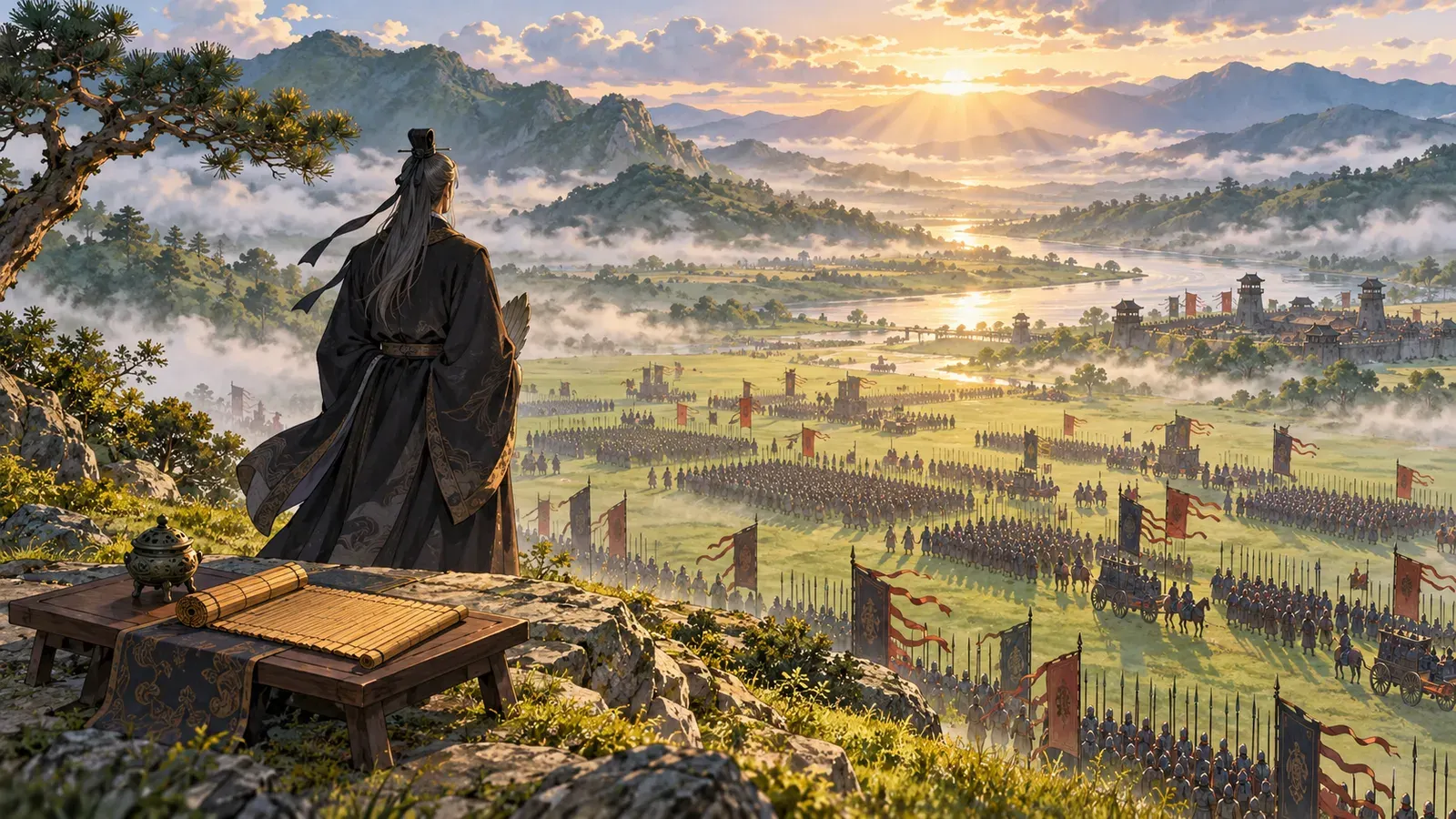
1. Sun Tzŭ said: The art of war is of vital importance to the State.
1. 孫子は言う。戦争は国家にとって重大事である。
2. It is a matter of life and death, a road either to safety or to ruin. Hence it is a subject of inquiry which can on no account be neglected.
2. 戦争には人の生き死にがかかっており、国が生き残るか滅びるかの分かれ道となる。だから、どうしてもよく考え抜いておかなければならない。
3. The art of war, then, is governed by five constant factors, to be taken into account in one's deliberations, when seeking to determine the conditions obtaining in the field.
3. 戦争の勝ち負けは、五つの変わらない要素で決まる。戦場の状況を見定めようとするときは、この五つをもとによく考えなければならない。
4. These are: (1) The Moral Law; (2) Heaven; (3) Earth; (4) The Commander; (5) Method and discipline.
4. その五つとは、(1) 道(人の道)、(2) 天、(3) 地、(4) 将(指揮官)、(5) 法(編成と規律)である。
5, 6. The Moral Law causes the people to be in complete accord with their ruler, so that they will follow him regardless of their lives, undismayed by any danger.
5, 6. 道とは、民の心を君主とぴったり一つにするものである。そうなれば民は、命を惜しまず君主に従い、どんな危険にもひるまない。
7. Heaven signifies night and day, cold and heat, times and seasons.
7. 天とは、夜と昼、寒さと暑さ、時と季節のことである。
8. Earth comprises distances, great and small; danger and security; open ground and narrow passes; the chances of life and death.
8. 地とは、道のりの遠い近い、地形の危険と安全、開けた土地と狭い通り道、そして生き残れる場所か死ぬ場所かということである。
9. The Commander stands for the virtues of wisdom, sincerity, benevolence, courage and strictness.
9. 将とは、知恵、誠実さ、思いやり、勇気、厳しさという徳をそなえていることである。
10. By Method and discipline are to be understood the marshalling of the army in its proper subdivisions, the gradations of rank among the officers, the maintenance of roads by which supplies may reach the army, and the control of military expenditure.
10. 法とは、軍をきちんと部隊に分けて編成すること、将校の階級の序列、軍に物資を送り届ける道を確保すること、そして軍の費用を管理することである。
11. These five heads should be familiar to every general: he who knows them will be victorious; he who knows them not will fail.
11. この五つは、将軍なら誰でもよく心得ていなければならない。これを知る者は勝ち、知らない者は敗れる。
12. Therefore, in your deliberations, when seeking to determine the military conditions, let them be made the basis of a comparison, in this wise:—
12. だから、戦の状況を見定めようとするときは、この五つをもとにして、次のように敵と味方を比べてみよ。
13. (1) Which of the two sovereigns is imbued with the Moral law? (2) Which of the two generals has most ability? (3) With whom lie the advantages derived from Heaven and Earth? (4) On which side is discipline most rigorously enforced? (5) Which army is the stronger? (6) On which side are officers and men more highly trained? (7) In which army is there the greater constancy both in reward and punishment?
13. (1) 二人の君主のうち、どちらが道をわきまえているか。(2) 二人の将軍のうち、どちらが有能か。(3) 天の利と地の利は、どちらにあるか。(4) どちらが規律を厳しく守らせているか。(5) どちらの軍が強いか。(6) どちらの将校と兵士がよく訓練されているか。(7) どちらの軍が、賞罰を公正にきちんと行っているか。
14. By means of these seven considerations I can forecast victory or defeat.
14. この七つを比べれば、私はどちらが勝ち、どちらが負けるかを言い当てることができる。
15. The general that hearkens to my counsel and acts upon it, will conquer: let such a one be retained in command! The general that hearkens not to my counsel nor acts upon it, will suffer defeat:—let such a one be dismissed!
15. 私の策に耳を傾け、そのとおりに行う将軍は勝つ。そういう者は指揮官にとどめておくがよい。私の策に耳を貸さず、そのとおりに行わない将軍は負ける。そういう者はやめさせるがよい。
16. While heeding the profit of my counsel, avail yourself also of any helpful circumstances over and beyond the ordinary rules.
16. 私の策が役に立つことを心にとめたうえで、普通の決まりを超えて、有利な状況があれば何でも利用せよ。
17. According as circumstances are favourable, one should modify one's plans.
17. 状況が有利かどうかに応じて、計画は臨機応変に変えるべきである。
18. All warfare is based on deception.
18. 兵は詭道なり。戦争とは、すべて敵をあざむくことである。
19. Hence, when able to attack, we must seem unable; when using our forces, we must seem inactive; when we are near, we must make the enemy believe we are far away; when far away, we must make him believe we are near.
19. だから、攻められるときには、攻められないように見せかける。軍を動かしているときには、動いていないように見せかける。近くにいるときは遠くにいると敵に思わせ、遠くにいるときは近くにいると思わせる。
20. Hold out baits to entice the enemy. Feign disorder, and crush him.
20. えさを見せて敵を誘い出せ。乱れているふりをして、敵を打ち砕け。
21. If he is secure at all points, be prepared for him. If he is in superior strength, evade him.
21. 敵の備えがどこも固ければ、こちらもしっかり備えよ。敵の兵力がまさっていれば、戦いを避けよ。
22. If your opponent is of choleric temper, seek to irritate him. Pretend to be weak, that he may grow arrogant.
22. 相手が怒りっぽければ、わざと怒らせよ。弱いふりをして、相手をおごり高ぶらせよ。
23. If he is taking his ease, give him no rest. If his forces are united, separate them.
23. 敵がくつろいでいれば、休む暇を与えるな。敵がまとまっていれば、ばらばらに引き離せ。
24. Attack him where he is unprepared, appear where you are not expected.
24. 敵の備えのないところを攻め、敵が思いもよらないところに現れよ。
25. These military devices, leading to victory, must not be divulged beforehand.
25. 勝利へと導くこうした策は、前もって人にもらしてはならない。
26. Now the general who wins a battle makes many calculations in his temple ere the battle is fought. The general who loses a battle makes but few calculations beforehand. Thus do many calculations lead to victory, and few calculations to defeat: how much more no calculation at all! It is by attention to this point that I can foresee who is likely to win or lose.
26. 戦いに勝つ将軍は、戦いの前に、廟堂でよくよく計算をする。戦いに負ける将軍は、前もってほとんど計算をしない。計算が多ければ勝ち、少なければ負ける。まして、まったく計算しない者が勝てるはずがない。この点を見れば、どちらが勝ちそうか負けそうか、私には前もって分かるのである。