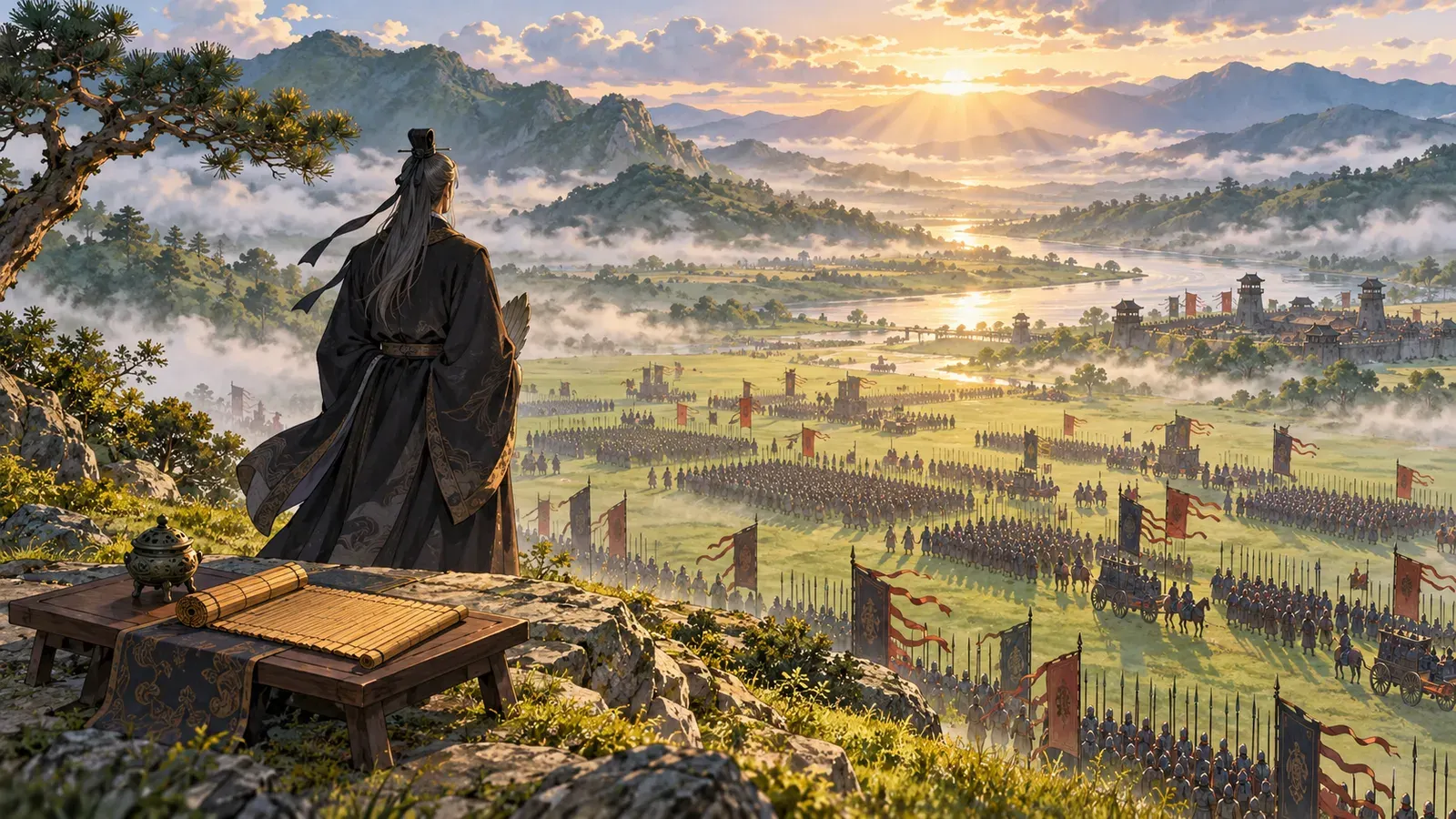
1. Sun Tzŭ said: In the operations of war, where there are in the field a thousand swift chariots, as many heavy chariots, and a hundred thousand mail-clad soldiers, with provisions enough to carry them a thousand li, the expenditure at home and at the front, including entertainment of guests, small items such as glue and paint, and sums spent on chariots and armour, will reach the total of a thousand ounces of silver per day. Such is the cost of raising an army of 100,000 men.
1. 孫子は言う。戦をするには、速い戦車を千台、重い戦車を千台、よろいを着た兵士を十万人そろえ、千里の道のりを運べるだけの食糧を用意しなければならない。国の内と戦場とで、客をもてなす費用、にかわや漆のような細かな品の代金、戦車やよろいにかかる費用などを合わせると、一日に銀千両にもなる。十万の軍を起こすには、それだけの費用がかかるのである。
2. When you engage in actual fighting, if victory is long in coming, the men's weapons will grow dull and their ardour will be damped. If you lay siege to a town, you will exhaust your strength.
2. 実際に戦って、勝つまでに長くかかれば、兵士の武器はなまり、意気はくじける。町を包囲すれば、力を使い果たしてしまう。
3. Again, if the campaign is protracted, the resources of the State will not be equal to the strain.
3. また、戦が長引けば、国の財力がもたなくなる。
4. Now, when your weapons are dulled, your ardour damped, your strength exhausted and your treasure spent, other chieftains will spring up to take advantage of your extremity. Then no man, however wise, will be able to avert the consequences that must ensue.
4. 武器はなまり、意気はくじけ、力は尽き、財産も使い果たした。そうなれば、ほかの諸侯がその苦境につけ込んで兵を挙げる。そうなってからでは、どんなに知恵のある者でも、その後に起こることを防ぐことはできない。
5. Thus, though we have heard of stupid haste in war, cleverness has never been seen associated with long delays.
5. だから、戦では、多少まずくても素早く勝負をつけたという話は聞くが、うまくやって長引かせたという例は見たことがない。
6. There is no instance of a country having benefited from prolonged warfare.
6. 戦が長引いて国が得をしたという例は、一つもない。
7. It is only one who is thoroughly acquainted with the evils of war that can thoroughly understand the profitable way of carrying it on.
7. 戦の害を知り尽くしている者だけが、戦の利を十分に理解できるのである。
8. The skilful soldier does not raise a second levy, neither are his supply-waggons loaded more than twice.
8. 戦の上手な者は、兵を二度も徴集しないし、食糧を国から三度も運ばせない。
9. Bring war material with you from home, but forage on the enemy. Thus the army will have food enough for its needs.
9. 武器や道具は自分の国から持っていくが、食糧は敵地で手に入れる。そうすれば、軍の食糧は足りる。
10. Poverty of the State exchequer causes an army to be maintained by contributions from a distance. Contributing to maintain an army at a distance causes the people to be impoverished.
10. 国が貧しくなるのは、遠くまで食糧を運んで軍を養うからである。遠くの軍を養うために物資を差し出せば、民は貧しくなる。
11. On the other hand, the proximity of an army causes prices to go up; and high prices cause the people's substance to be drained away.
11. また、軍が近くにいると、物の値段が上がる。値段が上がれば、民のたくわえはなくなってしまう。
12. When their substance is drained away, the peasantry will be afflicted by heavy exactions.
12. たくわえがなくなれば、農民は重い取り立てに苦しむことになる。
13, 14. With this loss of substance and exhaustion of strength, the homes of the people will be stripped bare, and three-tenths of their incomes will be dissipated; while Government expenses for broken chariots, worn-out horses, breast-plates and helmets, bows and arrows, spears and shields, protective mantlets, draught-oxen and heavy waggons, will amount to four-tenths of its total revenue.
13, 14. こうして財は失われ、力は尽き、民の家はすっかり空になって、収入の十分の三が消えてしまう。国のほうも、壊れた戦車、疲れた馬、胴よろいと兜、弓と矢、槍と盾、身を守る大盾、車を引く牛と重い荷車などに費用がかかり、その額は国の収入の十分の四にもなる。
15. Hence a wise general makes a point of foraging on the enemy. One cartload of the enemy's provisions is equivalent to twenty of one's own, and likewise a single picul of his provender is equivalent to twenty from one's own store.
15. だから知恵のある将軍は、つとめて敵地で食糧を手に入れる。敵の食糧を車一台分奪えば、自分の国から運ぶ二十台分に当たる。家畜の飼料も、敵から一石奪えば、自分のたくわえの二十石分に当たる。
16. Now in order to kill the enemy, our men must be roused to anger; that there may be advantage from defeating the enemy, they must have their rewards.
16. 敵を討たせるには、兵士の怒りをかき立てなければならない。敵を負かして得をさせるには、ほうびを与えなければならない。
17. Therefore in chariot fighting, when ten or more chariots have been taken, those should be rewarded who took the first. Our own flags should be substituted for those of the enemy, and the chariots mingled and used in conjunction with ours. The captured soldiers should be kindly treated and kept.
17. だから、戦車戦で敵の戦車を十台以上奪ったら、最初に奪った者にほうびを与えよ。奪った戦車は、敵の旗を味方の旗に取り替え、味方の戦車にまぜて使え。捕らえた兵士はていねいに扱い、味方として養え。
18. This is called, using the conquered foe to augment one's own strength.
18. これを、打ち負かした敵を使って、自軍の力を増すという。
19. In war, then, let your great object be victory, not lengthy campaigns.
19. 戦では、勝つことを第一とし、長引かせることをよしとしてはならない。
20. Thus it may be known that the leader of armies is the arbiter of the people's fate, the man on whom it depends whether the nation shall be in peace or in peril.
20. このことから分かるように、軍を率いる将軍は、民の運命をにぎる者であり、国が平和でいられるか危うくなるかを左右する者なのである。