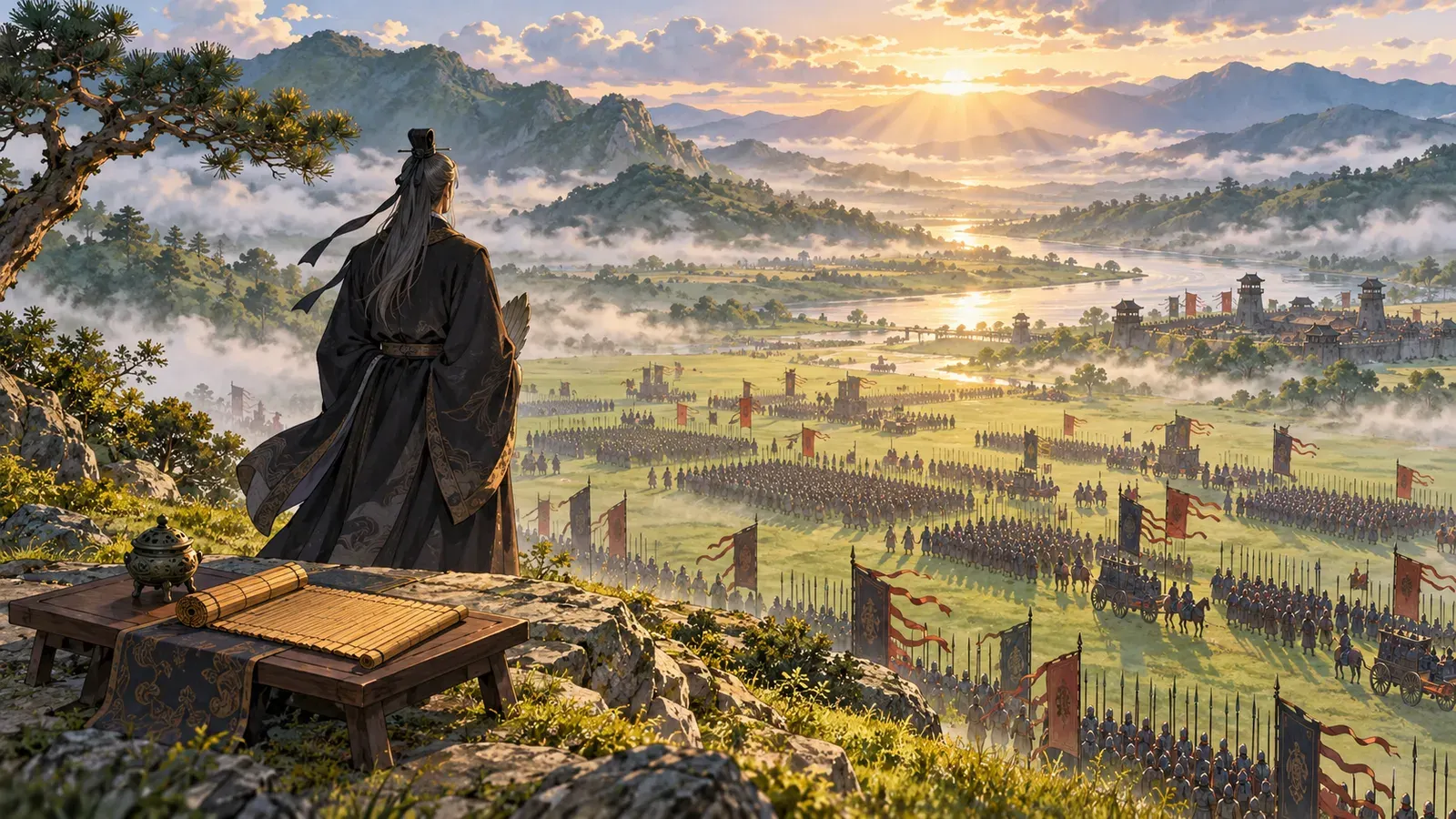
1. Sun Tzŭ said: The good fighters of old first put themselves beyond the possibility of defeat, and then waited for an opportunity of defeating the enemy.
1. 孫子は言う。昔の戦の上手な者は、まず自分が負けないように態勢を固め、それから敵を打ち負かせる機会を待った。
2. To secure ourselves against defeat lies in our own hands, but the opportunity of defeating the enemy is provided by the enemy himself.
2. 負けないようにするのは、自分しだいである。だが、敵に勝てる機会は、敵のほうがつくってくれるものである。
3. Thus the good fighter is able to secure himself against defeat, but cannot make certain of defeating the enemy.
3. だから戦の上手な者でも、負けないようにすることはできるが、必ず敵に勝てるようにすることはできない。
4. Hence the saying: One may know how to conquer without being able to do it.
4. それゆえ、こう言われる。勝ち方は分かっても、いつでも勝てるとはかぎらない。
5. Security against defeat implies defensive tactics; ability to defeat the enemy means taking the offensive.
5. 負けないようにするのは守りであり、敵に勝つのは攻めである。
6. Standing on the defensive indicates insufficient strength; attacking, a superabundance of strength.
6. 守るのは力が足りないからであり、攻めるのは力があり余っているからである。
7. The general who is skilled in defence hides in the most secret recesses of the earth; he who is skilled in attack flashes forth from the topmost heights of heaven. Thus on the one hand we have ability to protect ourselves; on the other, a victory that is complete.
7. 守りの上手な将軍は、地の底の奥深くに身を隠すように、敵に姿をつかませない。攻めの上手な将軍は、天の高みからひらめくように、いきなり襲いかかる。だから、一方では自分の身を守り、もう一方では完全な勝利を得ることができるのである。
8. To see victory only when it is within the ken of the common herd is not the acme of excellence.
8. 誰の目にも明らかになってから勝利を見抜くようでは、最高の腕前とはいえない。
9. Neither is it the acme of excellence if you fight and conquer and the whole Empire says, "Well done!"
9. 戦って勝ち、天下の人々から「おみごと」とほめられるのも、最高のすぐれた腕前ではない。
10. To lift an autumn hair is no sign of great strength; to see sun and moon is no sign of sharp sight; to hear the noise of thunder is no sign of a quick ear.
10. 秋の細い獣の毛を持ち上げても、力持ちとは言わない。太陽や月が見えても、目がよいとは言わない。雷の音が聞こえても、耳がさといとは言わない。
11. What the ancients called a clever fighter is one who not only wins, but excels in winning with ease.
11. 昔の人が戦の上手な者と呼んだのは、ただ勝つだけでなく、たやすく勝つことにすぐれた者のことである。
12. Hence his victories bring him neither reputation for wisdom nor credit for courage.
12. だから、その勝利は、知恵があるという評判も、勇気があるという手柄ももたらさない。
13. He wins his battles by making no mistakes. Making no mistakes is what establishes the certainty of victory, for it means conquering an enemy that is already defeated.
13. 戦の上手な者は、まちがいをしないことで勝つ。まちがいをしなければ、必ず勝てる。すでに負けている敵に勝つことになるからである。
14. Hence the skilful fighter puts himself into a position which makes defeat impossible, and does not miss the moment for defeating the enemy.
14. だから戦の上手な者は、決して負けない立場に身を置き、敵を打ち負かす機会を逃さない。
15. Thus it is that in war the victorious strategist only seeks battle after the victory has been won, whereas he who is destined to defeat first fights and afterwards looks for victory.
15. 勝つ軍は、まず勝てる態勢をつくってから戦う。負ける軍は、まず戦い始めてから勝ちを求める。
16. The consummate leader cultivates the moral law, and strictly adheres to method and discipline; thus it is in his power to control success.
16. すぐれた将軍は、人の道を修め、編成と規律をしっかり守る。だから勝敗を思いのままに決めることができるのである。
17. In respect of military method, we have, firstly, Measurement; secondly, Estimation of quantity; thirdly, Calculation; fourthly, Balancing of chances; fifthly, Victory.
17. 兵法には、第一に「度(土地の広さをはかること)」、第二に「量(物の量を見積もること)」、第三に「数(兵の数を計算すること)」、第四に「称(両軍の力を比べること)」、第五に「勝(勝ちを決めること)」がある。
18. Measurement owes its existence to Earth; Estimation of quantity to Measurement; Calculation to Estimation of quantity; Balancing of chances to Calculation; and Victory to Balancing of chances.
18. 土地があるから広さをはかる。広さをはかるから物の量を見積もれる。量を見積もるから兵の数を計算できる。兵の数を計算するから力を比べられる。力を比べるから勝ちが決まる。
19. A victorious army opposed to a routed one, is as a pound's weight placed in the scale against a single grain.
19. 勝つ軍が負ける軍と向き合うのは、天秤で、重い分銅一つと穀物ひと粒とを比べるようなものである。
20. The onrush of a conquering force is like the bursting of pent-up waters into a chasm a thousand fathoms deep. So much for tactical dispositions.
20. 勝つ軍の勢いは、せき止めておいた水を、千尋の深い谷へ一気に切って落とすようなものである。これが「形」、すなわち軍の態勢というものである。