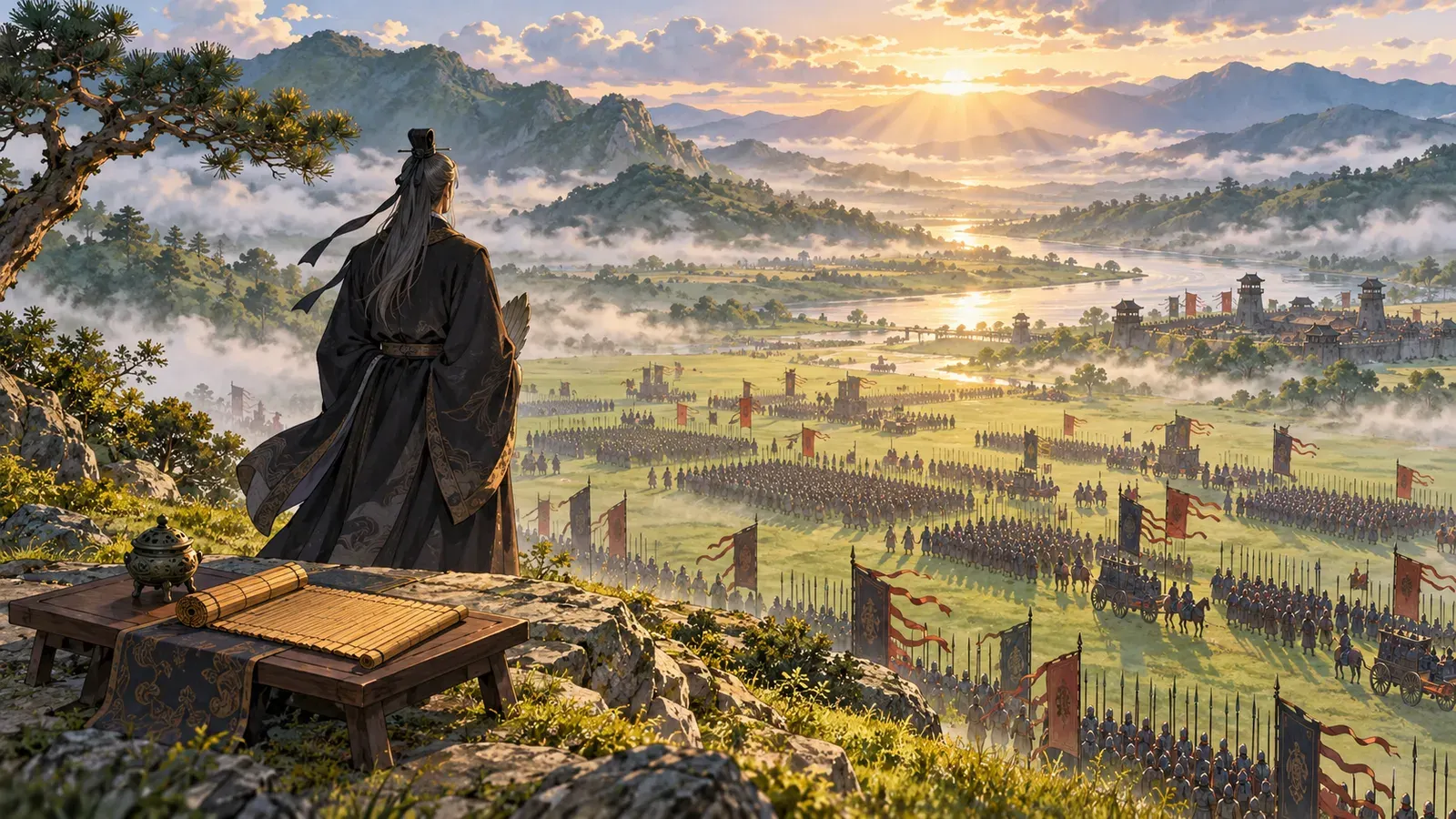
1. Sun Tzŭ said: In war, the general receives his commands from the sovereign, collects his army and concentrates his forces.
1. 孫子は言う。戦では、将軍は君主から命令を受け、兵を集めて軍を一つにまとめる。
2. When in difficult country, do not encamp. In country where high roads intersect, join hands with your allies. Do not linger in dangerously isolated positions. In hemmed-in situations, you must resort to stratagem. In a desperate position, you must fight.
2. 行き来の難しい土地では、陣を張ってはならない。大きな道が交わる土地では、味方の国と手を結べ。危うく孤立した場所に、ぐずぐずとどまってはならない。四方を囲まれた土地では、計略を使え。逃げ場のない土地では、戦え。
3. There are roads which must not be followed, armies which must be not attacked, towns which must not be besieged, positions which must not be contested, commands of the sovereign which must not be obeyed.
3. 通ってはならない道がある。攻めてはならない軍がある。攻めてはならない町がある。奪い合ってはならない土地がある。従ってはならない君主の命令がある。
4. The general who thoroughly understands the advantages that accompany variation of tactics knows how to handle his troops.
4. 状況に応じて戦法を変えることの利点をよく分かっている将軍は、兵の動かし方を知っている。
5. The general who does not understand these, may be well acquainted with the configuration of the country, yet he will not be able to turn his knowledge to practical account.
5. それが分かっていない将軍は、土地のありさまをよく知っていても、その知識を実際に生かすことはできない。
6. So, the student of war who is unversed in the art of war of varying his plans, even though he be acquainted with the Five Advantages, will fail to make the best use of his men.
6. だから兵法を学ぶ者も、状況に応じて策を変える術を身につけていなければ、「五つの利点」を知っていても、兵を十分に生かすことはできない。
7. Hence in the wise leader's plans, considerations of advantage and of disadvantage will be blended together.
7. それゆえ知恵のある将軍は、策を立てるとき、必ず利益と害の両方をあわせて考える。
8. If our expectation of advantage be tempered in this way, we may succeed in accomplishing the essential part of our schemes.
8. このように利益を期待するときに害も考えに入れておけば、はかりごとの大事なところをやりとげることができる。
9. If, on the other hand, in the midst of difficulties we are always ready to seize an advantage, we may extricate ourselves from misfortune.
9. 逆に、苦しい中でも、いつでも利益をつかもうと構えていれば、災いから抜け出すことができる。
10. Reduce the hostile chiefs by inflicting damage on them; and make trouble for them, and keep them constantly engaged; hold out specious allurements, and make them rush to any given point.
10. 敵の諸侯を屈服させるには、害を与える。手を焼かせるには、絶えず厄介ごとを起こして休ませない。うまそうなえさを見せて、思う場所へ駆けつけさせる。
11. The art of war teaches us to rely not on the likelihood of the enemy's not coming, but on our own readiness to receive him; not on the chance of his not attacking, but rather on the fact that we have made our position unassailable.
11. 兵法の教えでは、敵が来ないだろうと当てにするのではなく、いつ来てもよいように備えていることを頼みとする。敵が攻めてこないだろうと当てにするのではなく、攻められないだけの態勢を整えておくことを頼みとするのである。
12. There are five dangerous faults which may affect a general: (1) Recklessness, which leads to destruction; (2) cowardice, which leads to capture; (3) a hasty temper, which can be provoked by insults; (4) a delicacy of honour which is sensitive to shame; (5) over-solicitude for his men, which exposes him to worry and trouble.
12. 将軍には、五つの危うい欠点がある。(1) 向こう見ずなこと。これは身を滅ぼす。(2) 臆病なこと。これは捕らえられる。(3) 怒りっぽいこと。これは侮辱されると、すぐ挑発に乗る。(4) 名誉を気にしすぎること。これは恥をかかされると、すぐ動揺する。(5) 兵をかわいがりすぎること。これは心配や面倒ごとに悩まされる。
13. These are the five besetting sins of a general, ruinous to the conduct of war.
13. この五つは、将軍が陥りやすいあやまちであり、戦をだめにしてしまう。
14. When an army is overthrown and its leader slain, the cause will surely be found among these five dangerous faults. Let them be a subject of meditation.
14. 軍が打ち破られ、将軍が討たれるとき、その原因は必ずこの五つの欠点の中にある。よくよく考えておかなければならない。