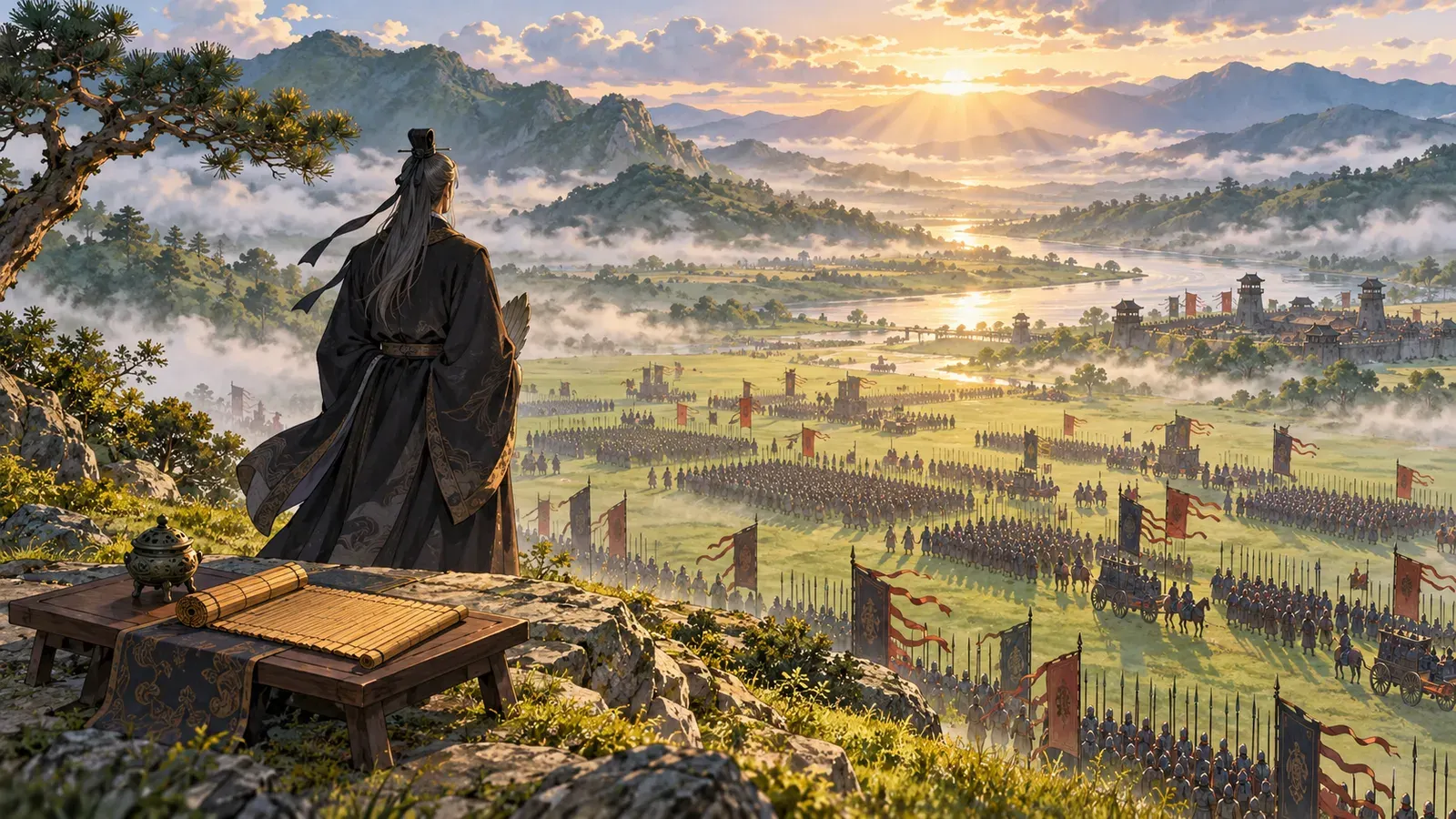
1. Sun Tzŭ said: In the practical art of war, the best thing of all is to take the enemy's country whole and intact; to shatter and destroy it is not so good. So, too, it is better to capture an army entire than to destroy it, to capture a regiment, a detachment or a company entire than to destroy them.
1. 孫子は言う。実際の戦いでは、敵国を傷つけずにまるごと手に入れるのが最上であり、打ち破って滅ぼすのはそれに劣る。敵の軍も同じで、滅ぼすよりまるごと降伏させるほうがよい。連隊も、分隊も、小隊も、滅ぼすよりまるごと降伏させるほうがよい。
2. Hence to fight and conquer in all your battles is not supreme excellence; supreme excellence consists in breaking the enemy's resistance without fighting.
2. だから、百たび戦って百たび勝つのは、最善の中の最善ではない。戦わずに敵を屈服させることこそ、最善の中の最善である。
3. Thus the highest form of generalship is to baulk the enemy's plans; the next best is to prevent the junction of the enemy's forces; the next in order is to attack the enemy's army in the field; and the worst policy of all is to besiege walled cities.
3. それゆえ、いちばんよい戦い方は、敵のはかりごとを打ち破ることである。その次は、敵の軍勢が合流するのを妨げることである。その次は、野で敵の軍を攻めることである。いちばんまずいのは、城壁に囲まれた町を攻めることである。
4. The rule is, not to besiege walled cities if it can possibly be avoided. The preparation of mantlets, movable shelters, and various implements of war, will take up three whole months; and the piling up of mounds over against the walls will take three months more.
4. 城攻めは、できるかぎり避けるのが原則である。城攻めのための大盾や移動式のやぐら、さまざまな攻め道具を用意するだけで、まる三か月かかる。城壁に向かって土の山を築くのに、さらに三か月かかる。
5. The general, unable to control his irritation, will launch his men to the assault like swarming ants, with the result that one-third of his men are slain, while the town still remains untaken. Such are the disastrous effects of a siege.
5. 将軍は待ちきれずにいらだち、兵士を蟻のように群がらせて城壁をよじ登らせる。その結果、兵士の三分の一が死んでも、町は落ちない。城攻めは、これほどの災いをもたらすのである。
6. Therefore the skilful leader subdues the enemy's troops without any fighting; he captures their cities without laying siege to them; he overthrows their kingdom without lengthy operations in the field.
6. だから戦の上手な者は、戦わずに敵の軍を屈服させる。城攻めをせずに敵の町を手に入れる。長い戦をせずに敵の国を倒す。
7. With his forces intact he will dispute the mastery of the Empire, and thus, without losing a man, his triumph will be complete. This is the method of attacking by stratagem.
7. 自分の軍を無傷のまま保って天下を争うので、兵を一人も失わずに、完全な勝利を得る。これが、はかりごとで攻めるやり方である。
8. It is the rule in war, if our forces are ten to the enemy's one, to surround him; if five to one, to attack him; if twice as numerous, to divide our army into two.
8. 戦の原則として、こちらの兵力が敵の十倍なら、敵を包囲する。五倍なら、攻める。二倍なら、軍を二つに分けて戦う。
9. If equally matched, we can offer battle; if slightly inferior in numbers, we can avoid the enemy; if quite unequal in every way, we can flee from him.
9. 互角なら、戦ってもよい。いくらか少なければ、敵を避ける。あらゆる点でとてもかなわなければ、逃げる。
10. Hence, though an obstinate fight may be made by a small force, in the end it must be captured by the larger force.
10. だから、小さな軍がいくら意地を張って戦っても、最後には大きな軍に捕らえられてしまう。
11. Now the general is the bulwark of the State: if the bulwark is complete at all points; the State will be strong; if the bulwark is defective, the State will be weak.
11. 将軍は国を守る防壁である。防壁がどこも欠けていなければ、国は強い。防壁に欠けたところがあれば、国は弱い。
12. There are three ways in which a ruler can bring misfortune upon his army:—
12. 君主が自分の軍に災いを招くことが、三つある。
13. (1) By commanding the army to advance or to retreat, being ignorant of the fact that it cannot obey. This is called hobbling the army.
13. (1) 軍が従えない状況にあることを知らずに、進めとか退けとか命じること。これを、軍の足をしばるという。
14. (2) By attempting to govern an army in the same way as he administers a kingdom, being ignorant of the conditions which obtain in an army. This causes restlessness in the soldier's minds.
14. (2) 軍の中の事情を知らずに、国を治めるのと同じやり方で軍を治めようとすること。これは兵士の心をかき乱す。
15. (3) By employing the officers of his army without discrimination, through ignorance of the military principle of adaptation to circumstances. This shakes the confidence of the soldiers.
15. (3) 状況に応じて対応を変えるという兵法の原則を知らずに、将校を見境なく使うこと。これは兵士の信頼をゆるがす。
16. But when the army is restless and distrustful, trouble is sure to come from the other feudal princes. This is simply bringing anarchy into the army, and flinging victory away.
16. 軍の心が乱れ、疑いに満ちれば、ほかの諸侯が必ずつけ込んでくる。これは、自分で自分の軍を混乱させ、勝利を投げ捨てるようなものである。
17. Thus we may know that there are five essentials for victory: (1) He will win who knows when to fight and when not to fight. (2) He will win who knows how to handle both superior and inferior forces. (3) He will win whose army is animated by the same spirit throughout all its ranks. (4) He will win who, prepared himself, waits to take the enemy unprepared. (5) He will win who has military capacity and is not interfered with by the sovereign. Victory lies in the knowledge of these five points.
17. このことから、勝つための五つの条件が分かる。(1) 戦うべきときと戦うべきでないときを知っている者は勝つ。(2) 大軍の使い方も小勢の使い方も知っている者は勝つ。(3) 上の者も下の者も心を一つにしている軍は勝つ。(4) 自分は備えを固めて、備えのない敵を待つ者は勝つ。(5) 将軍に才能があり、君主が口出しをしない者は勝つ。勝利への道は、この五つを知ることにある。
18. Hence the saying: If you know the enemy and know yourself, you need not fear the result of a hundred battles. If you know yourself but not the enemy, for every victory gained you will also suffer a defeat. If you know neither the enemy nor yourself, you will succumb in every battle.
18. だから、こう言われる。「彼を知り己を知れば、百戦殆うからず。」敵を知り、自分を知っていれば、百回戦っても負ける心配はない。自分を知っていても敵を知らなければ、勝ったり負けたりする。敵も知らず、自分も知らなければ、戦うたびに必ず負ける。