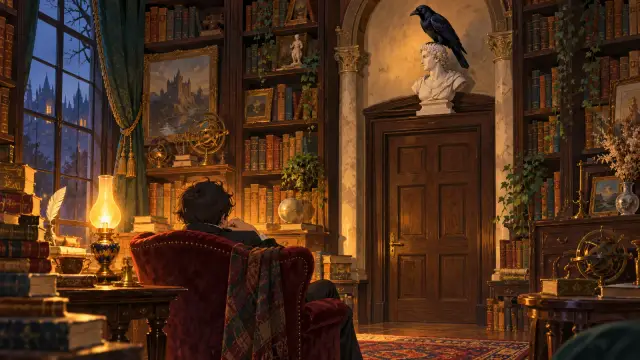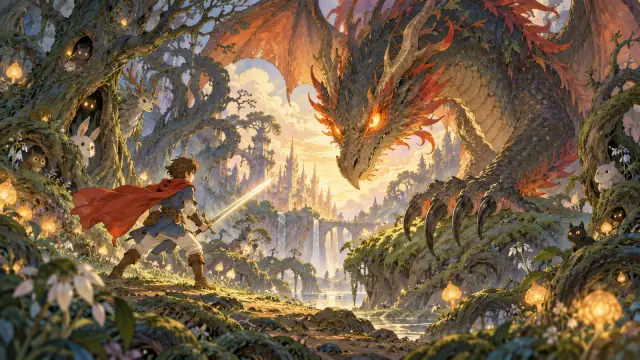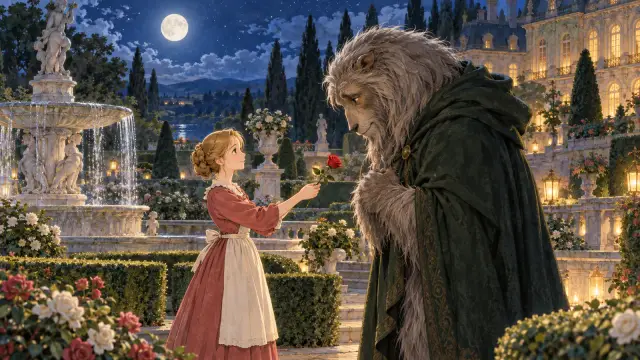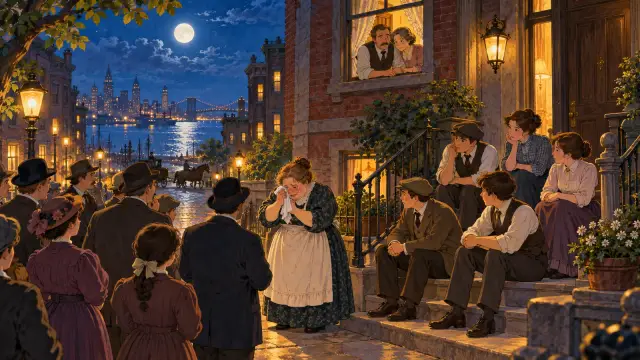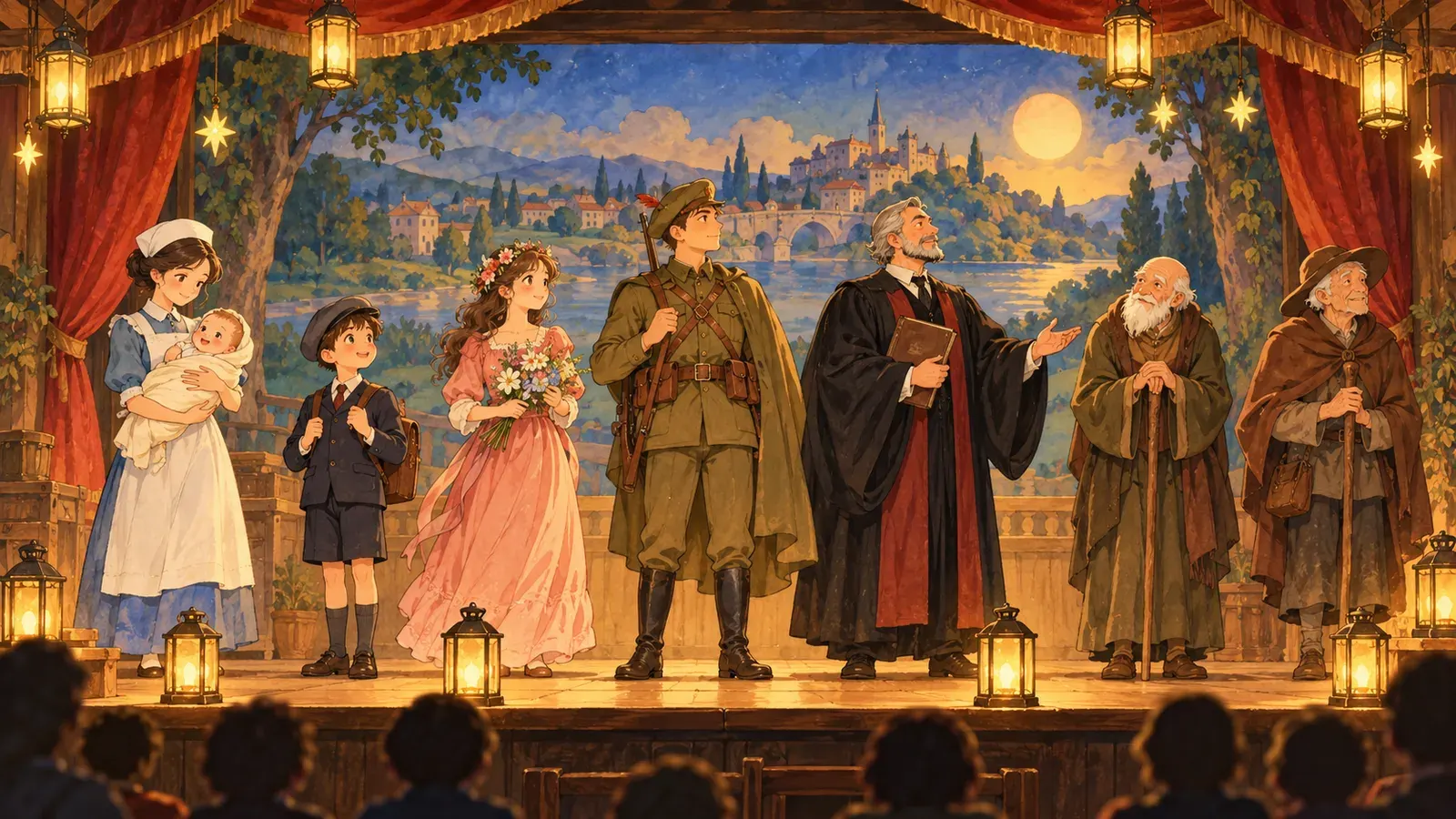
All the world's a stage, And all the men and women merely players; They have their exits and their entrances, And one man in his time plays many parts, His acts being seven ages. At first the infant, Mewling and puking in the nurse's arms; Then the whining schoolboy, with his satchel And shining morning face, creeping like snail Unwillingly to school. And then the lover, Sighing like furnace, with a woeful ballad Made to his mistress' eyebrow. Then a soldier, Full of strange oaths and bearded like the pard, Jealous in honour, sudden and quick in quarrel, Seeking the bubble reputation Even in the cannon's mouth. And then the justice, In fair round belly with good capon lined, With eyes severe and beard of formal cut, Full of wise saws and modern instances; And so he plays his part. The sixth age shifts Into the lean and slippered pantaloon, With spectacles on nose and pouch on side, His youthful hose, well saved, a world too wide For his shrunk shank, and his big manly voice, Turning again toward childish treble, pipes And whistles in his sound. Last scene of all, That ends this strange eventful history, Is second childishness and mere oblivion, Sans teeth, sans eyes, sans taste, sans everything.
この世はすべて舞台だ。 男も女も、みな役者にすぎない。 退場もあれば、登場もある。 ひとりの人間が、生涯のうちにいくつもの役を演じる。 その芝居は七幕、七つの年代からなる。まずは赤ん坊。 乳母の腕に抱かれて、泣いたり乳をもどしたりしている。 次は、泣き言ばかりの小学生。かばんをさげ、 朝の顔をつやつやと光らせて、カタツムリのようにのろのろと、 いやいや学校へ向かう。それから恋する若者。 炉のように熱いため息をつき、恋人の眉をたたえて 悲しい恋の歌をつくる。次は兵士。 聞きなれない誓いの文句をならべ、豹のようなひげをはやし、 名誉にうるさく、すぐにかっとなってけんかを始め、 あぶくのようにはかない名声を、 大砲の筒先にまで追い求める。それから裁判官。 上等な去勢鶏をたらふく詰めこんだ、見事な太鼓腹で、 目つきはきびしく、ひげはきちんと刈りそろえ、 もっともらしい格言や、ありふれたたとえ話をいくらでも口にする。 こうして、この役を演じる。六番目の年代になると、 やせこけて、スリッパをはいた喜劇の老いぼれ役に変わる。 鼻にはめがね、腰には巾着。 若いころの長靴下は大事にとってあったが、 しなびたすねには、ぶかぶかすぎる。男らしかった太い声は また子どもの甲高い声にもどって、 ぴいぴい、ひゅうひゅうと鳴る。最後の場面、 この不思議で波乱に満ちた物語の幕切れは、 二度目の子ども時代と、何もかも忘れてしまうこと。 歯もなく、目も見えず、味もわからず、何ひとつない。
 ▶
 ▶