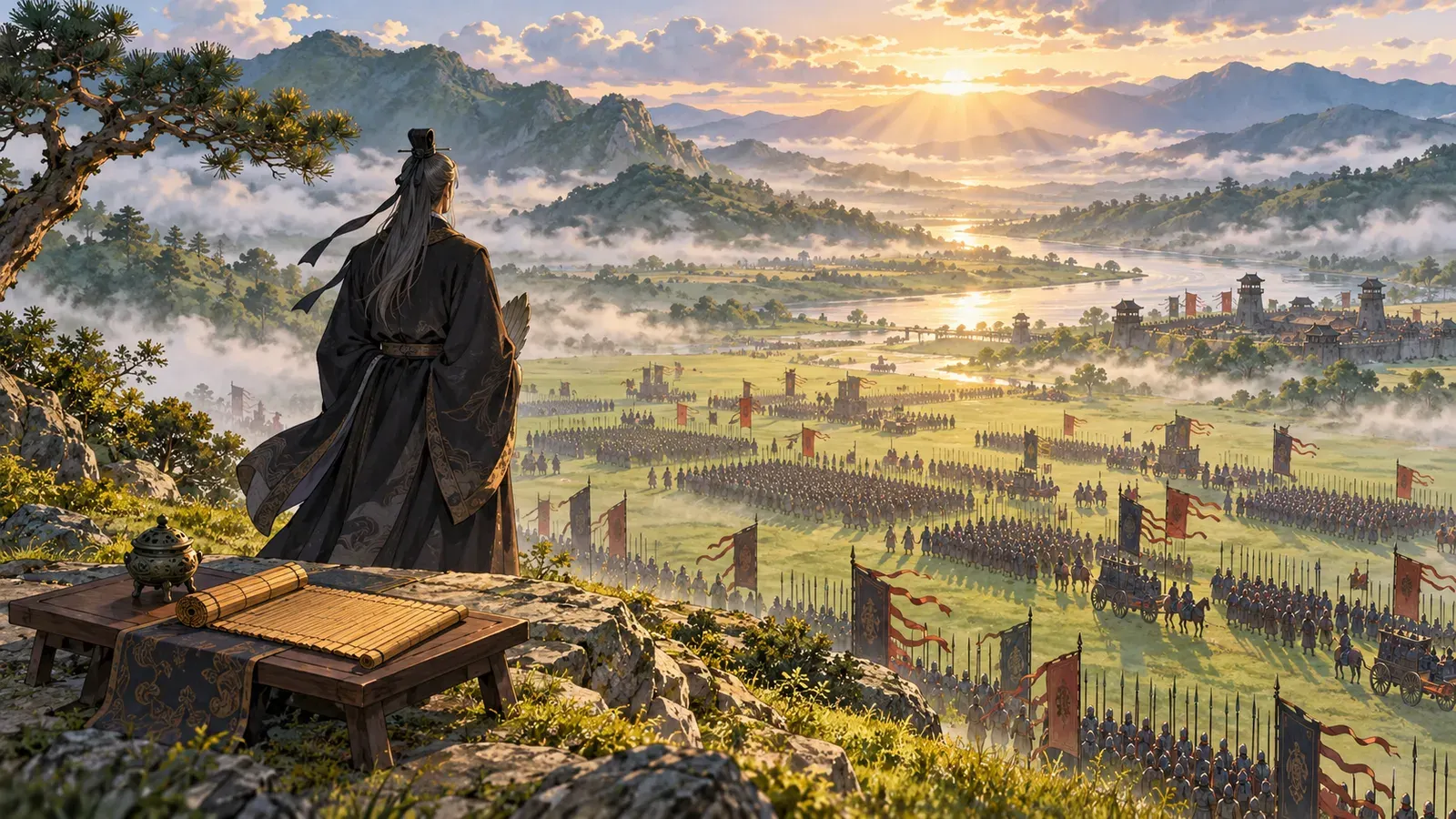
1. Sun Tzŭ said: We come now to the question of encamping the army, and observing signs of the enemy. Pass quickly over mountains, and keep in the neighbourhood of valleys.
1. 孫子は言う。ここからは、軍の陣の張り方と、敵の様子の見抜き方について述べる。山はすばやく越え、谷の近くに沿って進め。
2. Camp in high places, facing the sun. Do not climb heights in order to fight. So much for mountain warfare.
2. 陣は高いところに、日の当たる側に向けて張れ。高いところにいる敵と戦うために、坂を登ってはならない。山での戦いについては、これだけである。
3. After crossing a river, you should get far away from it.
3. 川を渡ったら、すぐに川から遠く離れよ。
4. When an invading force crosses a river in its onward march, do not advance to meet it in mid-stream. It will be best to let half the army get across, and then deliver your attack.
4. 攻めてくる敵が川を渡って進んできたら、川の中ほどまで迎え撃ちに出てはならない。敵の半分を渡らせてから攻めるのが、いちばんよい。
5. If you are anxious to fight, you should not go to meet the invader near a river which he has to cross.
5. 戦いたいと思っても、敵が渡らなければならない川の近くで迎え撃ってはならない。
6. Moor your craft higher up than the enemy, and facing the sun. Do not move up-stream to meet the enemy. So much for river warfare.
6. 舟は敵より上流に、日の当たる側に向けてつなげ。川をさかのぼって敵を迎え撃ってはならない。川での戦いについては、これだけである。
7. In crossing salt-marshes, your sole concern should be to get over them quickly, without any delay.
7. 塩気のある沼地を渡るときは、ぐずぐずせず、ただすばやく渡りきることだけを考えよ。
8. If forced to fight in a salt-marsh, you should have water and grass near you, and get your back to a clump of trees. So much for operations in salt-marshes.
8. やむをえず沼地で戦うときは、水と草の近くにいて、木の茂みを背にせよ。沼地での戦いについては、これだけである。
9. In dry, level country, take up an easily accessible position with rising ground to your right and on your rear, so that the danger may be in front, and safety lie behind. So much for campaigning in flat country.
9. 乾いた平らな土地では、行き来しやすい場所に陣取り、右と後ろに高い土地を置け。そうすれば、危険は前にあり、安全は後ろにある。平地での戦いについては、これだけである。
10. These are the four useful branches of military knowledge which enabled the Yellow Emperor to vanquish four several sovereigns.
10. この四つの役に立つ兵法の知識によって、黄帝は四人の帝王を打ち破ったのである。
11. All armies prefer high ground to low, and sunny places to dark.
11. どんな軍も、低いところより高いところを好み、日陰より日なたを好む。
12. If you are careful of your men, and camp on hard ground, the army will be free from disease of every kind, and this will spell victory.
12. 兵の健康に気を配り、固い地面に陣を張れば、軍はどんな病気にもかからない。それが勝利につながる。
13. When you come to a hill or a bank, occupy the sunny side, with the slope on your right rear. Thus you will at once act for the benefit of your soldiers and utilise the natural advantages of the ground.
13. 丘や土手に来たら、日の当たる側に陣取り、斜面を右の後ろに置け。そうすれば、兵のためにもなり、同時に地形の利点を生かすことにもなる。
14. When, in consequence of heavy rains up-country, a river which you wish to ford is swollen and flecked with foam, you must wait until it subsides.
14. 上流で大雨が降り、渡ろうとする川が増水して泡立っているときは、水が引くまで待て。
15. Country in which there are precipitous cliffs with torrents running between, deep natural hollows, confined places, tangled thickets, quagmires and crevasses, should be left with all possible speed and not approached.
15. 切り立った崖の間を激流が走っているところ、深い窪地、狭い場所、もつれた茂み、ぬかるみ、地の裂け目。こうした土地からは、できるだけ早く離れ、近づいてはならない。
16. While we keep away from such places, we should get the enemy to approach them; while we face them, we should let the enemy have them on his rear.
16. こちらはそういう場所から遠ざかり、敵を近づかせよ。こちらはそういう場所に向かって陣を構え、敵にはそういう場所を背にさせよ。
17. If in the neighbourhood of your camp there should be any hilly country, ponds surrounded by aquatic grass, hollow basins filled with reeds, or woods with thick undergrowth, they must be carefully routed out and searched; for these are places where men in ambush or insidious spies are likely to be lurking.
17. 陣の近くに、起伏のある土地、水草に囲まれた池、葦の茂った窪地、下草の深い林などがあれば、念入りに調べて探れ。そういう場所には、伏兵やずる賢い間者がひそんでいることが多いからである。
18. When the enemy is close at hand and remains quiet, he is relying on the natural strength of his position.
18. 敵が近くにいながら静かにしているのは、陣地の地形の険しさを頼みにしているのである。
19. When he keeps aloof and tries to provoke a battle, he is anxious for the other side to advance.
19. 敵が遠くにいながら戦いをしかけてくるのは、こちらを前へ誘い出したいのである。
20. If his place of encampment is easy of access, he is tendering a bait.
20. 敵が近づきやすい場所に陣を張っているのは、えさを見せているのである。
21. Movement amongst the trees of a forest shows that the enemy is advancing. The appearance of a number of screens in the midst of thick grass means that the enemy wants to make us suspicious.
21. 森の木々が動いているのは、敵が進んできているしるしである。深い草むらのあちこちに目隠しが置かれているのは、こちらを疑わせようとしているのである。
22. The rising of birds in their flight is the sign of an ambuscade. Startled beasts indicate that a sudden attack is coming.
22. 鳥が飛び立つのは、伏兵がいるしるしである。獣が驚いて逃げ出すのは、不意打ちが来るしるしである。
23. When there is dust rising in a high column, it is the sign of chariots advancing; when the dust is low, but spread over a wide area, it betokens the approach of infantry. When it branches out in different directions, it shows that parties have been sent to collect firewood. A few clouds of dust moving to and fro signify that the army is encamping.
23. 土ぼこりが高く柱のように立つのは、戦車が進んでくるしるしである。低く、広く立つのは、歩兵が近づいてくるしるしである。あちこちに枝分かれしているのは、薪を集める部隊が送り出されたしるしである。少しの土ぼこりが行ったり来たりしているのは、陣を張っているしるしである。
24. Humble words and increased preparations are signs that the enemy is about to advance. Violent language and driving forward as if to the attack are signs that he will retreat.
24. 言葉はへりくだっているのに、備えを増しているのは、攻めてくるしるしである。言葉は荒々しく、今にも攻めかかりそうに突き進んでくるのは、退くしるしである。
25. When the light chariots come out first and take up a position on the wings, it is a sign that the enemy is forming for battle.
25. 軽い戦車が先に出て、両翼に陣取るのは、戦いの陣を組んでいるしるしである。
26. Peace proposals unaccompanied by a sworn covenant indicate a plot.
26. 誓いの約束もなしに和睦を申し出てくるのは、何かたくらんでいるしるしである。
27. When there is much running about and the soldiers fall into rank, it means that the critical moment has come.
27. 兵があわただしく走り回り、隊列を組んでいるのは、いよいよ決戦の時が来たしるしである。
28. When some are seen advancing and some retreating, it is a lure.
28. 進む者もあれば退く者もあるのは、こちらを誘っているのである。
29. When the soldiers stand leaning on their spears, they are faint from want of food.
29. 兵が槍にもたれて立っているのは、食べ物が足りずに弱っているのである。
30. If those who are sent to draw water begin by drinking themselves, the army is suffering from thirst.
30. 水くみに行った者が、まず自分で飲んでいるのは、軍がのどの渇きに苦しんでいるのである。
31. If the enemy sees an advantage to be gained and makes no effort to secure it, the soldiers are exhausted.
31. 得になることが見えているのに、取りに来ないのは、兵が疲れきっているのである。
32. If birds gather on any spot, it is unoccupied. Clamour by night betokens nervousness.
32. 鳥が群れているところには、人がいない。夜に騒がしいのは、おびえているのである。
33. If there is disturbance in the camp, the general's authority is weak. If the banners and flags are shifted about, sedition is afoot. If the officers are angry, it means that the men are weary.
33. 陣の中が騒がしいのは、将軍の威厳が弱いのである。旗やのぼりがあちこち動いているのは、反乱が起こりかけているのである。将校たちが怒っているのは、兵が疲れているのである。
34. When an army feeds its horses with grain and kills its cattle for food, and when the men do not hang their cooking-pots over the camp-fires, showing that they will not return to their tents, you may know that they are determined to fight to the death.
34. 馬に穀物を食べさせ、牛を殺して食べ、炊事の鍋を火にかけず、もう幕舎に戻らない様子なのは、死ぬまで戦う覚悟を決めたのだと分かる。
35. The sight of men whispering together in small knots or speaking in subdued tones points to disaffection amongst the rank and file.
35. 兵たちが小さな輪になってひそひそ話をしたり、小声で話したりしているのは、兵の間に不満が広がっているのである。
36. Too frequent rewards signify that the enemy is at the end of his resources; too many punishments betray a condition of dire distress.
36. ほうびをやたらに与えるのは、もう打つ手がなくなっているのである。罰をやたらに与えるのは、ひどく追いつめられているのである。
37. To begin by bluster, but afterwards to take fright at the enemy's numbers, shows a supreme lack of intelligence.
37. 初めは威張っていたのに、後になって敵の数に恐れをなすのは、まったく知恵が足りないのである。
38. When envoys are sent with compliments in their mouths, it is a sign that the enemy wishes for a truce.
38. 使いを送って、口先でほめたたえてくるのは、休戦を望んでいるのである。
39. If the enemy's troops march up angrily and remain facing ours for a long time without either joining battle or taking themselves off again, the situation is one that demands great vigilance and circumspection.
39. 敵の兵が怒って押し寄せてきながら、長い間こちらと向き合ったまま、戦いもせず、引き上げもしないときは、よくよく用心し、慎重に構えなければならない。
40. If our troops are no more in number than the enemy, that is amply sufficient; it only means that no direct attack can be made. What we can do is simply to concentrate all our available strength, keep a close watch on the enemy, and obtain reinforcements.
40. こちらの兵が敵より多くなくても、それで十分である。ただ正面から攻めかかることができないというだけである。こちらにできるのは、使える力をすべて一つに集め、敵をよく見張り、援軍を得ることである。
41. He who exercises no forethought but makes light of his opponents is sure to be captured by them.
41. 先のことを考えず、相手を軽く見る者は、必ず相手に捕らえられる。
42. If soldiers are punished before they have grown attached to you, they will not prove submissive; and, unless submissive, then will be practically useless. If, when the soldiers have become attached to you, punishments are not enforced, they will still be useless.
42. 兵がまだなついていないうちに罰すれば、兵は従わない。従わなければ、ほとんど使いものにならない。かといって、兵がなついてから罰をきちんと行わなければ、やはり使いものにならない。
43. Therefore soldiers must be treated in the first instance with humanity, but kept under control by means of iron discipline. This is a certain road to victory.
43. だから兵には、まず思いやりをもって接し、そのうえで鉄の規律で統制しなければならない。これが勝利への確かな道である。
44. If in training soldiers commands are habitually enforced, the army will be well-disciplined; if not, its discipline will be bad.
44. 兵を訓練するとき、ふだんから命令をきちんと守らせていれば、軍の規律はよくなる。そうでなければ、規律は悪くなる。
45. If a general shows confidence in his men but always insists on his orders being obeyed, the gain will be mutual.
45. 将軍が兵を信頼し、それでいて命令は必ず守らせるなら、将軍と兵の双方が得をするのである。