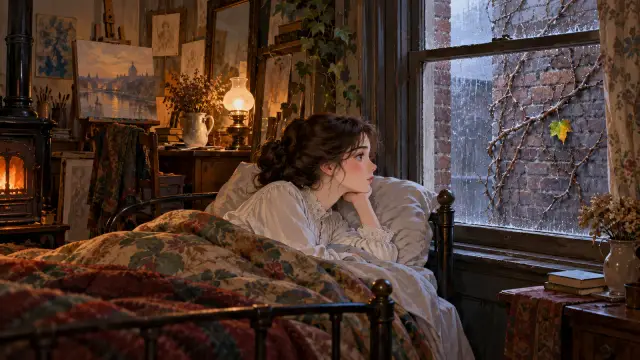
An elder sister came to visit her younger sister in the country. The elder was married to a tradesman in town, the younger to a peasant in the village. As the sisters sat over their tea talking, the elder began to boast of the advantages of town life: saying how comfortably they lived there, how well they dressed, what fine clothes her children wore, what good things they ate and drank, and how she went to the theatre, promenades, and entertainments.
姉が、田舎に住む妹のところへ訪ねてきた。姉は町の商人に、妹は村の百姓に嫁いでいた。二人でお茶を飲みながら話していると、姉が町の暮らしのよさを自慢しはじめた。町ではどんなに楽に暮らしているか。どんなにいい身なりをしているか。子どもたちにどんなにきれいな服を着せているか。どんなにおいしいものを食べたり飲んだりしているか。それに、芝居や散歩や、いろいろな催しに出かけていることも。
The younger sister was piqued, and in turn disparaged the life of a tradesman, and stood up for that of a peasant.
妹はむっとして、今度は商人の暮らしをけなし、百姓の暮らしの肩を持った。
"I would not change my way of life for yours," said she. "We may live roughly, but at least we are free from anxiety. You live in better style than we do, but though you often earn more than you need, you are very likely to lose all you have. You know the proverb, 'Loss and gain are brothers twain.' It often happens that people who are wealthy one day are begging their bread the next. Our way is safer. Though a peasant's life is not a fat one, it is a long one. We shall never grow rich, but we shall always have enough to eat."
「わたしは、自分の暮らしを姉さんの暮らしと取り替えたいとは思わないわ」と妹は言った。「わたしたちの暮らしは荒っぽいかもしれないけど、少なくとも心配ごとはないもの。姉さんたちはわたしたちよりいい暮らしをしているわ。でも、要るより多く稼ぐことはよくあっても、持っているものを全部なくしてしまうことだって、大いにあるのよ。ことわざにもあるでしょう、『損と得とは兄弟分』って。きのうはお金持ちだった人が、きょうはパンを恵んでもらって歩いている、なんてことはよくあるわ。わたしたちのやり方のほうが安心よ。百姓の暮らしは太くはないけれど、長続きするの。お金持ちにはけっしてならないけれど、食べるものに困ることもないわ」
The elder sister said sneeringly:
姉はあざ笑うように言った。
"Enough? Yes, if you like to share with the pigs and the calves! What do you know of elegance or manners! However much your good man may slave, you will die as you are living-on a dung heap-and your children the same."
「困らないですって? そうね、豚や子牛と分け合うのがお好きならね! あんたに上品さや行儀作法の何がわかるっていうの! あんたのご亭主がどんなに身を粉にして働いたって、あんたはいまと同じ暮らしのまま、肥やしの山の上で死ぬのよ。子どもたちだって同じことよ」
"Well, what of that?" replied the younger. "Of course our work is rough and coarse. But, on the other hand, it is sure; and we need not bow to any one. But you, in your towns, are surrounded by temptations; today all may be right, but tomorrow the Evil One may tempt your husband with cards, wine, or women, and all will go to ruin. Don't such things happen often enough?"
「それがどうしたっていうの?」と妹は答えた。「そりゃあ、わたしたちの仕事は荒っぽくて泥くさいわ。でもそのかわり、確かなものよ。それに、誰にも頭を下げなくていいの。でも姉さんたちは、町で誘惑に囲まれているじゃない。きょうは何もかもうまくいっていても、あしたには悪魔がご亭主を、カードやお酒や女で誘惑して、何もかもだめになってしまうかもしれない。そんなこと、しょっちゅう起きているでしょう?」
Pahom, the master of the house, was lying on the top of the oven, and he listened to the women's chatter.
この家の主人のパホームは、ペチカの上に寝そべって、女たちのおしゃべりを聞いていた。
"It is perfectly true," thought he. "Busy as we are from childhood tilling Mother Earth, we peasants have no time to let any nonsense settle in our heads. Our only trouble is that we haven't land enough. If I had plenty of land, I shouldn't fear the Devil himself!"
「まったくそのとおりだ」とパホームは思った。「おれたち百姓は、子どものころから母なる大地を耕すのに忙しくて、頭の中にくだらない考えが入りこむ暇なんかない。ただひとつ困っているのは、土地が足りないことだ。たっぷり土地さえあれば、悪魔だって怖くないんだがなあ!」
The women finished their tea, chatted a while about dress, and then cleared away the tea-things and lay down to sleep.
女たちはお茶を飲み終えると、しばらく着るもののことをしゃべり、それから茶道具を片づけて寝床に入った。
But the Devil had been sitting behind the oven, and had heard all that was said. He was pleased that the peasant's wife had led her husband into boasting, and that he had said that if he had plenty of land he would not fear the Devil himself.
ところが悪魔がペチカの後ろに座っていて、話をすっかり聞いていた。悪魔は喜んだ。百姓のおかみさんのせいで、亭主が大口をたたいた。たっぷり土地さえあれば悪魔だって怖くない、と言ったのだ。
"All right," thought the Devil. "We will have a tussle. I'll give you land enough; and by means of that land I will get you into my power."
「よかろう」と悪魔は思った。「ひとつ勝負といこう。おまえに土地をたっぷりくれてやる。そしてその土地を使って、おまえをわしの手に入れてやろう」
Close to the village there lived a lady, a small landowner, who had an estate of about three hundred acres. She had always lived on good terms with the peasants, until she engaged as her steward an old soldier, who took to burdening the people with fines. However careful Pahom tried to be, it happened again and again that now a horse of his got among the lady's oats, now a cow strayed into her garden, now his calves found their way into her meadows-and he always had to pay a fine.
村のすぐ近くに、一人の奥さまが住んでいた。小さな地主で、三百エーカーほどの土地を持っていた。奥さまはずっと百姓たちと仲よくやってきた。ところが年寄りの退役兵を管理人に雇ったところ、この男が村人たちに、次々と罰金を課すようになった。パホームがどんなに気をつけていても、馬が奥さまの燕麦畑に入りこんだり、牛が庭に迷いこんだり、子牛が牧草地に入りこんだりすることが、たびたびあった。そのたびに罰金を払わなければならなかった。
Pahom paid, but grumbled, and, going home in a temper, was rough with his family. All through that summer Pahom had much trouble because of this steward; and he was even glad when winter came and the cattle had to be stabled. Though he grudged the fodder when they could no longer graze on the pasture-land, at least he was free from anxiety about them.
パホームは払いはしたが、ぶつぶつ文句を言い、むしゃくしゃして家に帰っては、家族に当たり散らした。その夏じゅう、パホームはこの管理人のせいでさんざん苦労した。だから冬が来て、家畜を小屋に入れなければならなくなると、かえってほっとしたくらいだった。放牧地で草を食べさせられなくなり、飼い葉代は惜しかったが、少なくとも家畜のことで気をもまなくてすんだからである。
In the winter the news got about that the lady was going to sell her land, and that the keeper of the inn on the high road was bargaining for it. When the peasants heard this they were very much alarmed.
冬になると、うわさが広まった。奥さまが土地を売りに出すそうだ。街道ぞいの宿屋の主人が、それを買おうと掛け合っているそうだ。それを聞いて、百姓たちはひどくあわてた。
"Well," thought they, "if the innkeeper gets the land he will worry us with fines worse than the lady's steward. We all depend on that estate."
「さあ大変だ」と百姓たちは思った。「宿屋の亭主が土地を手に入れたら、奥さまの管理人よりもっとひどい罰金で、おれたちを苦しめるだろう。おれたちはみんな、あの土地をあてにして暮らしているんだから」
So the peasants went on behalf of their Commune, and asked the lady not to sell the land to the innkeeper; offering her a better price for it themselves. The lady agreed to let them have it. Then the peasants tried to arrange for the Commune to buy the whole estate, so that it might be held by all in common. They met twice to discuss it, but could not settle the matter; the Evil One sowed discord among them, and they could not agree. So they decided to buy the land individually, each according to his means; and the lady agreed to this plan as she had to the other.
そこで百姓たちは、村の共同体を代表して奥さまのところへ行き、土地を宿屋の主人に売らないでくれとたのんだ。自分たちがもっといい値で買う、と申し出たのである。奥さまは、百姓たちに譲ることを承知した。そこで百姓たちは、共同体で土地を全部買いとって、みんなで一緒に持つことにしようとした。二度集まって相談したが、話はまとまらなかった。悪魔が百姓たちのあいだに仲たがいの種をまいたので、意見が合わなかったのだ。そこで、めいめいが自分のふところ具合に応じて、ばらばらに土地を買うことにした。奥さまはこの案も、前の案と同じように承知した。
Presently Pahom heard that a neighbor of his was buying fifty acres, and that the lady had consented to accept one half in cash and to wait a year for the other half. Pahom felt envious.
まもなくパホームは、隣の男が五十エーカー買うことになったと聞いた。奥さまは、半分を現金で受けとり、残りの半分は一年待つことを承知したという。パホームはうらやましくなった。
"Look at that," thought he, "the land is all being sold, and I shall get none of it." So he spoke to his wife.
「ほら見ろ」とパホームは思った。「土地はどんどん売れていくのに、おれには何も手に入らない」そこで女房に話した。
"Other people are buying," said he, "and we must also buy twenty acres or so. Life is becoming impossible. That steward is simply crushing us with his fines."
「ほかの連中は買っているんだ」とパホームは言った。「おれたちも、二十エーカーかそこらは買わなきゃならん。このままじゃ暮らしていけない。あの管理人ときたら、罰金でおれたちを押しつぶしにかかっているんだから」
So they put their heads together and considered how they could manage to buy it. They had one hundred roubles laid by. They sold a colt, and one half of their bees; hired out one of their sons as a laborer, and took his wages in advance; borrowed the rest from a brother-in-law, and so scraped together half the purchase money.
そこで夫婦は額を寄せ合って、どうやったら買えるかを考えた。蓄えが百ルーブルあった。子馬を一頭と、蜜蜂の半分を売った。息子の一人を作男に出して、給金を前借りした。残りは義理の兄弟から借りた。こうしてどうにか、代金の半分をかき集めた。
Having done this, Pahom chose out a farm of forty acres, some of it wooded, and went to the lady to bargain for it. They came to an agreement, and he shook hands with her upon it, and paid her a deposit in advance. Then they went to town and signed the deeds; he paying half the price down, and undertaking to pay the remainder within two years.
それがすむと、パホームは一部が林になっている四十エーカーの農地を選び、奥さまのところへ値段の掛け合いに行った。話がまとまると、奥さまと手を打ち、手付金を払った。それから二人で町へ行って、証書に署名した。パホームは代金の半分をその場で払い、残りは二年以内に払うと約束した。
So now Pahom had land of his own. He borrowed seed, and sowed it on the land he had bought. The harvest was a good one, and within a year he had managed to pay off his debts both to the lady and to his brother-in-law. So he became a landowner, ploughing and sowing his own land, making hay on his own land, cutting his own trees, and feeding his cattle on his own pasture. When he went out to plough his fields, or to look at his growing corn, or at his grass meadows, his heart would fill with joy. The grass that grew and the flowers that bloomed there, seemed to him unlike any that grew elsewhere. Formerly, when he had passed by that land, it had appeared the same as any other land, but now it seemed quite different.
こうしてパホームは、自分の土地を持つ身になった。種を借りて、買った土地にまいた。収穫はよく、一年のうちに、奥さまへの借金も、義理の兄弟への借金も、払い終えた。こうしてパホームは地主になった。自分の土地を耕して種をまき、自分の土地で干し草をつくり、自分の木を切り、自分の放牧地で家畜を養った。畑を耕しに出かけたり、伸びていく麦や草地を見に行ったりすると、パホームの胸は喜びでいっぱいになった。そこに生える草も、咲く花も、ほかのどこのものとも違って見えた。前にこの土地のそばを通ったときは、ほかの土地と何も変わらないように見えた。それがいまでは、まるで違って見えるのだった。
So Pahom was well contented, and everything would have been right if the neighboring peasants would only not have trespassed on his corn-fields and meadows. He appealed to them most civilly, but they still went on: now the Communal herdsmen would let the village cows stray into his meadows; then horses from the night pasture would get among his corn. Pahom turned them out again and again, and forgave their owners, and for a long time he forbore from prosecuting any one. But at last he lost patience and complained to the District Court. He knew it was the peasants' want of land, and no evil intent on their part, that caused the trouble; but he thought:
こうしてパホームはたいそう満足していた。近所の百姓たちが麦畑や草地に入りこみさえしなければ、何もかもうまくいっていただろう。パホームはずいぶんていねいにたのんだが、それでもやめなかった。共同体の牧夫が村の牛を草地に迷いこませることもあれば、夜の放牧に出した馬が麦畑に入りこむこともあった。パホームは何度も何度も追い出しては、持ち主を許してやり、長いこと、誰も訴えずに辛抱した。だがとうとう堪忍袋の緒が切れて、郡の裁判所に訴え出た。面倒が起きるのは、百姓たちに土地が足りないからで、悪気があってのことではない。それはわかっていた。それでもパホームは考えた。
"I cannot go on overlooking it, or they will destroy all I have. They must be taught a lesson."
「いつまでも見逃してやるわけにはいかない。でないと、おれの持っているものを全部だめにされてしまう。思い知らせてやらなきゃならん」
So he had them up, gave them one lesson, and then another, and two or three of the peasants were fined. After a time Pahom's neighbours began to bear him a grudge for this, and would now and then let their cattle on his land on purpose. One peasant even got into Pahom's wood at night and cut down five young lime trees for their bark. Pahom passing through the wood one day noticed something white. He came nearer, and saw the stripped trunks lying on the ground, and close by stood the stumps, where the tree had been. Pahom was furious.
そこでパホームは百姓たちを訴えて、一度、また一度と思い知らせてやった。百姓の二、三人が罰金をとられた。しばらくすると、隣人たちはこのことでパホームを恨むようになり、ときどき、わざと家畜をパホームの土地に放すようになった。ある百姓などは、夜中にパホームの林に忍びこんで、樹皮をとるために、若い菩提樹を五本も切り倒した。ある日、林を通りかかったパホームは、何か白いものに目をとめた。近づいてみると、皮をはがれた幹が地面に転がっていて、すぐそばに、木が立っていたところの切り株が並んでいた。パホームはかんかんに怒った。
"If he had only cut one here and there it would have been bad enough," thought Pahom, "but the rascal has actually cut down a whole clump. If I could only find out who did this, I would pay him out."
「あちこちで一本ずつ切ったというだけでも、ひどいことだ」とパホームは思った。「なのにあの悪党は、ひとかたまり全部切り倒しやがった。誰がやったのかさえわかれば、思い知らせてやるのに」
He racked his brains as to who it could be. Finally he decided: "It must be Simon-no one else could have done it." Se he went to Simon's homestead to have a look around, but he found nothing, and only had an angry scene. However' he now felt more certain than ever that Simon had done it, and he lodged a complaint. Simon was summoned. The case was tried, and re-tried, and at the end of it all Simon was acquitted, there being no evidence against him. Pahom felt still more aggrieved, and let his anger loose upon the Elder and the Judges.
パホームは、誰のしわざだろうと頭をしぼった。そしてとうとう決めつけた。「セミョーンにちがいない。ほかのやつにできるはずがない」そこでセミョーンの家に行ってあたりを見まわしたが、何も見つからず、ただどなり合いになっただけだった。それでも、セミョーンがやったのだという気持ちはいっそう強くなり、パホームは訴えを起こした。セミョーンが呼び出された。裁判は何度もくりかえされたが、結局、何の証拠もないというので、セミョーンは無罪になった。パホームはますます腹を立て、その怒りを村長や判事たちにぶちまけた。
"You let thieves grease your palms," said he. "If you were honest folk yourselves, you would not let a thief go free."
「あんたたちは泥棒から袖の下をもらっているんだ」とパホームは言った。「あんたたち自身が正直者なら、泥棒を放免したりはしないはずだ」
So Pahom quarrelled with the Judges and with his neighbors. Threats to burn his building began to be uttered. So though Pahom had more land, his place in the Commune was much worse than before.
こうしてパホームは、判事たちとも、隣人たちとも仲たがいした。家に火をつけてやる、という脅しまで聞こえてくるようになった。こうして、パホームの土地は前より増えたが、共同体の中での立場は、前よりずっと悪くなってしまった。
About this time a rumor got about that many people were moving to new parts.
ちょうどそのころ、新しい土地へ移っていく人が大勢いる、といううわさが広まった。
"There's no need for me to leave my land," thought Pahom. "But some of the others might leave our village, and then there would be more room for us. I would take over their land myself, and make my estate a bit bigger. I could then live more at ease. As it is, I am still too cramped to be comfortable."
「おれが自分の土地を離れることはない」とパホームは思った。「だが、ほかの連中が何人か村を出ていけば、こっちにはもっとゆとりができる。そいつらの土地を自分が引き受けて、地所を少し広げることもできる。そうすれば、もっと楽に暮らせるだろう。いまのままじゃ、まだ窮屈で落ちつかない」
One day Pahom was sitting at home, when a peasant passing through the village, happened to call in. He was allowed to stay the night, and supper was given him. Pahom had a talk with this peasant and asked him where he came from. The stranger answered that he came from beyond the Volga, where he had been working. One word led to another, and the man went on to say that many people were settling in those parts. He told how some people from his village had settled there. They had joined the Commune, and had had twenty-five acres per man granted them. The land was so good, he said, that the rye sown on it grew as high as a horse, and so thick that five cuts of a sickle made a sheaf. One peasant, he said, had brought nothing with him but his bare hands, and now he had six horses and two cows of his own.
ある日パホームが家にいると、村を通りかかった一人の百姓が、たまたま立ち寄った。その男はひと晩泊めてもらい、夕食をふるまわれた。パホームはこの百姓と話をして、どこから来たのかと聞いた。よそから来た男は、ヴォルガの向こうから来た、そこで働いていたのだ、と答えた。話がはずんで、男は、あのあたりには大勢の人が移り住んでいると話しだした。自分の村の者も何人か、あそこに住みついたという。共同体に入って、一人につき二十五エーカーの土地をもらった。土地はとても肥えていて、まいたライ麦は馬の背丈ほどにも伸び、びっしり生えるので、鎌を五回振ればひと束になる。ある百姓などは、身ひとつでやって来たのに、いまでは自分の馬を六頭と、牛を二頭持っている。男はそう話した。
Pahom's heart kindled with desire. He thought:
パホームの胸に、ほしいという気持ちがめらめらと燃え上がった。パホームは考えた。
"Why should I suffer in this narrow hole, if one can live so well elsewhere? I will sell my land and my homestead here, and with the money I will start afresh over there and get everything new. In this crowded place one is always having trouble. But I must first go and find out all about it myself."
「よそでそんなにいい暮らしができるのなら、なぜこんな狭苦しい穴ぐらで苦労していなきゃならないんだ? ここの土地と家を売って、その金で向こうで一からやり直し、何もかも新しくそろえよう。こんなごみごみしたところにいたら、いつも面倒ばかりだ。だがまず、自分で行って、何もかも確かめてこなきゃならん」
Towards summer he got ready and started. He went down the Volga on a steamer to Samara, then walked another three hundred miles on foot, and at last reached the place. It was just as the stranger had said. The peasants had plenty of land: every man had twenty-five acres of Communal land given him for his use, and any one who had money could buy, besides, at fifty-cents an acre as much good freehold land as he wanted.
夏が近づくと、パホームは支度をして出かけた。蒸気船でヴォルガをサマーラまで下り、そこからさらに三百マイル歩いて、とうとうその土地にたどり着いた。よそから来た男の言ったとおりだった。百姓たちは土地をたっぷり持っていた。誰でも共同体の土地を二十五エーカーずつ使わせてもらえた。お金のある者は、そのほかに、いい私有地を一エーカー五十セントで、好きなだけ買えた。
Having found out all he wished to know, Pahom returned home as autumn came on, and began selling off his belongings. He sold his land at a profit, sold his homestead and all his cattle, and withdrew from membership of the Commune. He only waited till the spring, and then started with his family for the new settlement.
知りたいことをすっかり確かめると、パホームは秋が近づくころ家に帰り、持ち物を売り払いはじめた。土地をもうけが出る値で売り、家も家畜も全部売り払って、共同体からも抜けた。そして春が来るのを待って、家族を連れて新しい入植地へ出発した。
As soon as Pahom and his family arrived at their new abode, he applied for admission into the Commune of a large village. He stood treat to the Elders, and obtained the necessary documents. Five shares of Communal land were given him for his own and his sons' use: that is to say—125 acres (not altogether, but in different fields) besides the use of the Communal pasture. Pahom put up the buildings he needed, and bought cattle. Of the Communal land alone he had three times as much as at his former home, and the land was good corn-land. He was ten times better off than he had been. He had plenty of arable land and pasturage, and could keep as many head of cattle as he liked.
新しい住まいに着くとすぐ、パホームは、ある大きな村の共同体に入れてもらいたいと申し出た。長老たちにごちそうをふるまい、必要な書類を手に入れた。自分と息子たちが使えるように、共同体の土地を五人分もらった。つまり百二十五エーカーである(ひとまとまりではなく、あちこちの畑に分かれていたが)。ほかに、共同の放牧地も使えた。パホームは必要な建物を建て、家畜を買った。共同体の土地だけでも、前の住まいの三倍あり、しかも麦のよくとれる、いい土地だった。暮らしは前の十倍もよくなった。耕す土地も、放牧地もたっぷりあり、家畜を好きなだけ飼えた。
At first, in the bustle of building and settling down, Pahom was pleased with it all, but when he got used to it he began to think that even here he had not enough land. The first year, he sowed wheat on his share of the Communal land, and had a good crop. He wanted to go on sowing wheat, but had not enough Communal land for the purpose, and what he had already used was not available; for in those parts wheat is only sown on virgin soil or on fallow land. It is sown for one or two years, and then the land lies fallow till it is again overgrown with prairie grass. There were many who wanted such land, and there was not enough for all; so that people quarrelled about it. Those who were better off, wanted it for growing wheat, and those who were poor, wanted it to let to dealers, so that they might raise money to pay their taxes. Pahom wanted to sow more wheat; so he rented land from a dealer for a year. He sowed much wheat and had a fine crop, but the land was too far from the village—the wheat had to be carted more than ten miles. After a time Pahom noticed that some peasant-dealers were living on separate farms, and were growing wealthy; and he thought:
初めのうちは、家を建てたり、落ちついたりするのに忙しく、パホームは何もかもに満足していた。だが慣れてくると、ここでも土地が足りないと思いはじめた。最初の年、パホームは割り当ての共同体の土地に小麦をまいて、豊作だった。小麦をまき続けたかったが、そのための共同体の土地が足りなかった。一度使った土地は、もう使えなかったのだ。このあたりでは、小麦は手つかずの土地か、休ませておいた土地にしかまかない。一、二年まいたら、その土地はまた草原の草に覆われるまで休ませておく。そういう土地をほしがる者は大勢いて、みんなに行きわたるほどはなかった。それで人々は、その土地をめぐって争った。暮らしにゆとりのある者は、小麦をつくるためにほしがった。貧しい者は、商人に貸して、税金を払うお金をつくるためにほしがった。パホームはもっと小麦をまきたかったので、ある商人から土地を一年借りた。小麦をたくさんまいて、みごとな収穫を得た。だがその土地は村から遠すぎた。小麦を十マイル以上も荷車で運ばなければならなかったのだ。しばらくするうちに、パホームは気づいた。百姓あがりの商人たちが、村から離れた自分の農場に住んで、金持ちになっていく。そしてパホームは考えた。
"If I were to buy some freehold land, and have a homestead on it, it would be a different thing, altogether. Then it would all be nice and compact."
「もし私有地を買って、そこに家を建てたら、まるで話が違ってくる。そうすれば何もかも、ひとまとまりになって具合がいい」
The question of buying freehold land recurred to him again and again.
私有地を買うという考えが、何度も何度も頭に浮かんだ。
He went on in the same way for three years; renting land and sowing wheat. The seasons turned out well and the crops were good, so that he began to lay money by. He might have gone on living contentedly, but he grew tired of having to rent other people's land every year, and having to scramble for it. Wherever there was good land to be had, the peasants would rush for it and it was taken up at once, so that unless you were sharp about it you got none. It happened in the third year that he and a dealer together rented a piece of pasture land from some peasants; and they had already ploughed it up, when there was some dispute, and the peasants went to law about it, and things fell out so that the labor was all lost. "If it were my own land," thought Pahom, "I should be independent, and there would not be all this unpleasantness."
パホームは三年のあいだ、同じように土地を借りて小麦をまき続けた。天候に恵まれて作物はよくでき、お金がたまりはじめた。そのまま満足して暮らしていくこともできただろう。だが、毎年人の土地を借りなければならず、それを奪い合わなければならないのに、うんざりしてきた。いい土地が出たと聞けば、どこでも百姓たちがわっと押し寄せ、たちまち借り手がついてしまう。よほど抜け目なくやらないと、何も手に入らないのだ。三年目に、パホームはある商人と一緒に、何人かの百姓から放牧地をひと区画借りた。すっかり耕し終えたところで、何かもめごとが起き、百姓たちが訴えを起こした。そしてどういうわけか、苦労がすっかり水の泡になってしまった。「もしこれが自分の土地だったら」とパホームは思った。「誰にもたよらずにすむし、こんないやな思いもしないですむのに」
So Pahom began looking out for land which he could buy; and he came across a peasant who had bought thirteen hundred acres, but having got into difficulties was willing to sell again cheap. Pahom bargained and haggled with him, and at last they settled the price at 1,500 roubles, part in cash and part to be paid later. They had all but clinched the matter, when a passing dealer happened to stop at Pahom's one day to get a feed for his horse. He drank tea with Pahom, and they had a talk. The dealer said that he was just returning from the land of the Bashkirs, far away, where he had bought thirteen thousand acres of land all for 1,000 roubles. Pahom questioned him further, and the tradesman said:
そこでパホームは、買える土地を探しはじめた。そして一人の百姓に出会った。千三百エーカーの土地を買ったものの、困ったことになって、安く手放したがっているという。パホームはその男と値段を掛け合い、値切りに値切って、とうとう千五百ルーブル、一部は現金で、残りはあとで払うということで話がまとまった。ほとんど話が決まりかけていたとき、ある日、通りがかりの商人が、馬に飼い葉をやるためにパホームの家に立ち寄った。商人はパホームとお茶を飲み、二人は話をした。商人は、遠いバシキール人の土地からちょうど帰ってきたところで、そこで一万三千エーカーの土地を、たった千ルーブルで買ってきたと言った。パホームがさらに問いただすと、商人は言った。
"All one need do is to make friends with the chiefs. I gave away about one hundred roubles' worth of dressing-gowns and carpets, besides a case of tea, and I gave wine to those who would drink it; and I got the land for less than two cents an acre. And he showed Pahom the title-deeds, saying:
「やることといったら、首長たちと仲よくなることだけですよ。部屋着とじゅうたんを百ルーブル分ほどと、お茶をひと箱やって、飲む者には酒をふるまいました。それで土地を一エーカー二セント足らずで手に入れたんです」そう言って商人はパホームに権利証書を見せ、こう言った。
"The land lies near a river, and the whole prairie is virgin soil."
「土地は川のそばにあって、草原はどこも手つかずなんです」
Pahom plied him with questions, and the tradesman said:
パホームが次々に質問すると、商人は言った。
"There is more land there than you could cover if you walked a year, and it all belongs to the Bashkirs. They are as simple as sheep, and land can be got almost for nothing."
「あそこには、一年かかって歩いても回りきれないほどの土地があって、それが全部バシキール人のものなんです。あの人たちは羊みたいに素朴で、土地はほとんどただ同然で手に入りますよ」
"There now," thought Pahom, "with my one thousand roubles, why should I get only thirteen hundred acres, and saddle myself with a debt besides. If I take it out there, I can get more than ten times as much for the money."
「なんてこった」とパホームは思った。「おれの千ルーブルで、なぜ千三百エーカーぽっちしか手に入れられず、そのうえ借金まで背負いこまなきゃならないんだ? 向こうへ持っていけば、同じ金でその十倍以上も手に入るのに」
Pahom inquired how to get to the place, and as soon as the tradesman had left him, he prepared to go there himself. He left his wife to look after the homestead, and started on his journey taking his man with him. They stopped at a town on their way, and bought a case of tea, some wine, and other presents, as the tradesman had advised. On and on they went until they had gone more than three hundred miles, and on the seventh day they came to a place where the Bashkirs had pitched their tents. It was all just as the tradesman had said. The people lived on the steppes, by a river, in felt-covered tents. They neither tilled the ground, nor ate bread. Their cattle and horses grazed in herds on the steppe. The colts were tethered behind the tents, and the mares were driven to them twice a day. The mares were milked, and from the milk kumiss was made. It was the women who prepared kumiss, and they also made cheese. As far as the men were concerned, drinking kumiss and tea, eating mutton, and playing on their pipes, was all they cared about. They were all stout and merry, and all the summer long they never thought of doing any work. They were quite ignorant, and knew no Russian, but were good-natured enough.
パホームはその土地への行き方を聞いた。そして商人が帰るとすぐ、自分で行く支度をした。家のことは女房に任せ、作男を一人連れて旅に出た。途中の町に立ち寄って、商人に教わったとおり、お茶をひと箱と、酒と、ほかの贈り物を買った。どんどん進んで三百マイル以上も行き、七日目に、バシキール人がテントを張っている場所に着いた。何もかも商人の言ったとおりだった。人々は川のほとりの草原で、フェルトで覆ったテントに住んでいた。土地を耕すこともなく、パンも食べない。牛や馬は群れになって、草原で草を食べていた。子馬はテントの後ろにつながれていて、母馬が日に二度、そこへ連れてこられた。母馬の乳をしぼり、その乳から馬乳酒をつくる。馬乳酒をこしらえるのは女たちの仕事で、女たちはチーズもつくった。男たちはといえば、馬乳酒とお茶を飲み、羊の肉を食べ、笛を吹くことしか頭になかった。みな太っていて陽気で、夏じゅう働くことなど考えもしなかった。世の中のことはまるで知らず、ロシア語もわからなかったが、気のいい人たちだった。
As soon as they saw Pahom, they came out of their tents and gathered round their visitor. An interpreter was found, and Pahom told them he had come about some land. The Bashkirs seemed very glad; they took Pahom and led him into one of the best tents, where they made him sit on some down cushions placed on a carpet, while they sat round him. They gave him tea and kumiss, and had a sheep killed, and gave him mutton to eat. Pahom took presents out of his cart and distributed them among the Bashkirs, and divided amongst them the tea. The Bashkirs were delighted. They talked a great deal among themselves, and then told the interpreter to translate.
パホームを見るとすぐ、人々はテントから出てきて、客のまわりに集まった。通訳が見つかり、パホームは、土地のことで来たのだと話した。バシキール人たちはとても喜んだようだった。パホームを、いちばん上等なテントのひとつに案内し、じゅうたんの上に置いた羽毛のクッションに座らせ、自分たちはそのまわりに座った。お茶と馬乳酒を出し、羊を一頭つぶして、その肉をごちそうした。パホームは荷車から贈り物を取り出してバシキール人たちに配り、お茶も分けてやった。バシキール人たちは大喜びだった。仲間うちでさかんに話し合い、それから通訳に、訳してくれと言った。
"They wish to tell you," said the interpreter, "that they like you, and that it is our custom to do all we can to please a guest and to repay him for his gifts. You have given us presents, now tell us which of the things we possess please you best, that we may present them to you."
「みんなは、あなたにこう伝えたいそうです」と通訳は言った。「あなたが気に入った。お客をできるかぎりもてなし、贈り物にお返しをするのが、わたしたちのならわしだ。あなたはわたしたちに贈り物をくださった。だから今度は、わたしたちの持ち物の中で、何がいちばん気に入ったか言ってほしい。それを差し上げるから、と」
"What pleases me best here," answered Pahom, "is your land. Our land is crowded, and the soil is exhausted; but you have plenty of land and it is good land. I never saw the like of it."
「ここでいちばん気に入ったのは」とパホームは答えた。「みなさんの土地です。わたしらの土地は人がひしめいていて、地味もやせてしまいました。でもみなさんには土地がたっぷりあるし、それもいい土地だ。こんな土地は見たことがありません」
The interpreter translated. The Bashkirs talked among themselves for a while. Pahom could not understand what they were saying, but saw that they were much amused, and that they shouted and laughed. Then they were silent and looked at Pahom while the interpreter said:
通訳が訳した。バシキール人たちはしばらく仲間うちで話し合った。パホームには何を言っているのかわからなかったが、みんながたいそうおもしろがって、大声をあげたり笑ったりしているのはわかった。それからみんなは黙って、パホームを見つめた。通訳が言った。
"They wish me to tell you that in return for your presents they will gladly give you as much land as you want. You have only to point it out with your hand and it is yours."
「みんなは、こう伝えてほしいそうです。贈り物のお返しに、ほしいだけ土地を喜んで差し上げる。手で指し示しさえすれば、それはあなたのものです、と」
The Bashkirs talked again for a while and began to dispute. Pahom asked what they were disputing about, and the interpreter told him that some of them thought they ought to ask their Chief about the land and not act in his absence, while others thought there was no need to wait for his return.
バシキール人たちはまたしばらく話し合い、言い争いを始めた。何を言い争っているのかとパホームが聞くと、通訳は教えてくれた。土地のことは首長に相談するべきで、首長のいないときに勝手に決めてはいけない、と考える者がいる。首長が戻るのを待つことはない、と考える者もいる。
While the Bashkirs were disputing, a man in a large fox-fur cap appeared on the scene. They all became silent and rose to their feet. The interpreter said, "This is our Chief himself."
バシキール人たちが言い争っているところへ、大きな狐の毛皮の帽子をかぶった男が現れた。みんなは黙って立ち上がった。通訳が言った。「この方が、わたしたちの首長です」
Pahom immediately fetched the best dressing-gown and five pounds of tea, and offered these to the Chief. The Chief accepted them, and seated himself in the place of honour. The Bashkirs at once began telling him something. The Chief listened for a while, then made a sign with his head for them to be silent, and addressing himself to Pahom, said in Russian:
パホームはすぐに、いちばん上等な部屋着と、お茶を五ポンド持ってきて、首長に差し出した。首長はそれを受けとって、上座に座った。バシキール人たちはすぐに、首長に何か話しはじめた。首長はしばらく聞いていたが、やがて黙るようにとあごで合図をし、パホームのほうを向いて、ロシア語で言った。
"Well, let it be so. Choose whatever piece of land you like; we have plenty of it."
「よろしい、そうしよう。好きな土地を選びなさい。土地ならたっぷりある」
"How can I take as much as I like?" thought Pahom. "I must get a deed to make it secure, or else they may say, 'It is yours,' and afterwards may take it away again."
「好きなだけもらうなんて、そんなことができるものか」とパホームは思った。「確かなものにするには、証書をもらわなきゃならん。でないと、いまは『あんたのものだ』と言っておいて、あとでまた取り上げるかもしれない」
"Thank you for your kind words," he said aloud. "You have much land, and I only want a little. But I should like to be sure which bit is mine. Could it not be measured and made over to me? Life and death are in God's hands. You good people give it to me, but your children might wish to take it away again."
「ありがたいお言葉、ありがとうございます」とパホームは声に出して言った。「みなさんには土地がたくさんおありで、わたしはほんの少しほしいだけです。でも、どの土地が自分のものなのか、はっきりさせておきたいのです。測って、わたしに譲り渡していただくわけにはいかないでしょうか? 人の生き死には神さまの御手のうちにあります。みなさんは善い方々だからくださっても、お子さんたちがまた取り上げたいと思うかもしれませんから」
"You are quite right," said the Chief. "We will make it over to you."
「もっともだ」と首長は言った。「譲り渡してやろう」
"I heard that a dealer had been here," continued Pahom, "and that you gave him a little land, too, and signed title-deeds to that effect. I should like to have it done in the same way."
「ここに商人が来たと聞きました」とパホームは続けた。「その人にも少し土地をおやりになって、そのことを書いた証書に署名なさったとか。わたしにも同じようにしていただきたいのですが」
The Chief understood.
首長はのみこんだ。
"Yes," replied he, "that can be done quite easily. We have a scribe, and we will go to town with you and have the deed properly sealed."
「いいとも」と首長は答えた。「わけないことだ。わたしたちには書記がいるから、一緒に町へ行って、証書にちゃんと判を押してもらおう」
"And what will be the price?" asked Pahom.
「それで、お値段はいかほどで?」とパホームは聞いた。
"Our price is always the same: one thousand roubles a day."
「わたしたちの値段は、いつも同じだ。一日千ルーブル」
Pahom did not understand.
パホームにはわけがわからなかった。
"A day? What measure is that? How many acres would that be?"
「一日ですって? それはどういう測り方です? 何エーカーになるんですか?」
"We do not know how to reckon it out," said the Chief. "We sell it by the day. As much as you can go round on your feet in a day is yours, and the price is one thousand roubles a day."
「わたしたちは、そういう勘定のしかたを知らない」と首長は言った。「わたしたちは一日単位で売るのだ。一日のうちに自分の足で回れるだけの土地が、あんたのものになる。値段は一日千ルーブルだ」
Pahom was surprised.
パホームは驚いた。
"But in a day you can get round a large tract of land," he said.
「でも、一日あれば、ずいぶん広い土地を回れますよ」とパホームは言った。
The Chief laughed.
首長は笑った。
"It will all be yours!" said he. "But there is one condition: If you don't return on the same day to the spot whence you started, your money is lost."
「それが全部あんたのものになる!」と首長は言った。「だが、条件がひとつある。その日のうちに、出発した場所へ戻ってこなかったら、金はなくなる」
"But how am I to mark the way that I have gone?"
「でも、自分の歩いた道に、どうやってしるしをつければいいんです?」
"Why, we shall go to any spot you like, and stay there. You must start from that spot and make your round, taking a spade with you. Wherever you think necessary, make a mark. At every turning, dig a hole and pile up the turf; then afterwards we will go round with a plough from hole to hole. You may make as large a circuit as you please, but before the sun sets you must return to the place you started from. All the land you cover will be yours."
「なに、あんたの好きな場所へわたしたちが行って、そこで待っている。あんたはそこから出発して、鋤を持ってひと回りしてくるのだ。必要だと思うところに、しるしをつけなさい。曲がり角ごとに穴を掘って、芝土を積み上げておくのだ。あとでわたしたちが、穴から穴へ犂を引いて回る。好きなだけ大きく回ってかまわない。だが日が沈む前に、出発した場所へ戻ってこなければならない。あんたが回った土地は、全部あんたのものになる」
Pahom was delighted. It-was decided to start early next morning. They talked a while, and after drinking some more kumiss and eating some more mutton, they had tea again, and then the night came on. They gave Pahom a feather-bed to sleep on, and the Bashkirs dispersed for the night, promising to assemble the next morning at daybreak and ride out before sunrise to the appointed spot.
パホームは大喜びだった。翌朝早く出発することに決まった。みんなはしばらく話をし、馬乳酒をもう少し飲み、羊の肉をもう少し食べ、またお茶を飲んだ。そのうちに夜になった。バシキール人たちはパホームに羽根布団を出して寝かせてやり、それぞれ寝に引き上げていった。翌朝、夜明けに集まって、日の出前に約束の場所へ馬で出かけることになっていた。
Pahom lay on the feather-bed, but could not sleep. He kept thinking about the land.
パホームは羽根布団に横になったが、眠れなかった。土地のことばかり考えていた。
"What a large tract I will mark off!" thought he. "I can easily go thirty-five miles in a day. The days are long now, and within a circuit of thirty-five miles what a lot of land there will be! I will sell the poorer land, or let it to peasants, but I'll pick out the best and farm it. I will buy two ox-teams, and hire two more laborers. About a hundred and fifty acres shall be plough-land, and I will pasture cattle on the rest."
「なんて広い土地に、しるしをつけてやろう!」とパホームは思った。「一日に三十五マイルくらい、わけなく歩ける。いまは日が長いし、三十五マイルも回れば、どれほどの土地になることか! やせた土地は売るか、百姓たちに貸すかして、いちばんいいところを選んで自分で耕そう。牛を二組買って、作男をもう二人雇おう。百五十エーカーほどを畑にして、残りで家畜を飼おう」
Pahom lay awake all night, and dozed off only just before dawn. Hardly were his eyes closed when he had a dream. He thought he was lying in that same tent, and heard somebody chuckling outside. He wondered who it could be, and rose and went out, and he saw the Bashkir Chief sitting in front of the tent holding his side and rolling about with laughter. Going nearer to the Chief, Pahom asked: "What are you laughing at?" But he saw that it was no longer the Chief, but the dealer who had recently stopped at his house and had told him about the land. Just as Pahom was going to ask, "Have you been here long?" he saw that it was not the dealer, but the peasant who had come up from the Volga, long ago, to Pahom's old home. Then he saw that it was not the peasant either, but the Devil himself with hoofs and horns, sitting there and chuckling, and before him lay a man barefoot, prostrate on the ground, with only trousers and a shirt on. And Pahom dreamt that he looked more attentively to see what sort of a man it was lying there, and he saw that the man was dead, and that it was himself! He awoke horror-struck.
パホームはひと晩じゅう眠れず、夜明け前になってやっとうとうとした。目を閉じたとたん、夢を見た。あの同じテントに寝ていると、外で誰かがくすくす笑っているのが聞こえる。誰だろうと思って、起き上がって外に出てみると、バシキール人の首長がテントの前に座って、腹をかかえて笑い転げていた。パホームは首長に近づいて聞いた。「何を笑っているんです?」ところが、それはもう首長ではなかった。このあいだ家に立ち寄って、土地の話をしてくれたあの商人だった。パホームが「ここへ来てだいぶになるんですか?」と聞こうとすると、それは商人ではなく、ずっと前に、元の家にヴォルガのほうからやって来た、あの百姓だった。と思うと、それも百姓ではなかった。ひづめと角のある悪魔そのものが、そこに座ってくすくす笑っていたのだ。その前には、裸足の男が一人、地面にうつぶせに倒れていた。身につけているのはズボンとシャツだけだった。パホームは夢の中で、そこに倒れているのはどんな男だろうと、もっとよく見てみた。すると男は死んでいた。そしてそれは、自分自身だった! パホームはぞっとして目を覚ました。
"What things one does dream," thought he.
「なんて夢を見るんだろう」とパホームは思った。
Looking round he saw through the open door that the dawn was breaking.
あたりを見まわすと、開いた入り口から、夜が明けかけているのが見えた。
"It's time to wake them up," thought he. "We ought to be starting."
「みんなを起こす時間だ」とパホームは思った。「出かけなきゃならん」
He got up, roused his man (who was sleeping in his cart), bade him harness; and went to call the Bashkirs.
パホームは起き上がり、作男(荷車の中で寝ていた)を起こして馬をつなぐように言いつけ、バシキール人たちを呼びに行った。
"It's time to go to the steppe to measure the land," he said.
「土地を測りに、草原へ行く時間ですよ」とパホームは言った。
The Bashkirs rose and assembled, and the Chief came, too. Then they began drinking kumiss again, and offered Pahom some tea, but he would not wait.
バシキール人たちは起きて集まり、首長もやって来た。それからみんなはまた馬乳酒を飲みはじめ、パホームにもお茶をすすめた。だがパホームは待っていられなかった。
"If we are to go, let us go. It is high time," said he.
「行くなら、行きましょう。もういい時間です」とパホームは言った。
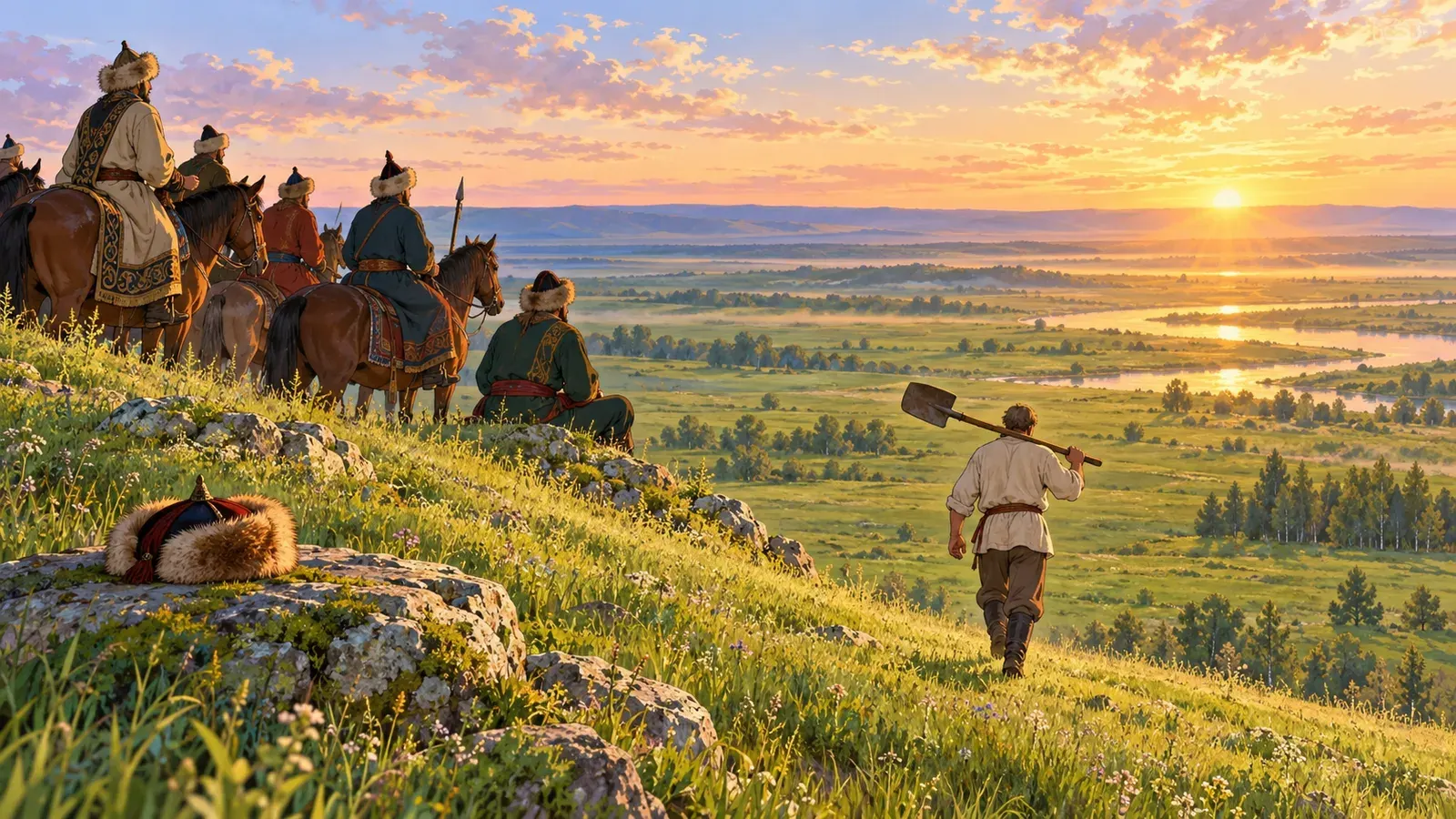
The Bashkirs got ready and they all started: some mounted on horses, and some in carts. Pahom drove in his own small cart with his servant, and took a spade with him. When they reached the steppe, the morning red was beginning to kindle. They ascended a hillock (called by the Bashkirs a shikhan) and dismounting from their carts and their horses, gathered in one spot. The Chief came up to Pahom and stretched out his arm towards the plain:
バシキール人たちは支度をととのえ、みんなで出発した。馬に乗る者もいれば、荷車に乗る者もいた。パホームは作男と一緒に自分の小さな荷車に乗り、鋤を持っていった。草原に着いたとき、朝焼けが赤く燃えはじめていた。一行は小高い丘(バシキール人はシハーンと呼んでいた)にのぼり、荷車や馬から降りて、一か所に集まった。首長がパホームのそばに来て、平原のほうへ腕を伸ばした。
"See," said he, "all this, as far as your eye can reach, is ours. You may have any part of it you like."
「ごらん」と首長は言った。「目の届くかぎり、これは全部わたしたちのものだ。どこでも好きなところを取りなさい」
Pahom's eyes glistened: it was all virgin soil, as flat as the palm of your hand, as black as the seed of a poppy, and in the hollows different kinds of grasses grew breast high.
パホームの目は輝いた。見わたすかぎり、手つかずの土地だった。手のひらのように平らで、けしの種のように黒く、くぼ地には、いろいろな草が胸の高さまで生い茂っていた。
The Chief took off his fox-fur cap, placed it on the ground and said:
首長は狐の毛皮の帽子を脱いで、地面に置いて言った。
"This will be the mark. Start from here, and return here again. All the land you go round shall be yours."
「これをしるしにしよう。ここから出発して、またここへ戻ってきなさい。あんたが回った土地は、全部あんたのものになる」
Pahom took out his money and put it on the cap. Then he took off his outer coat, remaining in his sleeveless under coat. He unfastened his girdle and tied it tight below his stomach, put a little bag of bread into the breast of his coat, and tying a flask of water to his girdle, he drew up the tops of his boots, took the spade from his man, and stood ready to start. He considered for some moments which way he had better go—it was tempting everywhere.
パホームはお金を取り出して、帽子の上に置いた。それから外套を脱いで、袖なしの胴着だけになった。帯をほどいて、腹の下できつく締め直した。パンを入れた小さな袋を胴着のふところに入れ、水筒を帯にくくりつけ、長靴の胴を引っぱり上げて、作男から鋤を受けとった。これで出発の支度ができた。パホームはしばらく、どちらへ行けばいいか考えた。どちらを見ても、心をそそられた。
"No matter," he concluded, "I will go towards the rising sun."
「どこだって同じことだ」とパホームは決めた。「日の昇るほうへ行こう」
He turned his face to the east, stretched himself, and waited for the sun to appear above the rim.
パホームは東を向いて伸びをし、太陽が地平線から顔を出すのを待った。
"I must lose no time," he thought, "and it is easier walking while it is still cool."
「一刻もむだにはできない」とパホームは思った。「それに、涼しいうちのほうが歩きやすい」
The sun's rays had hardly flashed above the horizon, before Pahom, carrying the spade over his shoulder, went down into the steppe.
太陽の光が地平線の上にきらめくかきらめかないうちに、パホームは鋤を肩にかついで、草原へおりていった。
Pahom started walking neither slowly nor quickly. After having gone a thousand yards he stopped, dug a hole and placed pieces of turf one on another to make it more visible. Then he went on; and now that he had walked off his stiffness he quickened his pace. After a while he dug another hole.
パホームは、ゆっくりでも速くもない足どりで歩きだした。千ヤードほど行ったところで立ち止まり、穴を掘って、目立つように芝土を積み重ねた。それからまた歩きだした。体のこわばりがとれてくると、足を速めた。しばらく行くと、また穴を掘った。
Pahom looked back. The hillock could be distinctly seen in the sunlight, with the people on it, and the glittering tires of the cartwheels. At a rough guess Pahom concluded that he had walked three miles. It was growing warmer; he took off his under-coat, flung it across his shoulder, and went on again. It had grown quite warm now; he looked at the sun, it was time to think of breakfast.
パホームは振り返った。日の光の中に丘がくっきりと見えた。その上には人々がいて、荷車の車輪の鉄の輪がきらきら光っていた。ざっと見積もって、三マイル歩いたとパホームは思った。だんだん暖かくなってきたので、胴着を脱いで肩にひっかけ、また歩きだした。もうすっかり暑くなっていた。太陽を見ると、そろそろ朝食のことを考える時刻だった。
"The first shift is done, but there are four in a day, and it is too soon yet to turn. But I will just take off my boots," said he to himself.
「ひと区切り目は終わった。だが一日には四区切りあるんだから、まだ曲がるには早すぎる。だが長靴だけは脱いでおこう」とパホームはひとりごとを言った。
He sat down, took off his boots, stuck them into his girdle, and went on. It was easy walking now.
パホームは腰をおろして長靴を脱ぎ、帯に差して、また歩きだした。今度は楽に歩けた。
"I will go on for another three miles," thought he, "and then turn to the left. The spot is so fine, that it would be a pity to lose it. The further one goes, the better the land seems."
「もう三マイル行こう」とパホームは思った。「それから左へ曲がろう。このあたりはとてもいいから、取りそこなうのは惜しい。先へ行けば行くほど、土地はよくなるようだ」
He went straight on a for a while, and when he looked round, the hillock was scarcely visible and the people on it looked like black ants, and he could just see something glistening there in the sun.
パホームはしばらくまっすぐ進んだ。振り返ってみると、丘はほとんど見えなくなっていた。丘の上の人々は黒い蟻のようで、何かが日の光にきらきら光っているのが、やっと見えるだけだった。
"Ah," thought Pahom, "I have gone far enough in this direction, it is time to turn. Besides I am in a regular sweat, and very thirsty."
「ああ」とパホームは思った。「こっちにはもう十分来た。曲がる時間だ。それに、汗びっしょりだし、ひどくのどが渇いた」
He stopped, dug a large hole, and heaped up pieces of turf. Next he untied his flask, had a drink, and then turned sharply to the left. He went on and on; the grass was high, and it was very hot.
パホームは立ち止まって大きな穴を掘り、芝土を積み上げた。それから水筒をはずして水を飲み、左へぐいと曲がった。パホームはどんどん歩いた。草は高く、ひどく暑かった。
Pahom began to grow tired: he looked at the sun and saw that it was noon.
パホームは疲れてきた。太陽を見ると、もう昼だった。
"Well," he thought, "I must have a rest."
「さて」とパホームは思った。「ひと休みしなければ」
He sat down, and ate some bread and drank some water; but he did not lie down, thinking that if he did he might fall asleep. After sitting a little while, he went on again. At first he walked easily: the food had strengthened him; but it had become terribly hot, and he felt sleepy; still he went on, thinking: "An hour to suffer, a life-time to live."
パホームは腰をおろして、パンを少し食べ、水を飲んだ。だが横にはならなかった。横になったら眠りこんでしまうかもしれないと思ったからだ。しばらく座ってから、また歩きだした。初めは楽に歩けた。食べたもので力がついたのだ。だがひどく暑くなってきて、眠気がさしてきた。それでもパホームは歩き続けた。「苦しいのは一時間、暮らすのは一生」と考えながら。
He went a long way in this direction also, and was about to turn to the left again, when he perceived a damp hollow: "It would be a pity to leave that out," he thought. "Flax would do well there." So he went on past the hollow, and dug a hole on the other side of it before he turned the corner. Pahom looked towards the hillock. The heat made the air hazy: it seemed to be quivering, and through the haze the people on the hillock could scarcely be seen.
この方向にも、パホームはずいぶん遠くまで行った。そしてもう一度左へ曲がろうとしたとき、湿ったくぼ地が目にとまった。「あれをはずすのは惜しい」とパホームは思った。「あそこなら亜麻がよく育つだろう」そこでくぼ地を通り越して進み、その向こう側に穴を掘ってから角を曲がった。パホームは丘のほうを見た。暑さで空気がかすみ、ゆらゆら揺れているように見えた。かすみの向こうの丘の上の人々は、ほとんど見分けられなかった。
"Ah!" thought Pahom, "I have made the sides too long; I must make this one shorter." And he went along the third side, stepping faster. He looked at the sun: it was nearly half way to the horizon, and he had not yet done two miles of the third side of the square. He was still ten miles from the goal.
「しまった!」とパホームは思った。「辺を長くしすぎた。この辺は短くしなければ」そして三つ目の辺を、足を速めて進んだ。太陽を見ると、地平線までの道のりの半分近くまで傾いていた。それなのに、四角の三つ目の辺は、まだ二マイルも進んでいなかった。ゴールまでは、まだ十マイルあった。
"No," he thought, "though it will make my land lopsided, I must hurry back in a straight line now. I might go too far, and as it is I have a great deal of land."
「いや」とパホームは思った。「土地がいびつになってしまうが、もうまっすぐ急いで戻らなければ。行きすぎてしまうかもしれない。いまのままでも、土地はたっぷりあるんだ」
So Pahom hurriedly dug a hole, and turned straight towards the hillock.
そこでパホームは急いで穴を掘り、まっすぐ丘のほうへ向きを変えた。
Pahom went straight towards the hillock, but he now walked with difficulty. He was done up with the heat, his bare feet were cut and bruised, and his legs began to fail. He longed to rest, but it was impossible if he meant to get back before sunset. The sun waits for no man, and it was sinking lower and lower.
パホームはまっすぐ丘へ向かった。だがもう、歩くのもやっとだった。暑さでへとへとになり、裸足の足は切り傷と打ち身だらけで、脚の力が抜けはじめていた。休みたくてたまらなかったが、日が沈む前に戻るつもりなら、休むわけにはいかなかった。太陽は誰も待ってはくれない。どんどん低く沈んでいった。
"Oh dear," he thought, "if only I have not blundered trying for too much! What if I am too late?"
「ああ、困った」とパホームは思った。「欲ばりすぎて、しくじったのでなければいいが! 間に合わなかったらどうしよう?」
He looked towards the hillock and at the sun. He was still far from his goal, and the sun was already near the rim. Pahom walked on and on; it was very hard walking, but he went quicker and quicker. He pressed on, but was still far from the place. He began running, threw away his coat, his boots, his flask, and his cap, and kept only the spade which he used as a support.
パホームは丘のほうと、太陽とを見た。ゴールまではまだ遠いのに、太陽はもう地平線の近くにあった。パホームはどんどん歩いた。歩くのはひどくつらかったが、ますます足を速めた。必死に進んだが、ゴールはまだ遠かった。パホームは走りだした。上着も、長靴も、水筒も、帽子も投げ捨てた。手に残したのは、杖がわりにしている鋤だけだった。
"What shall I do," he thought again, "I have grasped too much, and ruined the whole affair. I can't get there before the sun sets."
「どうしよう」とパホームはまた思った。「欲ばりすぎて、何もかもだめにしてしまった。日が沈む前に、あそこまで行けやしない」
And this fear made him still more breathless. Pahom went on running, his soaking shirt and trousers stuck to him, and his mouth was parched. His breast was working like a blacksmith's bellows, his heart was beating like a hammer, and his legs were giving way as if they did not belong to him. Pahom was seized with terror lest he should die of the strain.
そう思うと、いっそう息が苦しくなった。パホームは走り続けた。びしょぬれのシャツとズボンが体にはりつき、口はからからに渇いていた。胸は鍛冶屋のふいごのように波打ち、心臓は金槌のように打ち、脚は自分のものではないかのように崩れそうだった。無理をしすぎて死んでしまうのではないか。パホームは恐ろしくなった。
Though afraid of death, he could not stop. "After having run all that way they will call me a fool if I stop now," thought he. And he ran on and on, and drew near and heard the Bashkirs yelling and shouting to him, and their cries inflamed his heart still more. He gathered his last strength and ran on.
死ぬのは怖かった。それでも止まれなかった。「ここまで走ってきたのに、いま止まったら、ばか者呼ばわりされるだろう」とパホームは思った。そしてどんどん走った。近づいていくと、バシキール人たちが自分に向かってわめいたり叫んだりしているのが聞こえた。その声に、パホームの心はいっそう燃え立った。最後の力をふりしぼって、パホームは走り続けた。
The sun was close to the rim, and cloaked in mist looked large, and red as blood. Now, yes now, it was about to set! The sun was quite low, but he was also quite near his aim. Pahom could already see the people on the hillock waving their arms to hurry him up. He could see the fox-fur cap on the ground, and the money on it, and the Chief sitting on the ground holding his sides. And Pahom remembered his dream.
太陽は地平線のすぐ近くにあり、もやに包まれて大きく、血のように赤く見えた。いまにも、そう、いまにも沈もうとしていた! 太陽はすっかり低くなっていた。だがパホームも、目的の場所のすぐ近くまで来ていた。丘の上の人々が、急げと腕を振っているのが、もう見えた。地面に置いた狐の毛皮の帽子と、その上のお金が見えた。地面に座って、腹をかかえている首長の姿も見えた。そしてパホームは、あの夢を思い出した。
"There is plenty of land," thought he, "but will God let me live on it? I have lost my life, I have lost my life! I shall never reach that spot!"
「土地はたっぷりある」とパホームは思った。「だが神さまは、おれをそこで暮らさせてくださるだろうか? 命を落とした、命を落としたんだ! あそこまではとても行き着けない!」
Pahom looked at the sun, which had reached the earth: one side of it had already disappeared. With all his remaining strength he rushed on, bending his body forward so that his legs could hardly follow fast enough to keep him from falling. Just as he reached the hillock it suddenly grew dark. He looked up—the sun had already set. He gave a cry: "All my labor has been in vain," thought he, and was about to stop, but he heard the Bashkirs still shouting, and remembered that though to him, from below, the sun seemed to have set, they on the hillock could still see it. He took a long breath and ran up the hillock. It was still light there. He reached the top and saw the cap. Before it sat the Chief laughing and holding his sides. Again Pahom remembered his dream, and he uttered a cry: his legs gave way beneath him, he fell forward and reached the cap with his hands.
パホームは太陽を見た。太陽はもう大地にふれていて、片側はすでに消えていた。残った力をすべてふりしぼって、パホームは突き進んだ。体を前に傾けたので、脚は倒れないようについていくのがやっとだった。ちょうど丘のふもとに着いたとき、急にあたりが暗くなった。見上げると、太陽はもう沈んでいた。パホームは声をあげた。「苦労はみんなむだだった」と思い、立ち止まろうとした。だがバシキール人たちがまだ叫んでいるのが聞こえた。そのとき気がついた。下にいる自分には太陽が沈んだように見えても、丘の上の人たちには、まだ見えているのだ。パホームは大きく息を吸って、丘を駆けのぼった。上はまだ明るかった。てっぺんに着くと、帽子が見えた。その前に首長が座って、腹をかかえて笑っていた。パホームはまたあの夢を思い出し、叫び声をあげた。脚がくずれ、前のめりに倒れて、両手が帽子に届いた。
"Ah, what a fine fellow!" exclaimed the Chief. "He has gained much land!"
「ああ、あっぱれな男だ!」と首長は叫んだ。「たくさんの土地を手に入れたぞ!」
Pahom's servant came running up and tried to raise him, but he saw that blood was flowing from his mouth. Pahom was dead!
作男が駆け寄って、パホームを起こそうとした。だが見ると、口から血が流れていた。パホームは死んでいたのだ!
The Bashkirs clicked their tongues to show their pity.
バシキール人たちは舌を鳴らして、気の毒がった。
His servant picked up the spade and dug a grave long enough for Pahom to lie in, and buried him in it. Six feet from his head to his heels was all he needed.
作男は鋤を拾い上げ、パホームが横たわれるだけの長さの墓を掘って、そこに葬った。頭からかかとまで、六フィート。それが、パホームに必要な土地のすべてだった。