COURTEOUS READER,
親愛なる読者のみなさま
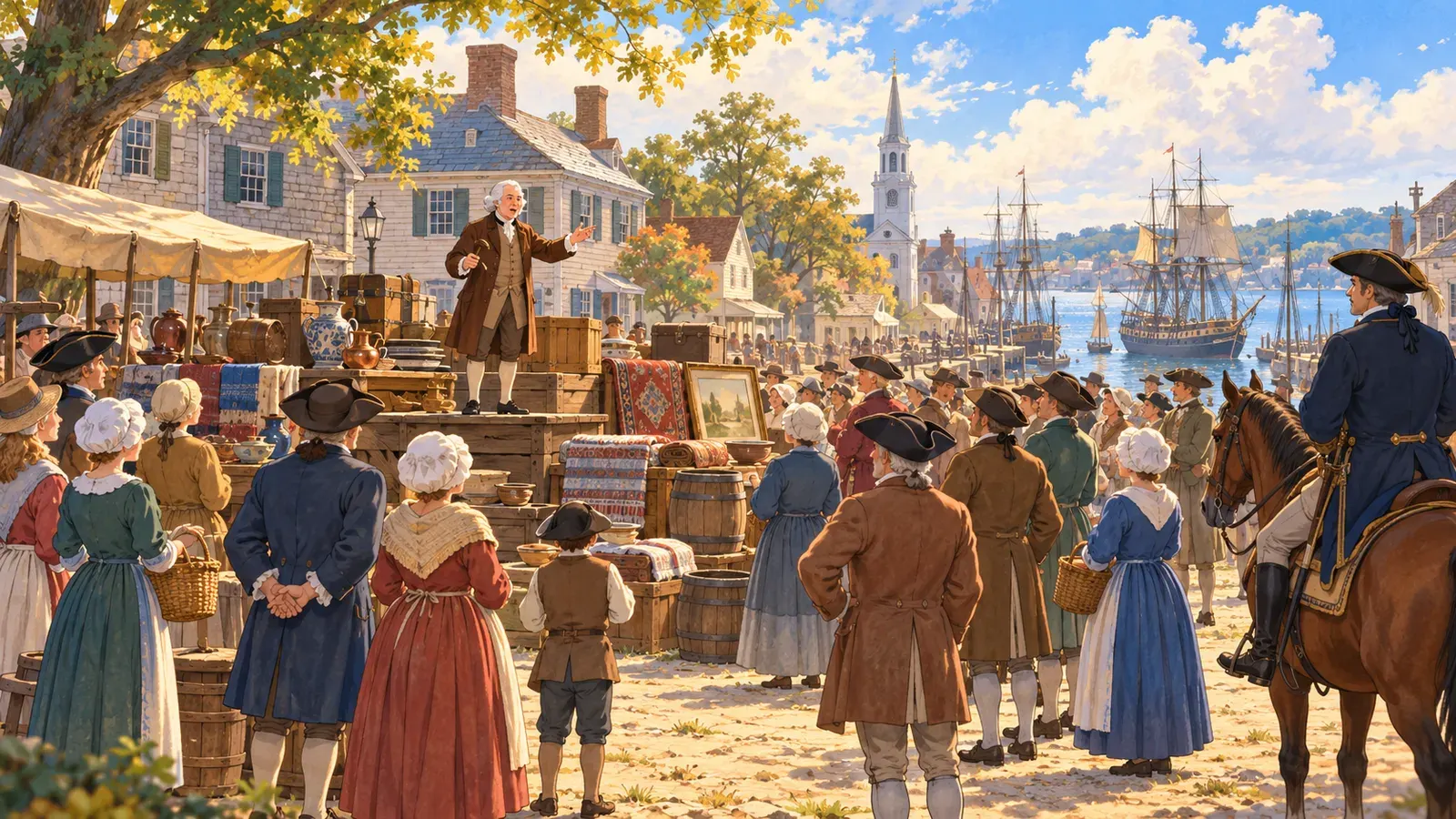
I HAVE heard that nothing gives an author so great pleasure, as to find his works respectfully quoted by others. Judge, then, how much I must have been gratified by an incident I am going to relate to you. I stopped my horse, lately, where a great number of people were collected at an auction of merchants' goods. The hour of the sale not being come, they were conversing on the badness of the times; and one of the company called to a plain, clean, old man, with white locks, 'Pray, Father Abraham, what think you of the times? Will not those heavy taxes quite ruin the country! How shall we be ever able to pay them? What would you advise us to?'—Father Abraham stood up, and replied, 'If you would have my advice, I will give it you in short; "for a word to the wise is enough," as Poor Richard says.' They joined in desiring him to speak his mind, and, gathering round him, he proceeded as follows:
聞くところによると、作家にとって、自分の作品がほかの人に敬意をもって引用されるのを見ることほど、うれしいことはないそうです。ですから、これからお話しする出来事に私がどれほど喜んだか、お察しいただけるでしょう。先日、馬に乗って通りかかると、商人たちの品物の競売に、大勢の人が集まっていました。私はそこで馬を止めました。競売の時刻にはまだ間があったので、人々は不景気の話をしていました。すると、その中の一人が、質素で身ぎれいな、白髪の老人に声をかけました。「ねえ、エイブラハムじいさん、今の世の中をどう思いますかね。あんな重い税金じゃ、国がすっかりだめになってしまうんじゃありませんか! いったいどうやって払っていけばいいんでしょう。どうしたらいいか、教えてくださいよ」。エイブラハムじいさんは立ち上がって答えました。「わしの考えが聞きたいなら、手短に話そう。貧しいリチャードも言うとおり、『賢い者には一言で足りる』のだからな」。人々は口をそろえて、ぜひ考えを聞かせてほしいと頼み、老人のまわりに集まりました。そこで老人は、次のように話しはじめたのです。
'Friends,' says he, 'the taxes are indeed very heavy; and, if those laid on by the government were the only ones we had to pay, we might more easily discharge them; but we have many others, and much more grievous to some of us. We are taxed twice as much by our idleness, three times as much by our pride, and four times as much by our folly; and from these taxes the commissioners cannot ease or deliver us by allowing an abatement. However, let us hearken to good advice, and something may be done for us; "God helps them that help themselves," as Poor Richard says.
「みなさん」と老人は言いました。「税金はたしかにとても重い。政府にかけられる税金だけを払えばいいのなら、もっと楽に払えるでしょう。ところが、私たちにはほかにもたくさんの税金があって、人によってはそちらのほうがずっと重いのです。私たちは、怠け心のために二倍、見栄のために三倍、愚かさのために四倍の税金をかけられています。しかも、こうした税金は、役人に頼んでまけてもらうことも、免除してもらうこともできません。それでも、よい助言に耳を傾ければ、何とかなるかもしれません。貧しいリチャードも言うとおり、『天は自ら助くる者を助く』のですから。
I. 'It would be thought a hard government that should tax its people one-tenth part of their time to be employed in its service: but idleness taxes many of us much more; sloth, by bringing on diseases, absolutely shortens life.
一、「国民の時間の十分の一を取り上げて、政府のために働かせるような税をかける政府があったら、ひどい政府だと思われるでしょう。けれども、怠け心は、私たちの多くに、それよりずっと重い税をかけています。怠けていると病気を招き、まちがいなく命を縮めてしまうのです。
"Sloth, like rust, consumes faster than labour wears, while the used key is always bright," as Poor Richard says.—"But, dost thou love life? then do not squander time, for that is the stuff life is made of," as Poor Richard says.—How much more than is necessary do we spend in sleep! forgetting that, "the sleeping fox catches no poultry, and that there will be sleeping enough in the grave," as Poor Richard says.
『怠けは、さびと同じで、働いてすり減るよりも早く体をむしばむ。いつも使っている鍵は、いつもぴかぴかだ』と、貧しいリチャードは言います。『命が惜しいか。それなら時間をむだにするな。時間こそ、命をつくっている材料なのだから』とも言っています。私たちは、必要以上にどれほど長く眠っていることでしょう! 『眠っている狐は鶏をつかまえられない。眠るのは墓に入ってからで十分だ』という、貧しいリチャードの言葉を忘れているのです。
"If time be of all things the most precious, wasting time must be" as Poor Richard says, "the greatest prodigality;" since, as he elsewhere tells us, "Lost time is never found again; and what we call time enough, always proves little enough." Let us then up and be doing, and doing to the purpose: so by diligence shall we do more with less perplexity. "Sloth makes all things difficult, but industry all easy; and he that riseth late, must trot all day, and shall scarce overtake his business at night; while laziness travels so slowly, that poverty soon overtakes him. Drive thy business, let not that drive thee; and early to bed, and early to rise, makes a man healthy, wealthy, and wise," as Poor Richard says.
貧しいリチャードが言うように、『時間が何よりも貴重なものなら、時間をむだにすることは、何よりもひどい浪費』のはずです。ほかのところでも、こう言っています。『失った時間は二度と見つからない。時間は十分あると思っていても、いつもまるで足りなかったと分かる』。ですから、さあ、起きて仕事にかかりましょう。それも、目的にかなった仕事をするのです。せっせと働けば、少ない苦労で多くのことができます。『怠けるとすべてが難しくなり、勤勉ならすべてがやさしくなる。朝寝坊をした者は一日じゅう小走りしなければならず、夜になってもろくに仕事に追いつけない。怠け者の歩みはあまりにのろいので、すぐに貧乏に追いつかれる。仕事を追い立てよ、仕事に追い立てられるな。早寝早起きは、人を健康に、豊かに、賢くする』と、貧しいリチャードは言っています。
'So what signifies wishing and hoping for better times? We may make these times better, if we bestir ourselves. "Industry need not wish, and he that lives upon hope will die fasting. There are no gains without pains; then help hands, for I have no lands;" or if I have, they are smartly taxed. "He that hath a trade, hath an estate; and he that hath a calling, hath an office of profit and honour," as Poor Richard says; but then the trade must be worked at, and the calling well followed, or neither the estate nor the office will enable us to pay our taxes.—If we are industrious, we shall never starve; for "at the working man's house hunger looks in, but dares not enter." Nor will the bailiff or the constable enter, for "industry pays debts, while despair increaseth them." What, though you have found no treasure, nor has any rich relation left you a legacy. "Diligence is the mother of good luck, and God gives all things to industry. Then plow deep, while sluggards sleep, and you shall have corn to sell and to keep." Work while it is called to-day, for you know not how much you may be hindered to-morrow. "One to-day is worth two to-morrows," as Poor Richard says, and farther, "Never leave that till to-morrow, which you can do to-day."—If you were a servant, would you not be ashamed that a good master should catch you idle? Are you then your own master? be ashamed to catch yourself idle, when there is so much to be done for yourself, your family, your country, and your king. Handle your tools without mittens: remember, that "The cat in gloves catches no mice," as Poor Richard says. It is true, there is much to be done, and, perhaps, you are weak-handed: but stick to it steadily, and you will see great effects; for "Constant dropping wears away stones; and by diligence and patience the mouse ate in two the cable; and little strokes fell great oaks."
「ですから、よい時代が来ないかと願ったり望んだりしても、何になるでしょう。私たちがみずから奮い立てば、今の時代をよくしていけるのです。『勤勉な者は願う必要がない。希望を食べて生きる者は、飢え死にする。苦労なくして得るものなし。だから両手よ、助けておくれ、わしには土地がないのだから』。土地があったとしても、それには重い税がかかっています。『手に職ある者は財産を持ち、天職ある者は、もうけと名誉のある地位を持つ』と、貧しいリチャードは言います。けれども、その職にはげみ、天職にしっかり打ちこまなければ、財産も地位も、税金を払う助けにはなりません。勤勉であれば、飢えることは決してありません。『働き者の家では、飢えは中をのぞきこむが、入ってはこない』からです。差し押さえの役人や巡査も入ってきません。『勤勉は借金を返し、絶望は借金を増やす』からです。宝物を見つけられなくても、金持ちの親戚が遺産を残してくれなくても、かまわないではありませんか。『勤勉は幸運の母。神は勤勉な者にすべてを与えてくださる。だから怠け者が眠っているうちに深く耕せ。そうすれば、売る分も、取っておく分も、麦がとれる』。今日という日のうちに働きなさい。明日はどんなじゃまが入るか分からないのですから。『今日の一日は、明日の二日に値する』と、貧しいリチャードは言います。さらに、『今日できることを明日にのばすな』とも言っています。もしあなたが使用人だったら、よい主人に怠けているところを見つかったら、恥ずかしいと思うでしょう。では、あなたは自分の主人ではありませんか。自分のため、家族のため、国のため、王のためにやるべきことが山ほどあるのに、怠けている自分を見つけたら、恥じなさい。手袋などはめずに道具を握りなさい。貧しいリチャードの言う『手袋をはめた猫はネズミをとれない』を、忘れないことです。たしかに、やるべきことはたくさんあり、あなたには人手が足りないかもしれません。けれども、こつこつと続けていれば、大きな成果が見えてきます。『雨だれ石をうがつ。勤勉と辛抱で、ネズミは太い綱もかみ切った。小さな斧の一打ちが、大きなカシの木を倒す』のですから。
'Methinks I hear some of you say, "Must a man afford himself no leisure?" I will tell thee, my friend, what Poor Richard says, "Employ thy time well, if thou meanest to gain leisure; and, since thou art not sure of a minute, throw not away an hour." Leisure is time for doing something useful; this leisure the diligent man will obtain, but the lazy man never; for "A life of leisure and a life of laziness are two things. Many, without labour, would live by their wits only, but they break for want of stock;" whereas industry gives comfort, and plenty, and respect. "Fly pleasures and they will follow you. The diligent spinner has a large shift; and now I have a sheep and a cow, every body bids me good-morrow."
「中には、『人間、少しも暇を持ってはいけないのか』と言う人もいるでしょう。友よ、貧しいリチャードの言葉を教えてあげましょう。『暇がほしいなら、時間をうまく使え。一分先のことも分からないのだから、一時間を投げ捨てるな』。暇とは、何か役に立つことをするための時間です。勤勉な人はこの暇を手に入れますが、怠け者は決して手に入れられません。『暇のある暮らしと、怠けた暮らしとは、別物だ。多くの人は、働かずに知恵だけで暮らそうとするが、元手がなくてつぶれてしまう』からです。それに対して、勤勉は、くつろぎと豊かさと人からの尊敬をもたらしてくれます。『楽しみから逃げよ。そうすれば、楽しみのほうが追いかけてくる。働き者の糸紡ぎ女は、下着をたっぷり持っている。わしも羊と牛を持つ身になったら、誰もがおはようと声をかけてくれる』。
II. 'But with our industry we must likewise be steady, settled, and careful, and oversee our own affairs with our own eyes, and not trust too much to others: for, as Poor Richard says,
二、「けれども、勤勉であるだけでなく、着実で、腰をすえ、気を配らなければなりません。自分の仕事は自分の目で見張り、人をあまり信用しすぎてはいけません。貧しいリチャードも言っています。
"I never saw an oft-removed tree, Nor yet an oft-removed family, That throve so well as those that settled be."
『何度も植えかえた木、何度も引っ越した家族が、根を下ろしたものほど栄えたためしはない』
And again, "Three removes are as bad as a fire," and again, "Keep thy shop, and thy shop will keep thee:" and again, "If you would have your business done, go; if not, send." And again,
さらに、『三度の引っ越しは、一度の火事に等しい』。また、『店を守れ。そうすれば店があなたを養ってくれる』。また、『用事をすませたいなら、自分で行け。すませなくてもいいなら、人をやれ』。そしてまた、
"He that by the plow would thrive, Himself must either hold or drive."
『鋤で身を立てたい者は、自ら鋤を握るか、牛を追え』
'And again, "The eye of the master will do more work than both his hands:" and again, "Want of care does us more damage than want of knowledge;" and again, "Not to oversee workmen, is to leave them your purse open."
「さらに、『主人の目は、主人の両手よりもよく働く』。また、『注意が足りないほうが、知識が足りないより大きな損になる』。また、『職人を見張らないのは、口の開いた財布を預けるようなものだ』。
'Trusting too much to others' care is the ruin of many; for, "In the affairs of this world, men are saved, not by faith, but by the want of it:" but a man's own care is profitable; for, "If you would have a faithful servant, and one that you like,—serve yourself. A little neglect may breed great mischief; for want of a nail the shoe was lost; for want of a shoe the horse was lost; and for want of a horse the rider was lost;" being overtaken and slain by the enemy; all for want of a little care about a horse-shoe nail.
「人の注意をあてにしすぎると、多くの人が身をほろぼします。『この世のことでは、人は信じることによってではなく、信じないことによって救われる』からです。けれども、自分で気を配ることは、得になります。『忠実で、気に入った使用人がほしいなら、自分で自分に仕えよ。ちょっとした油断が、大きな災いを生む。釘が一本足りなくて蹄鉄がとれ、蹄鉄が足りなくて馬を失い、馬が足りなくて乗り手を失った』のですから。乗り手は敵に追いつかれて殺されてしまいました。すべては、蹄鉄の釘一本に、少し気を配らなかったせいなのです。
III. 'So much for industry, my friends, and attention to one's own business; but to these we must add frugality, if we would make our industry more certainly successful. A man may if he knows not how to save as he gets, "keep his nose all his life to the grindstone, and die not worth a groat at last. A fat kitchen makes a lean will;" and,
三、「みなさん、勤勉と、自分の仕事への気配りについては、これくらいにしましょう。けれども、勤勉をもっと確かに実らせたいなら、これに倹約を加えなければなりません。稼ぐそばからためる方法を知らなければ、『一生、砥石に鼻をこすりつけるようにして働いても、最後には一文なしで死ぬ』かもしれません。『台所が太れば、遺言はやせる』のです。そして、
"Many estates are spent in the getting, Since women for tea forsook spinning and knitting, And men for punch forsook hewing and splitting."
『財産の多くは、稼ぐそばから消えていく。女はお茶のために糸紡ぎと編み物を捨て、男はポンチ酒のために木を切り割る仕事を捨てたから』
"If you would be wealthy, think of saving, as well as of getting. The Indies have not made Spain rich, because her out-goes are greater than her incomes."
『金持ちになりたければ、稼ぐことだけでなく、ためることも考えよ。新大陸の植民地も、スペインを豊かにはしなかった。出ていくお金が入ってくるお金より多いからだ』
'Away, then, with your expensive follies, and you will not then have so much cause to complain of hard times, heavy taxes, and chargeable families; for,
「ですから、お金のかかる愚かなことはおやめなさい。そうすれば、不景気だ、税金が重い、家族を養うのに金がかかる、とそれほど不平を言わずにすむでしょう。なぜなら、
"Women and wine, game and deceit, Make the wealth small, and the want great."
『女と酒、賭けごととごまかしは、富を減らし、貧しさを増やす』からです。
And farther, "What maintains one vice, would bring up two children." You may think perhaps, that a little tea, or a little punch now and then, diet a little more costly, clothes a little finer, and a little entertainment now and then, can be no great matter; but remember, "Many a little makes a mickle." Beware of little expences; "A small leak will sink a great ship," as Poor Richard says; and again, "Who dainties love shall beggars prove;" and moreover, "Fools make feasts, and wise men eat them." Here you are all got together to this sale of fineries and nick-nacks. You call them goods; but, if you do not take care, they will prove evils to some of you. You expect they will be sold cheap, and, perhaps, they may for less than they cost; but, if you have no occasion for them, they must be dear to you. Remember what poor Richard says, "Buy what thou hast no need of, and ere long thou shalt sell thy necessaries." And again, "At a great pennyworth pause a while:" he means, that perhaps the cheapness is apparent only, and not real; or the bargain, by straitening thee in thy business, may do thee more harm than good. For, in another place, he says, "Many have been ruined by buying good pennyworths." Again, "It is foolish to lay out money in a purchase of repentance;" and yet this folly is practised every day at auctions, for want of minding the Almanack. Many a one, for the sake of finery on the back, have gone with a hungry belly, and half starved their families; "Silks and satins, scarlet and velvets, put out the kitchen fire," as Poor Richard says. These are not the necessaries of life; they can scarcely be called the conveniences: and yet only because they look pretty, how many want to have them?—By these, and other extravagancies, the genteel are reduced to poverty, and forced to borrow of those whom they formerly despised, but who, through industry and frugality, have maintained their standing; in which case it appears plainly, that "A ploughman on his legs is higher than a gentleman on his knees," as Poor Richard says. Perhaps they have had a small estate left them, which they knew not the getting of; they think "it is day, and will never be night:" that a little to be spent out of so much is not worth minding; but "Always taking out of the meal-tub, and never putting in, soon comes to the bottom," as Poor Richard says; and then, "When the well is dry, they know the worth of water." But this they might have known before, if they had taken his advice. "If you would know the value of money, go and try to borrow some; for he that goes a borrowing, goes a sorrowing," as Poor Richard says; and, indeed, so does he that lends to such people, when he goes to get it in again. Poor Dick farther advises, and says,
さらに、『悪いくせ一つを養う金で、子ども二人が育てられる』。たまに少しのお茶や少しのポンチ酒、少し高い食べ物、少し上等な服、たまの少しの娯楽くらい、たいしたことはないと思うかもしれません。けれども、『ちりも積もれば山となる』ことを忘れてはいけません。小さな出費に気をつけなさい。『小さな水もれが大きな船を沈める』と、貧しいリチャードは言います。また、『ごちそう好きは乞食になる』。さらに、『愚か者がごちそうを作り、賢い者がそれを食べる』。さて、みなさんは今、このきらびやかな品物やこまごました小物の競売に集まっています。みなさんはそれを「グッズ(よいもの)」と呼びますが、気をつけないと、みなさんの何人かにとっては災いのもとになるでしょう。安く買えると期待しているのでしょうし、たしかに元値より安く売られるかもしれません。けれども、使い道がないのなら、高い買い物にちがいないのです。貧しいリチャードの言葉を思い出しなさい。『要らないものを買えば、やがて要るものを売ることになる』。また、『掘り出し物を見たら、しばし立ち止まれ』。これは、その安さは見かけだけで本物ではないかもしれない、あるいはその買い物のせいで商売の資金が苦しくなって、得より損のほうが大きくなるかもしれない、という意味です。ほかのところで、こうも言っています。『掘り出し物を買って破産した者は多い』。また、『後悔を買うために金を使うのは愚かだ』。それなのに、暦の教えを気にとめないために、こんな愚かなことが毎日のように競売で行われているのです。背中にまとうきらびやかな服のために、おなかをすかせ、家族を半分飢えさせてきた人がたくさんいます。『絹や繻子、緋色の布やビロードは、台所の火を消してしまう』と、貧しいリチャードは言います。こうした品は、暮らしに欠かせないものではありません。便利なものとさえ、まず呼べません。それなのに、ただきれいに見えるというだけで、どれほど多くの人がほしがることでしょう。こうしたぜいたくや、そのほかのむだづかいのせいで、上流の人たちが貧乏に落ち、かつて見下していた人たちからお金を借りなければならなくなります。見下されていた人たちのほうは、勤勉と倹約によって、自分の暮らしを守ってきたのです。こうなると、貧しいリチャードの言うとおり、『自分の足で立つ農夫は、ひざまずく紳士よりも背が高い』ことがはっきりします。そういう人たちは、もしかすると、ちょっとした財産を残してもらったのかもしれません。それを稼ぐ苦労は知らないのです。『今は昼だから、夜は決して来ない』と思っています。これだけたくさんあるのだから、少しくらい使っても気にすることはない、と思っているのです。けれども、『粉おけから取り出してばかりで、入れることがなければ、すぐに底をつく』と、貧しいリチャードは言います。そして、『井戸がかれてはじめて、水のありがたさを知る』のです。けれども、リチャードの忠告を聞いていれば、前もって分かったはずです。『お金のありがたさを知りたければ、借りに行ってみるがいい。借りに行く者は、悲しみに行く者だ』と、貧しいリチャードは言います。そして実際、そういう人にお金を貸した者も、取り立てに行くときには悲しい思いをするのです。貧しいディックは、さらにこう忠告しています。
"Fond pride of dress is sure a very curse, Ere fancy you consult, consult your purse."
『着るものへの見栄こそ、まさに呪い。好みに相談する前に、財布に相談せよ』
'And again, "Pride is as loud a beggar as Want, and a great deal more saucy." When you have bought one fine thing, you must buy ten more, that your appearance may be all of a piece; but Poor Dick says, "It is easier to suppress the first desire, than to satisfy all that follow it." And it is as truly folly for the poor to ape the rich, as for the frog to swell, in order to equal the ox.
「また、『見栄は、貧しさと同じくらい大声でものをねだる乞食で、しかもずっとずうずうしい』。上等な品を一つ買うと、見た目をそろえるために、あと十も買わなければならなくなります。けれども、貧しいディックは言います。『最初の欲を抑えるほうが、そのあとに続く欲を全部満たすよりやさしい』。貧しい人が金持ちのまねをするのは、牛と同じ大きさになろうとして体をふくらませるカエルと同じで、まったく愚かなことです。
"Vessels large may venture more, But little boats should keep near shore."
『大きな船なら沖へ乗り出してもよいが、小舟は岸の近くにいるがよい』
It is, however, a folly soon punished: for, as Poor Richard says, "Pride that dines on vanity, sups on contempt;—Pride breakfasted with Plenty, dined with Poverty and supped with Infamy." And, after all, of what use is this pride of appearance, for which so much is risked, so much is suffered? It cannot promote health, nor ease pain; it makes no increase of merit in the person, it creates envy, it hastens misfortune.
けれども、この愚かさはすぐに罰を受けます。貧しいリチャードが言うように、『見栄を昼食にする者は、さげすみを夕食にする。見栄は、豊かさと朝食をとり、貧しさと昼食をとり、恥と夕食をとった』のですから。それに、これほど危ない橋を渡り、これほどつらい思いをしてまで張る見栄が、結局のところ、何の役に立つでしょう。健康にもなれず、痛みもやわらぎません。その人の値打ちが上がるわけでもありません。ねたみを生み、不幸を早めるだけなのです。
'But what madness it must be to run in debt for these superfluities? We are offered, by the terms of this sale, six months credit; and that, perhaps, has induced some of us to attend it, because we cannot spare the ready money, and hope now to be fine without it. But, ah! think what you do when you run in debt; you give to another power over your liberty. If you cannot pay at the time, you will be ashamed to see your creditor; you will be in fear when you speak to him; you will make poor pitiful sneaking excuses, and, by degrees, come to lose your veracity, and sink into base, downright lying; for, "The second vice is lying, the first is running in debt," as Poor Richard says; and again, to the same purpose, "Lying rides upon Debt's back:" whereas a free-born Englishman ought not to be ashamed nor afraid to see or speak to any man living. But poverty often deprives a man of all spirit and virtue. "It is hard for an empty bag to stand upright."—What would you think of that prince, or of that government, who should issue an edict forbidding you to dress like a gentleman or gentlewoman, on pain of imprisonment or servitude? Would you not say that you were free, have a right to dress as you please, and that such an edict would be a breach of your privileges, and such a government tyrannical? And yet you are about to put yourself under that tyranny, when you run in debt for such dress! Your creditor has authority, at his pleasure, to deprive you of your liberty, by confining you in gaol for life, or by selling you for a servant, if you should not be able to pay him. When you have got your bargain, you may, perhaps, think little of payment; but, as Poor Richard says, "Creditors have better memories than debtors; creditors are a superstitious sect, great observers of set days and times." The day comes round before you are aware, and the demand is made before you are prepared to satisfy it; or, if you bear your debt in mind, the term, which at first seemed so long, will, as it lessens, appear extremely short: "Time will seem to have added wings to his heels as well as his shoulders. Those have a short Lent, who owe money to be paid at Easter." At present, perhaps, you may think yourselves in thriving circumstances, and that you can bear a little extravagance without injury; but
「それにしても、こんな余計なもののために借金をするとは、なんとばかげたことでしょう。この競売では、六か月の後払いが認められています。それで、現金の余裕はないけれど、現金がなくても着飾れると思って、ここへ来た人もいるかもしれません。けれども、ああ、借金をするとき、自分が何をしているのか考えてごらんなさい。自分の自由を左右する力を、人に渡してしまうのです。期日に払えなければ、貸し主に会うのが恥ずかしくなります。話をするにも、びくびくします。みじめで、情けない、こそこそした言い訳をするようになり、だんだん正直さを失って、卑しい、まっかなうそをつくようになります。『二番目の悪はうそをつくこと、一番目の悪は借金をすること』と、貧しいリチャードは言います。同じ意味で、『うそは借金の背中に乗ってやってくる』とも言っています。本来、自由に生まれたイギリス人は、生きている誰に会っても、誰と話しても、恥じたり恐れたりすることはないはずです。けれども、貧しさはしばしば、人から気概も徳も奪ってしまいます。『からっぽの袋は、まっすぐ立たない』のです。もし、ある君主や政府が、紳士や淑女のような服装をした者は牢屋に入れるか奴隷にする、というおふれを出したら、みなさんはどう思うでしょう。自分たちは自由だ、好きな服を着る権利がある、こんなおふれは自分たちの権利を踏みにじるものだ、こんな政府は暴君だ、と言うのではありませんか。それなのに、そういう服のために借金をするとき、みなさんは自分からその暴政の下に身を置こうとしているのです! 払えなければ、貸し主は好きなときに、みなさんを一生牢屋に閉じこめたり、使用人として売りとばしたりして、自由を奪うことができるのです。掘り出し物を手に入れたときには、支払いのことなどあまり考えないかもしれません。けれども、貧しいリチャードは言います。『貸し主は、借り手より記憶力がいい。貸し主というのは迷信深い一派で、決められた日と時刻をよく守る』。支払いの日は、気づかないうちにめぐってきます。払う用意ができないうちに、請求されてしまいます。借金を忘れずにいたとしても、はじめはとても長く思えた期限が、短くなるにつれて、おそろしく短く感じられるようになります。『時の神が、肩だけでなく、かかとにも翼をつけたように思える。復活祭に借金を返す者にとって、四旬節は短い』のです。今のところは、自分たちの暮らし向きはよく、少しくらいぜいたくをしても平気だと思っているかもしれません。けれども、
"For age and want save while you may, No morning sun lasts a whole day."
『老いと貧しさに備えて、ためられるうちにためておけ。朝の日ざしは一日じゅうは続かない』
Gain may be temporary and uncertain; but ever, while you live, expense is constant and certain; and "It is easier to build two chimneys, than to keep one in fuel," as Poor Richard says: so, "Rather go to bed supper-less, than rise in debt,"
収入は、一時のもので、あてにならないかもしれません。けれども、生きているかぎり、出費はいつも確かにやってきます。『煙突を二本建てるほうが、一本の煙突に燃料を絶やさないよりやさしい』と、貧しいリチャードは言います。ですから、『借金をして朝を迎えるより、夕食抜きで寝るほうがまし』なのです。
Get what you can, and what you get hold, 'Tis the stone that will turn all your lead into gold.
稼げるだけ稼ぎ、稼いだものは手放すな。それこそが、鉛をすべて金に変える石なのだ。
And when you have got the Philosopher's stone, sure you will no longer complain of bad times, or the difficulty of paying taxes.
この賢者の石を手に入れたら、もう不景気だの、税金を払うのがつらいだのと、不平を言うことはなくなるでしょう。
IV. 'This doctrine, my friends, is reason and wisdom; but, after all, do not depend too much upon your own industry, and frugality, and prudence, though excellent things; for they may all be blasted without the blessing of Heaven; and therefore, ask that blessing humbly, and be not uncharitable to those that at present seem to want it, but comfort and help them. Remember, Job suffered, and was afterwards prosperous.
四、「みなさん、この教えは道理にかない、知恵に満ちたものです。けれども、自分の勤勉や倹約や用心深さに頼りすぎてはいけません。どれもすばらしいものですが、天の恵みがなければ、すべて枯れてしまうかもしれないからです。ですから、その恵みをへりくだって願いなさい。そして、今その恵みに見放されているように見える人たちにも冷たくせず、なぐさめ、助けてあげなさい。ヨブも苦しみをなめ、そのあとで栄えたことを思い出しなさい。
'And now to conclude, "Experience keeps a dear school, but fools will learn in no other," as Poor Richard says, and scarce in that; for it is true, "We may give advice, but we cannot give conduct." However, remember this, "They that will not be counselled cannot be helped;" and farther, that "If you will not hear Reason, she will surely rap your knuckles," as Poor Richard says.'
「さて、最後に申し上げましょう。『経験という学校は授業料が高い。それでも愚か者は、ほかの学校では学ぼうとしない』と、貧しいリチャードは言います。いや、その学校でさえ、ろくに学びません。まさに『助言は与えられても、行いまでは与えられない』のです。けれども、これだけは覚えておきなさい。『忠告を聞かない者は、助けようがない』。さらに、貧しいリチャードは言います。『道理に耳を貸さなければ、道理はきっと、あなたの手をぴしゃりとたたくだろう』」
Thus the old gentleman ended his harangue. The people heard it, and approved the doctrine, and immediately practised the contrary, just as if it had been a common sermon; for the auction opened, and they began to buy extravagantly.—I found the good man had thoroughly studied my Almanacks, and digested all I had dropt on those topics during the course of twenty-five years. The frequent mention he made of me must have tired any one else; but my vanity was wonderfully delighted with it, though I was conscious that not a tenth part of the wisdom was my own, which he ascribed to me; but rather the gleanings that I had made of the sense of all ages and nations. However, I resolved to be the better for the echo of it; and, though I had at first determined to buy stuff for a new coat, I went away, resolved to wear my old one a little longer. Reader, if thou wilt do the same, thy profit will be as great as mine.—I am, as ever, thine to serve thee,
こうして、老人の長い演説は終わりました。人々は話を聞いて、その教えにうなずきました。そしてすぐさま、まるでありきたりのお説教でも聞いたかのように、正反対のことをしはじめました。競売が始まると、湯水のようにお金を使って買い物をはじめたのです。私は、この善良な老人が私の暦を徹底的に読みこみ、私が二十五年のあいだにこうした話題について書き散らしてきたことを、すっかり自分のものにしているのに気づきました。こうしょっちゅう私の名前を出されては、ほかの人ならうんざりしたことでしょう。けれども、私のうぬぼれ心は、すっかり喜んでいました。もっとも、老人が私のものとしてくれた知恵のうち、本当に私自身のものは十分の一もなく、むしろあらゆる時代、あらゆる国の知恵から私が拾い集めたものだということは、よく分かっていましたが。それでも私は、そのこだまを聞いて、少しでもよい人間になろうと決めました。はじめは新しい上着の生地を買うつもりでしたが、古い上着をもうしばらく着ることにして、その場をあとにしました。読者よ、あなたも同じようにすれば、私と同じくらい得をすることでしょう。――いつもながら、あなたのお役に立つ者より
RICHARD SAUNDERS.
リチャード・ソーンダーズ