上履きうわばき
uwabaki
the indoor shoes worn at school
学校でも靴を履き替える。玄関で靴を脱ぐ文化が、そのまま制度になっている。
一言で言うと
これだけ覚えれば最低限伝わる一文
Uwabaki are the soft indoor shoes Japanese students change into at the school entrance.
上履きとは、日本の生徒が学校の玄関で履き替える、やわらかい室内用の靴です。
30秒で説明する
外国人に説明するときの標準サイズ
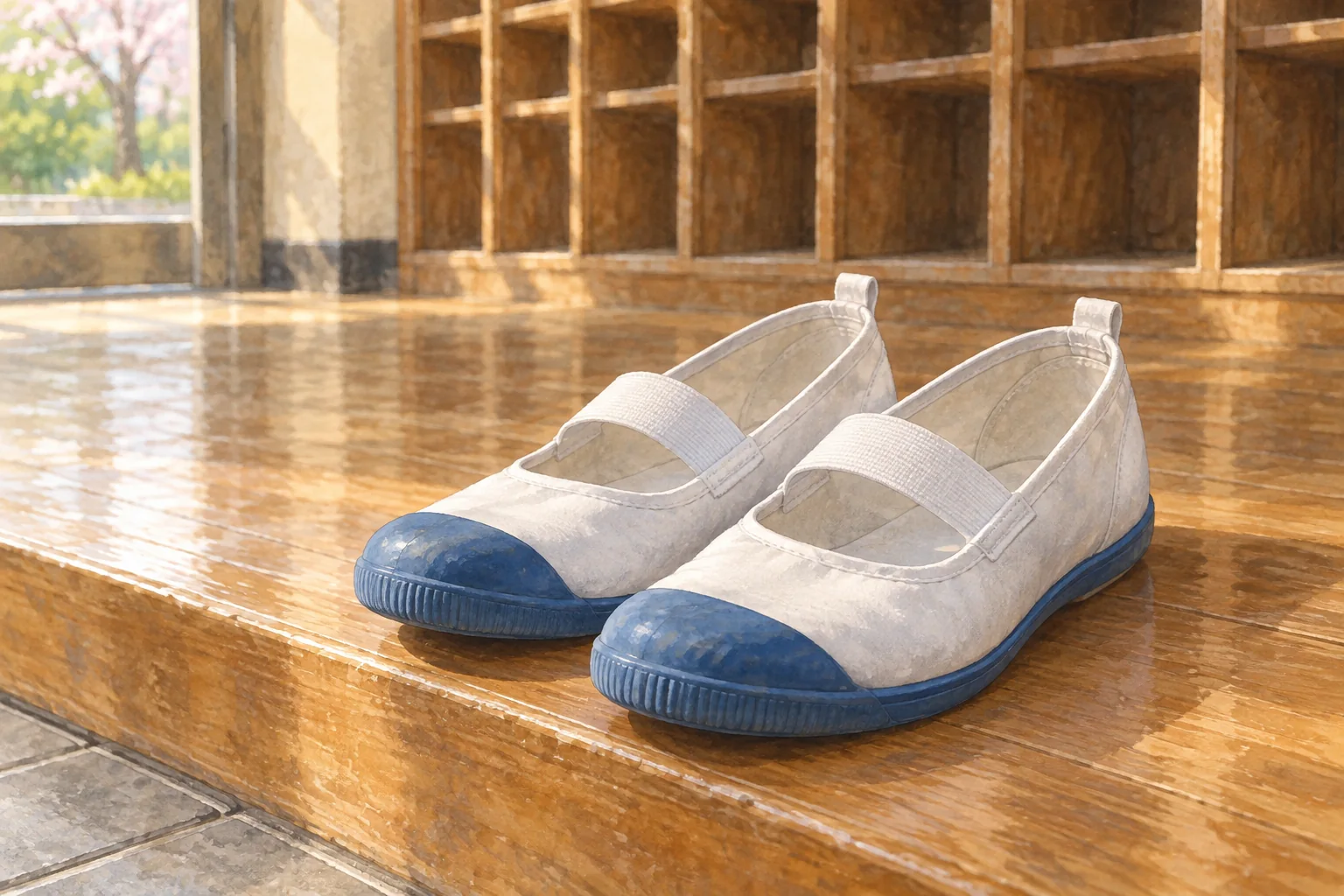
Japanese schools have a shoe cupboard at the entrance where every student swaps outdoor shoes for uwabaki, light canvas slip-ons. The same logic as taking your shoes off at home applies to the whole building. Students take them home on the weekend to wash, and there are separate shoes again for the gymnasium.
日本の学校には玄関に下駄箱があり、生徒は全員そこで外履きを上履きに替えます。軽い布製の靴です。家で靴を脱ぐのと同じ理屈が、建物全体に適用されています。週末には持ち帰って洗いますし、体育館ではさらに別の靴に履き替えます。
スピーチ・英作文
通訳案内士の二次口述・大学入試の自由英作文に
Most Japanese schools have a wall of shoe cupboards just inside the entrance, one small compartment per student. You arrive, take off your outdoor shoes, put them in your compartment, and put on uwabaki, soft white canvas shoes worn only inside the building.
This is the same principle as taking your shoes off at home, applied to a whole school, and it means the floors stay clean enough that students sit on them. There is usually a third pair as well, for the gymnasium, because the gym floor is treated as its own space.
Students take the uwabaki home on Fridays to be washed and bring them back on Monday, which is one of those small chores many Japanese adults remember. Teachers and visitors do the same thing: if you visit a Japanese school, you will be handed a pair of slippers at the door.
日本の多くの学校には、玄関を入ってすぐの壁に下駄箱が並んでいます。生徒一人に一つの区画です。登校したら外履きを脱いで自分の区画に入れ、上履きに履き替えます。校舎の中だけで履く、やわらかい白い布の靴です。
これは家で靴を脱ぐのと同じ考え方を学校全体に広げたもので、おかげで床は生徒が座れるくらい清潔に保たれます。たいていもう一足、体育館用の靴もあります。体育館の床は、それ自体が別の空間として扱われるからです。
上履きは金曜に持ち帰って洗い、月曜に持ってきます。日本の大人の多くが覚えている、小さな家の仕事のひとつです。教員も来客も同じで、日本の学校を訪ねると、入口でスリッパを渡されます。
こう聞かれたら
外国人から実際にされる質問と、その答え方。
Are there really three pairs of shoes?
靴を三足も使い分けるというのは本当ですか。
Commonly yes: outdoor shoes, indoor uwabaki, and gym shoes. Some schools also have separate shoes for the roof or a specific area. Each has its own place to be stored.
よくあります。外履き、上履き、体育館履きの三足です。屋上や特定の場所用にさらに別の靴がある学校もあります。それぞれ置き場所が決まっています。
What do visitors do?
来客はどうするのですか。
You are given slippers at the entrance and leave your own shoes in a rack or a plastic bag. Bringing your own indoor shoes to a school visit is normal and appreciated.
玄関でスリッパを渡され、自分の靴は下駄箱かビニール袋に入れます。学校訪問に自分の上履きを持参するのは普通で、喜ばれます。
Why are they usually white?
どうしてたいてい白いのですか。
White shows dirt, which makes it obvious when they need washing, and it keeps them uniform. Many schools use a colored toe cap to indicate the year group.
白は汚れが見えるので、洗うべき時期が分かりやすく、見た目もそろいます。学年ごとにつま先の色を変えている学校も多くあります。
そのまま使えるフレーズ
- Everyone changes shoes at the entrance.全員が玄関で靴を履き替えます。
- Each student has their own compartment.生徒一人に一つ下駄箱があります。
- There's a separate pair for the gymnasium.体育館用は別の靴です。
- They take them home to wash on the weekend.週末に持ち帰って洗います。
- Visitors are given slippers at the door.来客には玄関でスリッパを渡します。
説明に使う語句
- indoor shoes上履き
- shoe cupboard下駄箱
- change into履き替える
- gymnasium体育館
- canvas布、キャンバス地
動画で見る
YouTube より豆知識
上履きの呼び方は地域差が大きく、「上靴(うわぐつ)」「内履き」「バレーシューズ」などと呼ばれる。つま先やゴム部分の色を学年で分ける学校が多い。体育館用の靴を分けるのは、体育館の床材を傷めないためと、屋外の砂を持ち込まないためである。下駄箱は靴箱・シューズボックスとも呼ばれ、日本の学校建築の基本的な設備になっている。学校で靴を履き替える習慣は、家庭で靴を脱ぐ生活様式の延長にあり、床に座る活動(体育座り、掃除、給食の配膳)を成り立たせている。なお、下駄箱に手紙を入れるという学園ものの定番の場面は、この設備があって初めて成立する。
