日本国憲法にほんこくけんぽう
Nihonkoku kenpo
the postwar constitution
1947年の施行以来、一度も改正されていない。
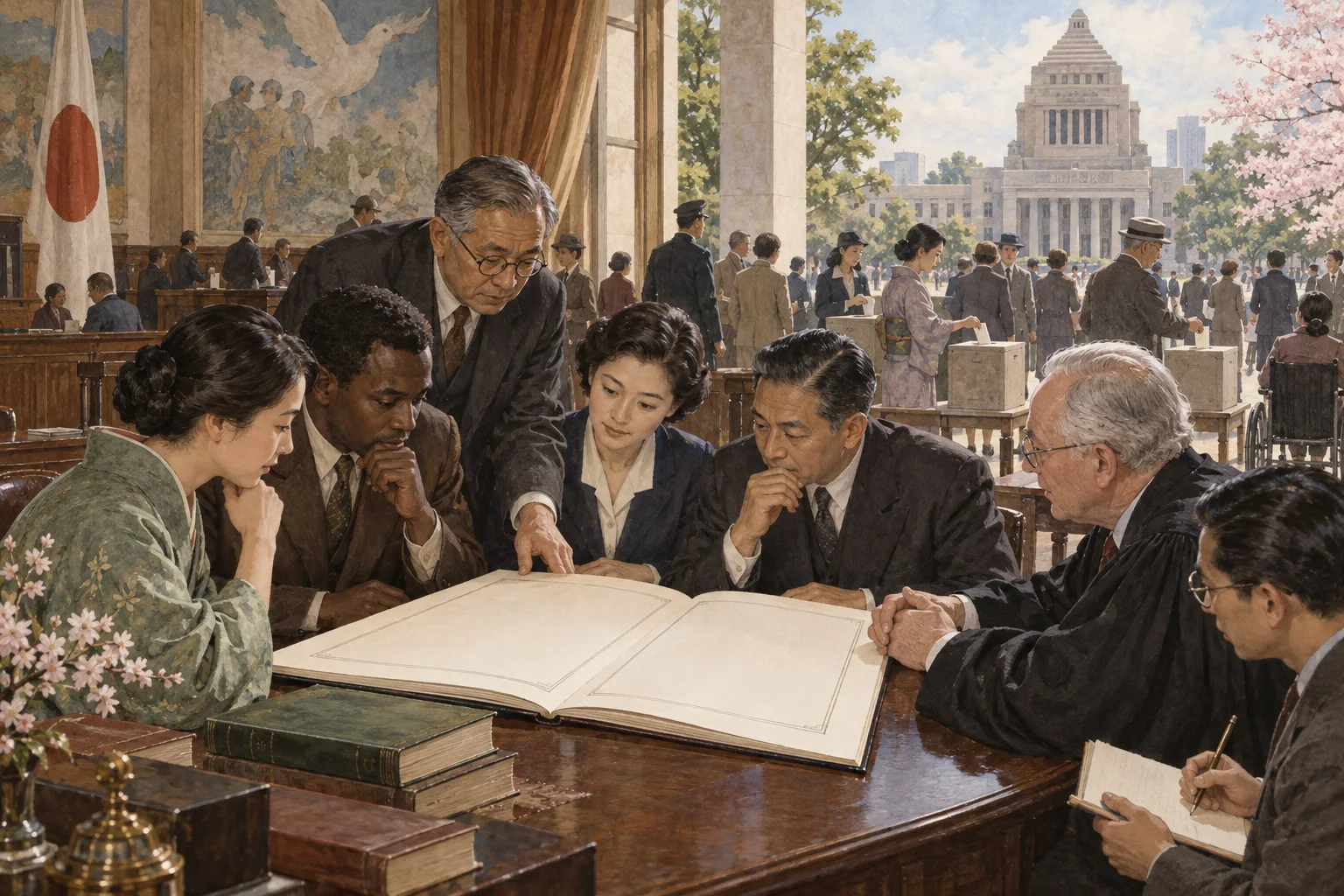
一言で言うと
これだけ覚えれば最低限伝わる一文
Nihonkoku kenpo, or the Constitution of Japan, is the document that took effect in 1947 and has never been amended.
日本国憲法とは、1947年に施行され、一度も改正されていない憲法です。
30秒で説明する
外国人に説明するときの標準サイズ
The Constitution of Japan was promulgated in November 1946 and came into force in May 1947, replacing the Meiji constitution. It places sovereignty with the people, guarantees fundamental rights, defines the emperor as a symbol without governmental powers, and renounces war in Article 9. It has never been amended since it took effect.
日本国憲法は1946年11月に公布され、1947年5月に施行されて、明治憲法に代わりました。主権が国民にあることを定め、基本的人権を保障し、天皇を国政の権能を持たない象徴と位置づけ、第9条で戦争を放棄しています。施行以来、一度も改正されていません。
スピーチ・英作文
通訳案内士の二次口述・大学入試の自由英作文に
The Constitution of Japan was promulgated on the third of November 1946 and came into force on the third of May 1947, and both dates are still national holidays. It replaced the Meiji constitution of 1889 and changed the basic structure of the state: sovereignty rests with the people rather than the emperor, fundamental human rights are guaranteed as eternal and inviolable, and the emperor becomes a symbol with no powers related to government.
Article 9 renounces war as a sovereign right of the nation. It was drafted during the Allied occupation, with a draft prepared by occupation staff forming the basis of the text, later revised in the Japanese parliament, and that origin is part of why amendment is debated.
Amendment requires a two-thirds majority in both houses of parliament and then a majority in a national referendum, a high bar that has never been cleared. Some people say it should be updated, for example to mention the Self-Defense Forces, while others say it has served the country well and should stay as it is.
日本国憲法は1946年11月3日に公布され、1947年5月3日に施行されました。どちらの日も今も祝日です。1889年の明治憲法に代わり、国のしくみの基本を変えました。主権は天皇ではなく国民にあり、基本的人権は永久の権利として保障され、天皇は国政に関する権能を持たない象徴となります。
第9条は、国の主権としての戦争を放棄しています。起草は連合国軍の占領下で行われ、占領側が用意した草案が条文のもとになり、帝国議会で審議・修正されました。この成り立ちは、改正が議論される理由のひとつでもあります。
改正には両議院それぞれの三分の二以上の賛成と、国民投票での過半数が必要で、この高い条件はこれまで一度も満たされていません。たとえば自衛隊を明記するなど、時代に合わせて改めるべきだという意見がある一方、この憲法は国によく役立ってきたので今のままでよいという意見もあります。
こう聞かれたら
外国人から実際にされる質問と、その答え方。
Why has it never been amended?
どうして一度も改正されていないのですか。
The bar is high: two-thirds of both houses of parliament, then a majority in a national referendum. No proposal has ever reached the referendum stage, and public opinion on specific changes has remained divided.
要件が高いからです。両議院それぞれの三分の二以上の賛成のうえ、国民投票で過半数が必要です。国民投票まで進んだ提案はこれまでになく、個別の改正案についての世論も分かれたままです。
What does Article 9 actually say?
九条には実際に何と書いてあるのですか。
It renounces war as a sovereign right and the threat or use of force to settle international disputes, and states that land, sea and air forces will not be maintained. Japan does maintain Self-Defense Forces, and how that fits with the text is the core of the long-running debate.
国の主権としての戦争と、国際紛争を解決する手段としての武力による威嚇や行使を放棄し、陸海空軍その他の戦力は保持しないと定めています。日本は自衛隊を保持しており、それが条文とどう整合するのかが、長く続く議論の核心です。
誤解されやすい
MYTHThe constitution has been rewritten several times since the war.
戦後に何度か書き換えられていると思われがちです。
FACTNot once. The text that came into force in 1947 is still in force unchanged, which is unusual among constitutions of comparable age.
一度もありません。1947年に施行された条文がそのまま今も効力を持っており、同じ年代の憲法の中では珍しいことです。
そのまま使えるフレーズ
- It came into force in May 1947.1947年5月に施行されました。
- It has never been amended.一度も改正されていません。
- Sovereignty rests with the people.主権は国民にあります。
- Amendment needs a national referendum.改正には国民投票が必要です。
説明に使う語句
- constitution憲法
- to amend改正する
- referendum国民投票
- fundamental rights基本的人権
動画で見る
YouTube より豆知識
公布された11月3日は文化の日、施行された5月3日は憲法記念日として祝日になっています。前文と全11章103条から成り、国民主権、基本的人権の尊重、平和主義が三つの柱と説明されます。改正の手続きは第96条に定められ、両議院の三分の二以上の発議と国民投票の過半数を要します。国民投票の手続きを定める法律は2007年に成立しました。改正をめぐる議論は戦後を通じて続いており、立場は一つではありません。
