外干しそとぼし
sotoboshi
drying laundry and futons outdoors
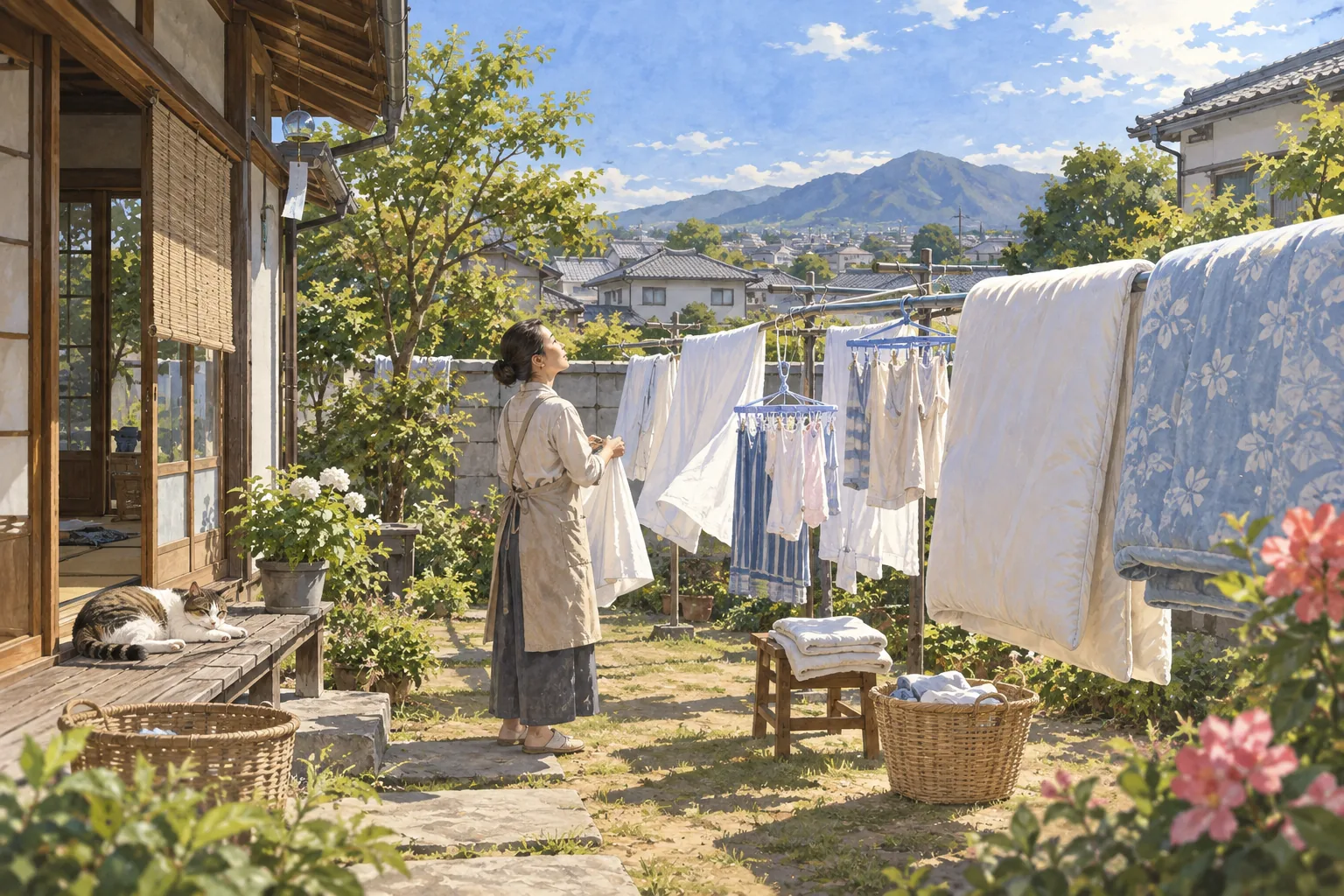
ベランダの洗濯物と布団。晴れた日にしかできない家事。
一言で言うと
これだけ覚えれば最低限伝わる一文
Most Japanese households dry laundry outdoors on a balcony rather than using a tumble dryer.
日本の多くの家庭は、乾燥機を使わずベランダで洗濯物を外に干します。
30秒で説明する
外国人に説明するときの標準サイズ
Laundry in Japan is usually hung outside on a balcony or in a garden, on poles set into brackets. Tumble dryers are far from standard. Futons are aired on the railing on sunny days, since sunlight and air are believed to keep bedding dry and fresh, and the weather forecast is watched with this in mind.
日本の洗濯物は、ベランダや庭に受け金具で渡した竿に干すのがふつうです。衣類乾燥機は標準の設備とは言えません。晴れた日には布団を手すりに干します。日光と風が寝具を乾いた清潔な状態に保つと考えられているからで、天気予報もそのつもりで見られています。
スピーチ・英作文
通訳案内士の二次口述・大学入試の自由英作文に
If you look at a Japanese apartment building on a fine morning, the balconies tell you what people are doing: laundry on poles, and futons draped over the railings. Drying outdoors is the default here.
Tumble dryers exist but are not standard equipment, partly because homes are compact, partly because electricity is expensive, and partly because there is a genuine preference for the smell and feel of sun-dried bedding. Futons in particular are aired regularly, and some people beat them with a paddle, though manufacturers now advise brushing rather than beating.
There are local rules to know: many buildings forbid hanging laundry above the railing height because it spoils the look of the block, and in spring people bring washing indoors to avoid pollen. On rainy days laundry goes inside under a fan, which is the reason Japanese detergents advertise so heavily about indoor drying smells.
晴れた朝に日本の集合住宅を眺めれば、ベランダが住人の暮らしを教えてくれます。竿にかかった洗濯物、手すりに掛けられた布団です。ここでは外に干すのが既定です。衣類乾燥機はありますが標準の設備ではありません。
家が小さいこと、電気代が高いこと、そして天日に干した寝具の匂いと感触が本当に好まれていることが理由です。とくに布団は定期的に干され、たたく道具を使う人もいますが、今は作り手の側が、たたかずに払うよう勧めています。
知っておきたい土地の決まりもあります。多くの建物では、外観を損ねるとして手すりより高く干すことを禁じており、春には花粉を避けて室内に取り込みます。雨の日は部屋干しにして扇風機を当てます。日本の洗剤が部屋干しの匂いをあれほど宣伝するのは、そのためです。
こう聞かれたら
外国人から実際にされる質問と、その答え方。
Why not just use a dryer?
乾燥機を使えばよいのではありませんか。
Space and running cost are the main reasons, and many homes have no place to put one. Washer-dryer combinations are sold and are becoming more common, but a balcony pole is still the normal setup.
場所と電気代が主な理由で、置く場所のない家も多くあります。洗濯と乾燥が一体の機械も売られていて増えてはいますが、今もふつうはベランダの物干し竿です。
Is airing a futon really necessary?
布団を干すのは本当に必要ですか。
It helps. A futon lies directly on the floor and absorbs moisture from the body, so airing keeps it dry. People who cannot hang one outside use a futon dryer, a machine that blows warm air inside the bedding.
効果があります。布団は床に直接敷き、体から出る湿気を吸うので、干すことで乾いた状態を保てます。外に干せない人は、寝具の中に温風を送る布団乾燥機を使います。
Are there rules about what I can hang outside?
外に干してよいものに決まりはありますか。
Often yes in apartment buildings: laundry below railing height, no bedding on the outer side in some blocks, and nothing on days the building is being cleaned. Check the house rules when you move in.
集合住宅にはあることが多いものです。手すりより低く干すこと、建物によっては布団を外側に出さないこと、清掃の日は干さないことなどです。入居のときに管理規約を確かめてください。
そのまま使えるフレーズ
- I'll hang the laundry out.洗濯物を干します。
- It's going to rain, so bring it in.雨が降るので取り込んでください。
- Let's air the futons today.今日は布団を干しましょう。
- We dry indoors during pollen season.花粉の時季は部屋干しにします。
- Do you have a drying rack?物干しはありますか。
説明に使う語句
- to hang out laundry洗濯物を干す
- drying pole物干し竿
- to bring laundry in取り込む
- drying indoors部屋干し
- futon dryer布団乾燥機
動画で見る
YouTube より豆知識
日本の集合住宅のベランダには物干しの金具が備えつけられ、竿を渡して使います。布団を干すのは、湿気を逃がしてかびやダニを防ぐためで、寝具の作り手はたたかずに表面を払うよう勧めています。ベランダは災害時の避難経路にもなるため、管理規約で物を置くことや干し方を制限している建物があります。春の花粉、梅雨の長雨、冬の乾燥と、季節によって干し方を変えるのがふつうで、部屋干し用の洗剤という商品分野も生まれました。
