総合職と一般職そうごうしょくといっぱんしょく
sogoshoku and ippanshoku
career-track and clerical-track hiring
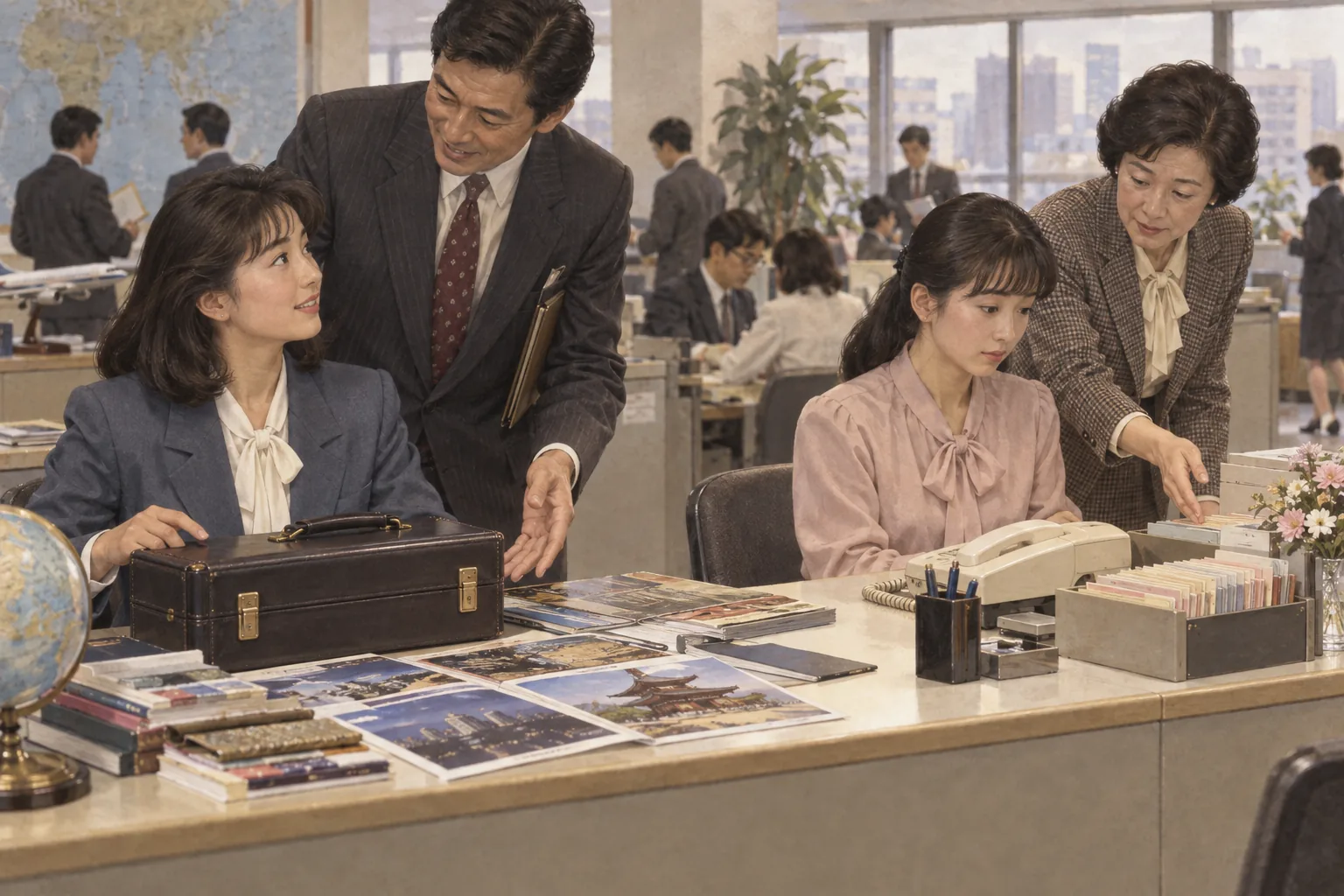
総合職は転勤も昇進もある型。一般職は転勤が少なく、定型の事務を担う型。
一言で言うと
これだけ覚えれば最低限伝わる一文
Sogoshoku and ippanshoku are the career track and clerical track, which Japanese companies long used to separate men and women.
総合職と一般職とは、日本の会社が長く男性と女性を振り分けるのに使ってきた、転勤や昇進のある職種と定型の事務を担う職種です。
30秒で説明する
外国人に説明するときの標準サイズ
Sogoshoku is the career track: transfers, rotation between departments, and a path toward management. Ippanshoku is the clerical track: routine office work, usually without relocation, and a lower salary ceiling. The split spread after the 1986 Equal Employment Opportunity Law, when many companies replaced separate hiring for men and women with these two nominally gender-neutral tracks. In practice, men still dominate sogoshoku and women still dominate ippanshoku, which is why critics call it a workaround rather than a fix.
総合職は転勤や部署間の異動があり、管理職への道につながる働き方です。一般職は主に定型的な事務を担い、転勤は少なく、昇給の上限も低いのがふつうです。この区分は1986年の男女雇用機会均等法のあと、男女別だった採用を、建前としては男女を問わない総合職と一般職という二つのコースに置き換える形で広まりました。実際には総合職の多くを男性が、一般職の多くを女性が占め続けており、批判する人はこれを解決策ではなく抜け道と呼びます。
スピーチ・英作文
通訳案内士の二次口述・大学入試の自由英作文に
Sogoshoku and ippanshoku are two hiring tracks that many Japanese companies still use, and understanding them explains a lot about gender in Japanese offices. Sogoshoku employees are hired for a career: they rotate between departments, can be transferred to other cities, and are the pool from which managers are promoted.
Ippanshoku employees do routine office support, are rarely relocated, and their pay scale tops out lower. The system dates to 1986, when the Equal Employment Opportunity Law took effect and called on employers to treat men and women equally in hiring, and many companies responded by creating these two officially gender-neutral tracks.
In practice, women remain concentrated in ippanshoku roles even today; critics call the arrangement a legal workaround, while companies have described it as a choice between working styles. Some companies have since abolished ippanshoku entirely, folding everyone into a single track.
総合職と一般職は、今も多くの日本企業が使っている二つの採用コースで、これを理解すると日本の職場のジェンダーについて多くのことが見えてきます。総合職の社員はキャリアのために採用され、部署を異動し、他の都市へ転勤することもあり、管理職に昇進していく人材の層になります。
一般職の社員は定型的な事務を担い、転勤はまれで、賃金表の上限も低く抑えられています。この仕組みは1986年、男女雇用機会均等法が施行され、募集と採用で男女を均等に扱うよう求めたことに始まり、多くの企業は、建前上は男女を問わないこの二つのコースを作ることで応じました。
実際には今も女性が一般職に偏って集まっており、法律をかいくぐる工夫だと批判する声がある一方、企業側は転勤の有無などの働き方の選択だと説明してきました。その後、一般職そのものを廃止し、全員を一つのコースにまとめた会社もあります。
こう聞かれたら
外国人から実際にされる質問と、その答え方。
Is this system illegal now?
この仕組みは今では違法なのですか。
Not by itself. The law bans differing treatment based on sex, and the tracks are officially open to anyone regardless of gender, so a company using them is not automatically breaking the law. It becomes a legal problem only if a company steers applicants into a track based on their sex.
それ自体は違法ではありません。法律が禁じるのは性別による扱いの違いであり、このコースは建前として性別を問わず誰にでも開かれているため、使っているだけで自動的に違法にはなりません。応募者を性別によって特定のコースへ誘導した場合に、法律上の問題になります。
Can someone switch tracks later?
あとからコースを変えることはできますか。
Some companies allow an internal application to move from ippanshoku to sogoshoku, but it usually requires passing an exam or interview and is not common. Moving the other way, from sogoshoku to ippanshoku, is rarer still and often tied to family circumstances.
一般職から総合職への異動を社内公募で認める会社もありますが、たいてい試験や面接に通る必要があり、多くはありません。逆に総合職から一般職へ移ることはさらに少なく、家庭の事情に結びついていることが多いです。
Do all companies still use this split?
今もすべての会社がこの区分を使っているのですか。
No. Many companies, especially newer or foreign-affiliated ones, hire everyone under a single track. Some traditional employers have abolished ippanshoku in recent years under pressure to close the gender gap, though some employers, including some in finance, still keep the distinction.
いいえ。特に新しい会社や外資系の会社の多くは、全員を一つのコースで採用しています。伝統的な会社の中にも、男女の格差を縮める圧力を受けて近年一般職を廃止したところがありますが、金融機関などでは今も区分を残すところがあります。
そのまま使えるフレーズ
- I was hired on the career track.総合職として採用されました。
- She's on the clerical track, so she won't be transferred.彼女は一般職なので転勤はありません。
- Our company abolished the clerical track last year.うちの会社は去年、一般職を廃止しました。
- Career-track staff are expected to relocate.総合職の社員は転勤を前提としています。
- He applied to switch from clerical to career track.彼は一般職から総合職への転換を申し込みました。
説明に使う語句
- career track総合職
- clerical track一般職
- Equal Employment Opportunity Law男女雇用機会均等法
- relocation転勤
- gender gap男女格差
動画で見る
YouTube より豆知識
総合職と一般職からなるコース別雇用管理制度は、1986年の男女雇用機会均等法の施行前後に、多くの大企業で広まりました。厚生労働省の指針は、コースの振り分けに性別を用いることを禁じていますが、実態として総合職の大半を男性が占める企業は今も少なくありません。近年は、勤務地を限定した総合職や、一般職を廃止して一つのコースに統合する会社も増えています。
