名刺交換めいしこうかん
meishi kokan
exchanging business cards
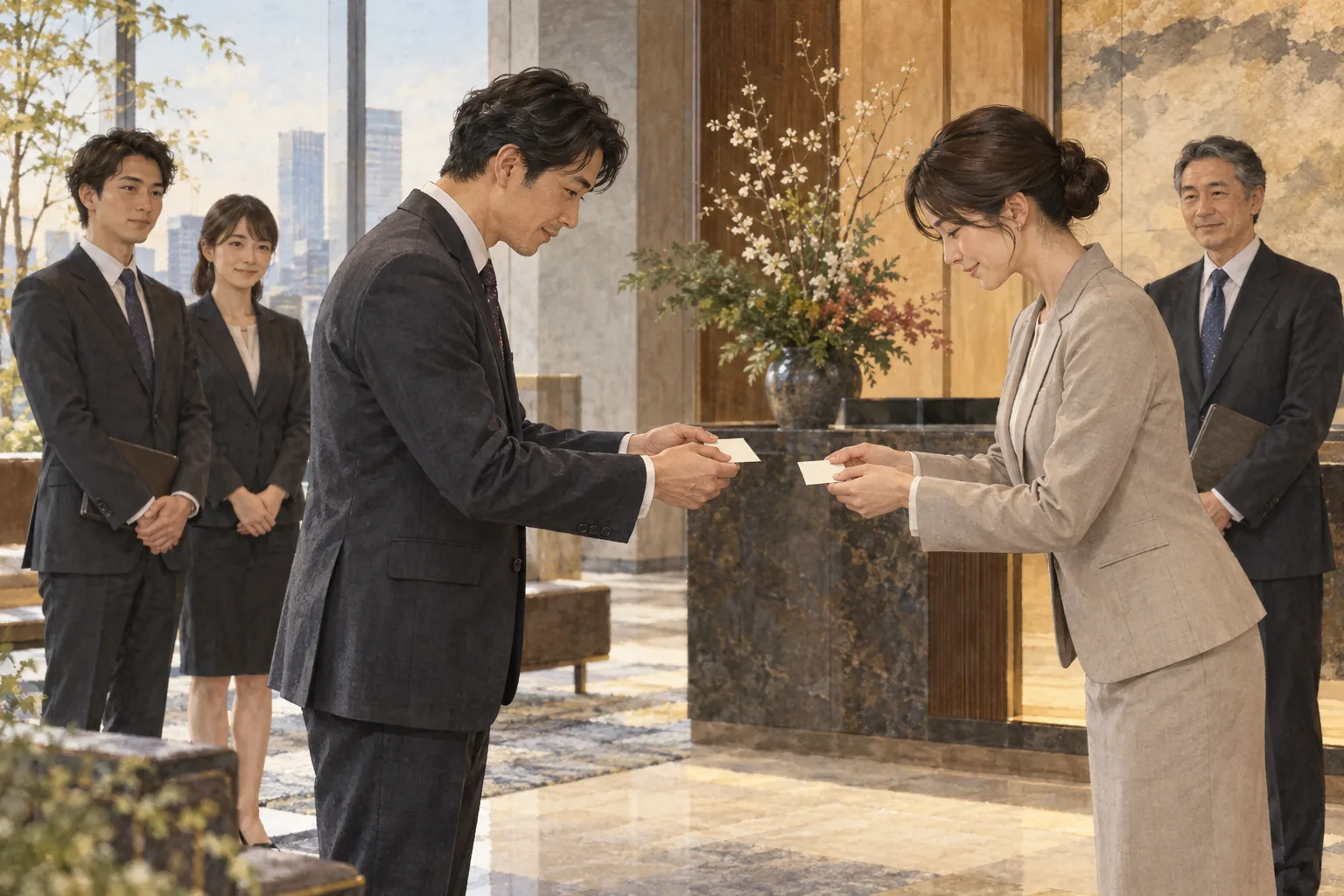
名刺は「その人の顔」。渡された名刺をすぐしまうと、顔をポケットに突っ込んだのと同じ。
一言で言うと
これだけ覚えれば最低限伝わる一文
Meishi kokan, or exchanging business cards, is done with both hands in Japan, and the cards are treated with care.
名刺交換とは、日本で名刺を両手でやりとりし、丁寧に扱う作法です。
30秒で説明する
外国人に説明するときの標準サイズ
A Japanese business meeting starts with the card exchange. You hand your card with both hands, facing the other person so they can read it, and receive theirs with both hands. Then you read it, say the person's name and title out loud, and place it on the table in front of you for the rest of the meeting. Writing on it or shoving it into a pocket is considered genuinely rude.
日本の商談は名刺交換から始まります。相手が読める向きにして両手で差し出し、両手で受け取ります。そして目を通し、名前と役職を声に出して確認し、会議のあいだはテーブルの自分の前に置いておきます。その場で書き込んだり、ポケットに突っ込んだりするのは本当に失礼にあたります。
スピーチ・英作文
通訳案内士の二次口述・大学入試の自由英作文に
Before any business conversation in Japan, people exchange business cards. There is a set way to do it. You stand, hold your card with both hands at chest height, turn it so the other person can read it, and say your company and your name.
You receive their card with both hands, and here is the important part: you look at it. You read the name and title, and you keep it on the table in front of you until the meeting ends.
You do not write on it, fold it, or put it straight into your back pocket. The reason is simple. In a business setting the card stands in for the person, including the company they belong to. Handling it carelessly looks like handling the person carelessly.
日本では商談の前に名刺を交換します。決まった作法があります。立って、胸の高さで両手に名刺を持ち、相手が読める向きにして、会社名と氏名を名乗ります。相手の名刺は両手で受け取ります。
大事なのはここからで、必ず目を通します。名前と役職を読み、会議が終わるまでテーブルの自分の前に置いておきます。書き込んだり、折ったり、そのまま尻ポケットに入れたりはしません。
理由は単純です。ビジネスの場では、名刺はその人自身と、その人が属する会社を代わりに表しています。名刺を雑に扱うことは、その人を雑に扱うように見えるのです。
こう聞かれたら
外国人から実際にされる質問と、その答え方。
What if I run out of cards?
名刺が足りなくなったらどうしますか。
Apologize sincerely, explain, and offer to send your details later. Running out is seen as poor preparation, so people carry far more than they expect to need.
きちんと詫びて事情を説明し、後で連絡先を送ると伝えます。切らしていること自体が準備不足と見られるため、多めに持ち歩くのが普通です。
Who hands their card first?
どちらが先に名刺を出すのですか。
The person in the lower position, or the one visiting or selling, offers first and holds their card slightly lower than the other person's. When in doubt, offer first.
立場が下の側、あるいは訪問した側・売る側が先に差し出し、相手より少し低い位置で持ちます。迷ったら先に出して構いません。
Can I write a note on the card to remember them?
覚えるために名刺に書き込んでもいいですか。
Not in front of them. Afterwards, in private, many Japanese people do write the date and a note on the back. Doing it during the meeting is what causes offense.
本人の前ではしません。後で一人のときに日付やメモを裏に書く人は多いです。問題になるのは、その場で書くことです。
そのまま使えるフレーズ
- Here is my card.私の名刺です。
- May I have your card?お名刺を頂戴できますか。
- I'm sorry, I've run out of cards today.申し訳ありません、本日名刺を切らしております。
- Thank you — Sales Manager, is that right?ありがとうございます。営業部長でいらっしゃいますね。
- Please receive it with both hands.両手でお受け取りください。
説明に使う語句
- business card名刺
- with both hands両手で
- job title役職
- run out of切らす
- come across as rude失礼に映る
動画で見る
YouTube より豆知識
名刺交換には、名刺入れから出すこと、相手の名刺入れの上に置くように渡すこと、複数人なら役職順に並べることなど、細かい作法がある。近年はオンライン会議の普及とデジタル名刺の登場で簡略化が進んでいるが、初対面の場では紙の名刺がまだ強い。ちなみに英語の business card に対して、名刺は「名(な)の刺(ふだ)」で、中国の古い習慣に由来する。訪問先が不在のとき、竹や木の札に名前を刻んで置いていったのが原型とされる。
