上座かみざ
kamiza
the seat of honor
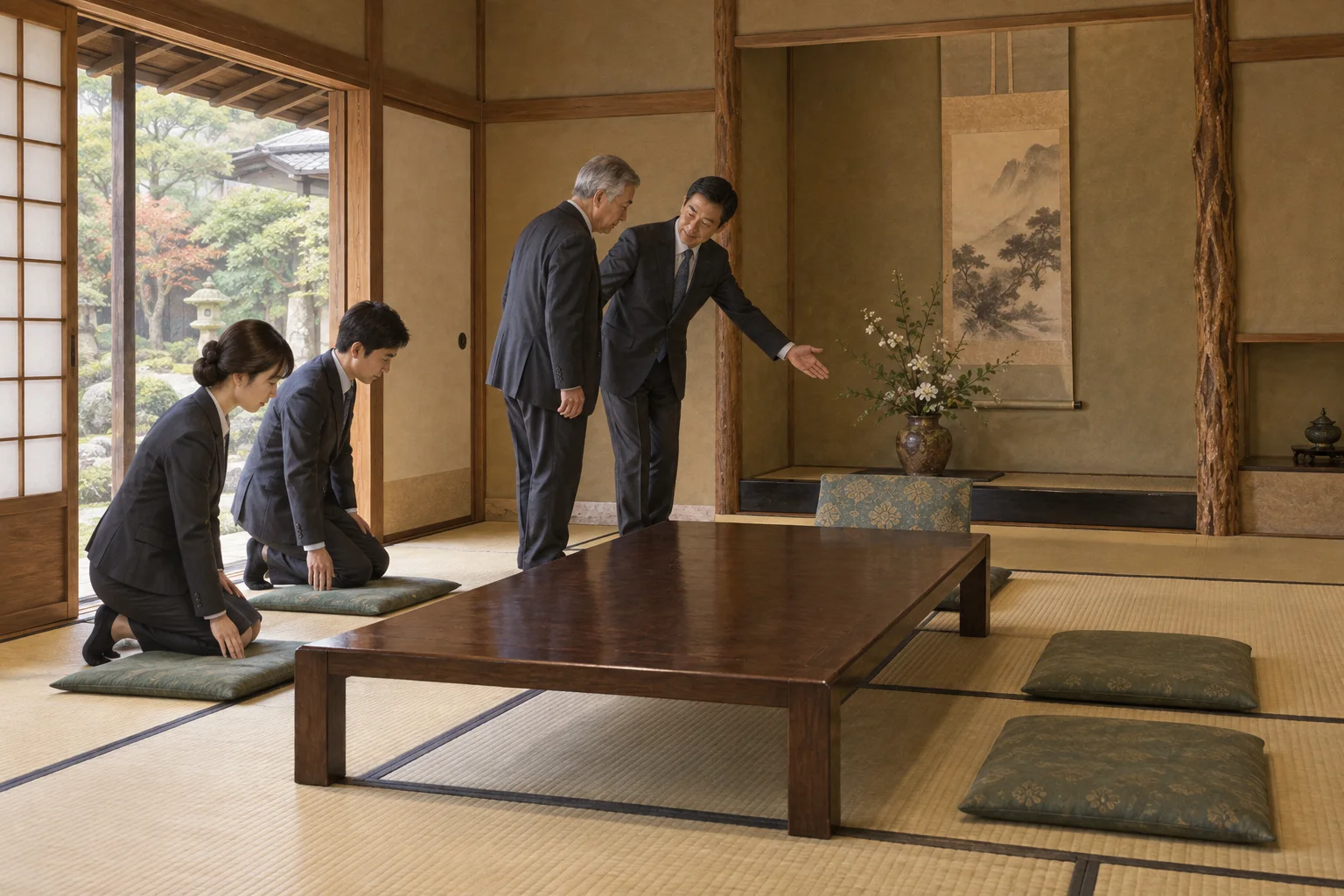
会議室でどこに座るかは、決まっている。入口から遠い席が上座、という一行だけで説明できる。
一言で言うと
これだけ覚えれば最低限伝わる一文
Kamiza is the seat of honor, usually the seat farthest from the door.
上座とは最も格の高い席のことで、たいてい入口からいちばん遠い席です。
30秒で説明する
外国人に説明するときの標準サイズ
Japanese rooms have a built-in seating order. The seat farthest from the entrance is the kamiza, the seat of honor, and the seat nearest the door is the shimoza, for the most junior person. The rule works in meeting rooms, restaurants, taxis and elevators. The reason usually given is safety: the person closest to the door dealt with whoever came in.
日本の部屋には席次があります。入口からいちばん遠い席が上座、いちばん近い席が下座で、下座には立場が下の人が座ります。会議室でも飲食店でもタクシーでもエレベーターでも同じです。もとの理由は安全だったとよく説明されます。入口に近い人が、入ってきた相手に対応したからです。
スピーチ・英作文
通訳案内士の二次口述・大学入試の自由英作文に
In a Japanese meeting room or restaurant, where you sit is not up to you. The seat farthest from the door is called the kamiza, the upper seat, and it goes to the most senior person or the guest.
The seat closest to the door is the lower seat, and that is for the most junior member of the team, who will be the one to pour drinks and handle anything that comes up. This even applies in a taxi: the seat behind the driver is the seat of honor, and the front passenger seat is the lowest.
The usual explanation is practical. Long ago, the person by the door faced whoever entered first, so that position carried the risk. Today it is pure etiquette, but Japanese office workers still check the seating without thinking.
日本の会議室や飲食店では、どこに座るかは自由ではありません。入口からいちばん遠い席を上座といい、いちばん立場が上の人か客が座ります。
入口にいちばん近い席は下座で、そこにはいちばん立場が下のメンバーが座り、飲み物を注いだり、何かあったときに動いたりします。タクシーでも同じで、運転席の後ろが上座、助手席が下座です。
由来は実用的なものと説明されます。昔は入口に近い人が最初に来訪者と向き合うため、その位置に危険が伴ったというのです。今では純粋な作法ですが、日本の会社員は今も無意識に席次を確認します。
こう聞かれたら
外国人から実際にされる質問と、その答え方。
As a foreign guest, where should I sit?
外国からの客として、どこに座ればいいですか。
Wait to be shown. As a guest you will usually be offered the seat of honor, and it is polite to accept rather than insist on sitting elsewhere.
案内を待ってください。客として上座をすすめられることが多く、遠慮して別の席に座ろうとするより、素直に受けるほうが丁寧です。
What if the room has no obvious door-to-seat layout?
扉と席の位置関係がはっきりしない部屋では、どうしますか。
Then other signals take over: the seat in front of the decorative alcove in a tatami room, the seat with the better view, or the middle of the far side of the table.
その場合は別の目印になります。和室なら床の間の前、眺めのよい席、あるいは奥側の中央です。
Does this really still matter?
これはいまでも大事なことなのですか。
In casual settings, less and less. In formal business, yes. Getting it wrong will not ruin a deal, but the older members of the room will notice.
くだけた場では薄れつつあります。正式なビジネスでは今も生きています。間違えても商談が壊れることはありませんが、年配の出席者は気づきます。
そのまま使えるフレーズ
- Please take the seat over there.どうぞ、奥の席へ。
- The seat farthest from the door is the seat of honor.入口から遠い席が上座です。
- I'll sit by the door.私は入口側に座ります。
- After you.お先にどうぞ。
- In a taxi, the seat behind the driver is the top seat.タクシーでは運転席の後ろが上座です。
説明に使う語句
- seat of honor上座
- seating order席次
- senior / junior目上/目下
- alcove床の間
- show someone to a seat席に案内する
動画で見る
YouTube より豆知識
上座・下座の考え方は、和室の「床の間」を基準にしていた。床の間は掛け軸や花を飾る最も格式の高い場所で、その前が最上席になる。武家の屋敷では、入口に近い席は不意の襲撃に真っ先に対応する位置であり、身の危険があったとされる。現代ではエレベーターにも席次があり、操作盤の前が下座、その奥が上座とされる。新幹線の3人掛けでは窓側が上座、通路側が下座、真ん中は最も下という扱い。ただし乗り降りのしやすさを優先すべき相手(高齢者など)には、形式より実用を優先するのが今のマナーとされる。
