神饌と直会しんせんとなおらい
shinsen and naorai
the food offered to a deity and the meal shared afterwards
神に供えたものを、あとで人が食べる。祭りの締めはいつも食事。
一言で言うと
これだけ覚えれば最低限伝わる一文
Shinsen and naorai are food offered to a Shinto deity and the meal where participants then eat it.
神饌と直会とは、神に供える食べものと、そのあと参列した人がそれをいただく食事のことです。
30秒で説明する
外国人に説明するときの標準サイズ
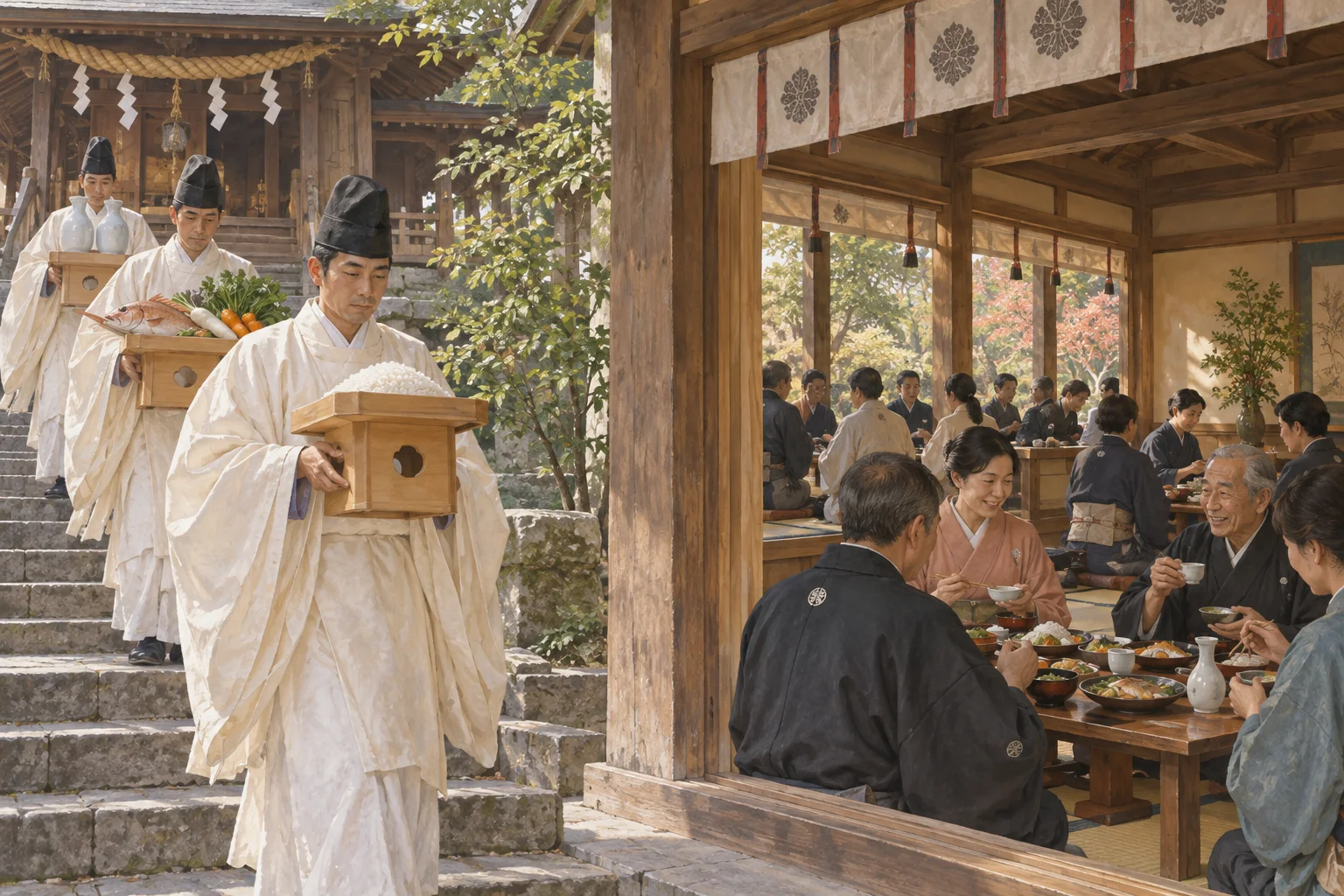
Shinsen is the food set before a deity at a Shinto rite: rice, sake, salt, water, and produce from land and sea. Naorai is the meal held afterwards, in which the participants eat and drink what was offered. Sharing a meal with the deity, rather than giving something up, is the underlying idea, and it is why so many shrine festivals end with people eating.
神饌とは、神事で神の前に供える食べものです。米、酒、塩、水、そして山と海の幸を並べます。直会は、そのあとに参列者が供えたものをいただく席です。差し出して終わりにするのではなく、神とともに食べるという考えが根にあります。神社の祭りの多くが食事で締めくくられるのは、そのためです。
スピーチ・英作文
通訳案内士の二次口述・大学入試の自由英作文に
At a Shinto rite you will see a set of low wooden stands carrying food: rice, rice wine, salt, water, then fish, vegetables, fruit and sometimes a whole sea bream. This is shinsen, the meal presented to the deity, and it is arranged in a fixed order with the most important items nearest the center. What matters is what happens at the end.
The offerings are taken down and the participants eat and drink them, in a gathering called naorai, which is treated as the closing part of the ceremony rather than a party afterwards. The principle behind it is that the deity and the people eat together, so the rite is a shared meal rather than a surrender of goods.
If you attend a ground-breaking ceremony or a shrine festival and someone hands you a small cup of sake at the end, that is naorai, and drinking it is part of taking part. A sip is enough, and nobody minds if you do not drink alcohol.
神事に立ち会うと、低い木の台に食べものが載って並んでいるのが目に入ります。米、酒、塩、水、そして魚、野菜、果物。鯛を一尾そのまま供えることもあります。これが神饌で、神に差し上げる食事です。並べ方には順があり、大切なものほど中央の近くに置かれます。
肝心なのは、その終わりに起きることです。供えものは下げられ、参列した人がそれを食べ、飲みます。この席を直会と呼び、儀式のあとの宴ではなく、儀式の締めくくりと位置づけられています。根にあるのは、神と人がともに食べるという考えです。
ですからこの祭りは、物を差し出す行いではなく、分け合う食事なのです。地鎮祭や神社の祭りに出て、最後に小さな杯の酒を渡されたら、それが直会です。口をつけることも参加のうちに入ります。ひと口で十分ですし、飲まない人がいても誰も気にしません。
こう聞かれたら
外国人から実際にされる質問と、その答え方。
Do I have to drink the sake?
お神酒は飲まないといけませんか。
No. Touching the cup to your lips is enough, and so is declining politely. Shrines are used to drivers, children and people who do not drink, and there is usually tea or a small package of sweets instead.
いいえ。杯に口をつけるだけで十分ですし、丁寧に断っても差し支えありません。運転する人、子ども、飲まない人には神社も慣れています。お茶や菓子が用意されているのがふつうです。
What exactly is offered?
何を供えるのですか。
Rice, sake, rice cakes, salt and water are the usual basics. Beyond that it depends on the place and the season: fish and seaweed at a coastal shrine, mountain vegetables inland, and the first crop of the year at harvest rites.
米、酒、餅、塩、水が基本です。そこから先は土地と季節によります。海沿いの神社なら魚と海藻、内陸なら山の幸、収穫の祭りではその年の初物です。
Is this the same as a Buddhist offering?
仏教のお供えと同じですか。
The logic differs. Buddhist offerings before an altar are given and then taken down and eaten by the family too, but the Shinto rite treats the shared eating as the completion of the ceremony itself, with its own name and its own order of proceedings.
考え方が違います。仏壇の供物も下げて家族が食べますが、神事では、ともに食べることが儀式の完成として位置づけられ、直会という名と、決まった進め方を持っています。
そのまま使えるフレーズ
- This food is offered to the deity.これは神様へのお供えです。
- Afterwards we share it.あとでみんなでいただきます。
- Just a sip is fine.ひと口で結構です。
- The rice wine is called omiki.このお酒をお神酒と言います。
- The meal closes the ceremony.この食事で神事が終わります。
説明に使う語句
- food offered to a deity神饌
- the shared meal afterwards直会
- consecrated sakeお神酒
- offering stand三方
- first crop of the season初物
動画で見る
YouTube より豆知識
神饌は神事で神に供える食べもので、米、酒、餅、塩、水を基本とし、土地と季節に応じて海の幸や山の幸を加えます。供える台には三方が使われ、中央に近いほど重いものを置く決まりがあります。直会は神事の最後に、下げた神饌をいただく席で、神と人が同じものを食べる神人共食の考えに基づきます。単なる宴会ではなく、儀式の一部と位置づけられます。地鎮祭や祭りのあとに小さな杯の酒が回るのも、簡略にした直会です。
