祝詞のりと
norito
the formal prayer read by a priest
神職が神前で読み上げる言葉。千年前の日本語に近い。
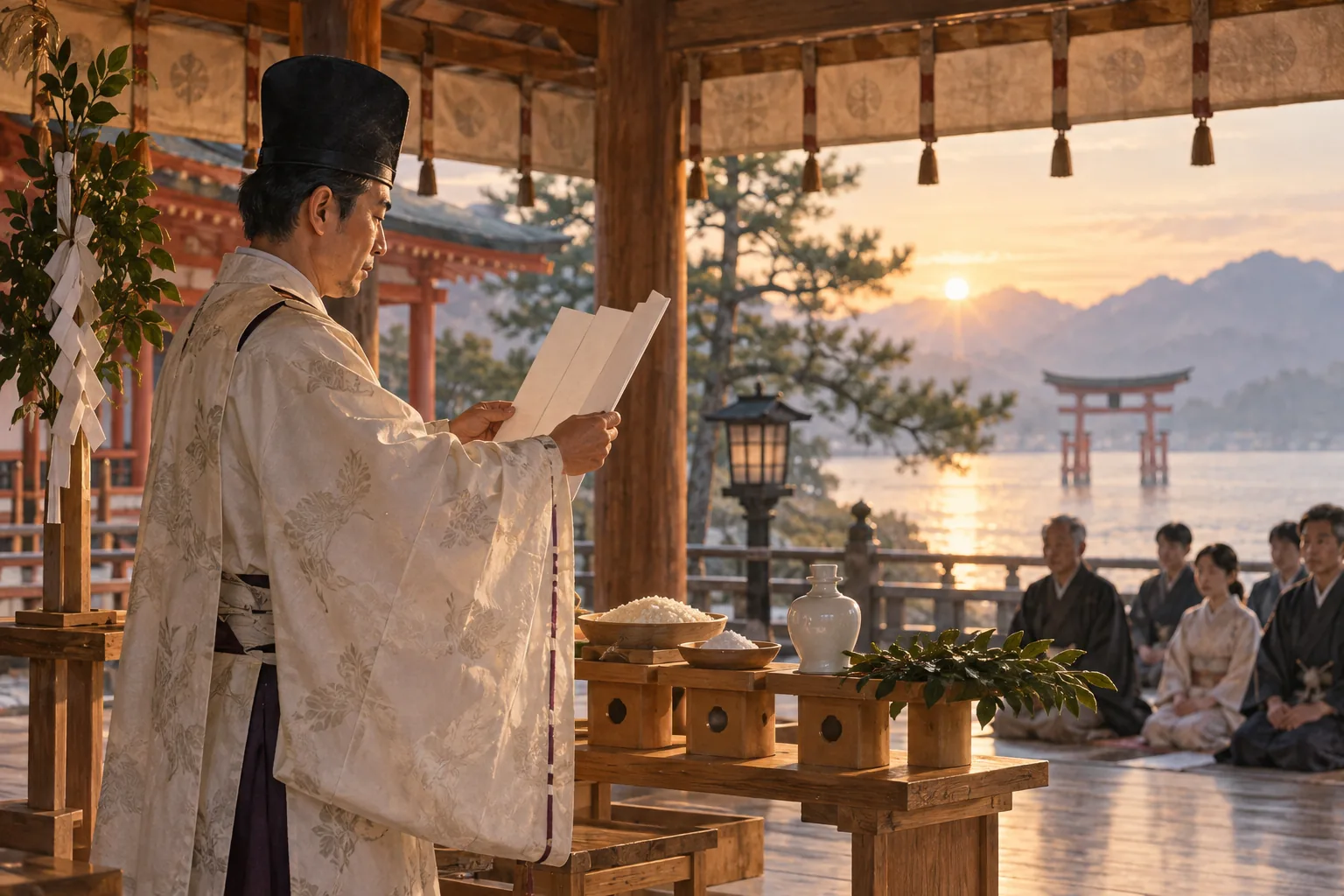
一言で言うと
これだけ覚えれば最低限伝わる一文
A norito is the formal address a Shinto priest reads aloud to the deity, in archaic Japanese.
祝詞とは、神職が神前で読み上げる正式な言葉で、古い日本語で書かれています。
30秒で説明する
外国人に説明するときの標準サイズ
A norito is the prayer a priest reads at a Shinto rite, addressed to the deity in an old form of Japanese with long vowels and a rising cadence. It usually states the date, the place, the names of the people present and what is being asked. Modern Japanese listeners catch only fragments.
祝詞は、神事で神職が読み上げる言葉で、母音を長く引き、独特の抑揚で神に語りかけます。日付、場所、参列する人の名、そして願う内容を述べるのがふつうです。現代の日本人が聞いても、断片しか聞き取れません。
スピーチ・英作文
通訳案内士の二次口述・大学入試の自由英作文に
If you attend any Shinto rite, from a wedding to the blessing of a new car, you will hear a norito. It is the formal address read aloud by the priest, and it is written in an archaic style of Japanese with a distinctive delivery: syllables drawn out, vowels extended, the voice rising and falling in a set pattern.
The content is more concrete than the sound suggests. A norito typically opens by naming the deity and the shrine, gives the date and place, names the people who have come and what they are asking for, and closes with respectful phrases.
The language is deliberately old, preserving vocabulary and grammar from over a thousand years ago, which is why modern Japanese listeners catch only fragments, usually their own name and address. Priests write new ones for each occasion within fixed patterns, and one of the best known, the great purification prayer, is recited at shrines across the country twice a year.
神前結婚式から車のお祓いまで、どんな神事に参列しても、祝詞を耳にします。神職が読み上げる正式な言葉で、古い文体の日本語で書かれ、独特の読み方をします。音を長く引き、母音を伸ばし、決まった型で声が上がり下がりします。
中身は、その響きから受ける印象よりずっと具体的です。祝詞はふつう、神と社の名を挙げることから始まり、日付と場所を述べ、参列した人の名と願う内容を申し上げ、敬った言葉で結びます。用いられる言葉はわざと古く、千年以上前の語彙と文法を保っています。
だからこそ、現代の日本人が聞いても断片しか分からず、たいてい聞き取れるのは自分の名前と住所くらいです。神職は決まった型のなかで、そのたびに新しい祝詞を書きます。最もよく知られた大祓詞は、年に二度、全国の神社で奏上されます。
こう聞かれたら
外国人から実際にされる質問と、その答え方。
Can Japanese people understand it?
日本人には意味がわかるのですか。
Only partly. The grammar and vocabulary are archaic, so most listeners recognize their own name, the place and a few set phrases. Shrines sometimes provide a modern-language summary.
一部だけです。文法も語彙も古いため、多くの人が聞き取れるのは自分の名、地名、いくつかの決まり文句くらいです。神社が現代語の要旨を添えることもあります。
What should I do while it is read?
読まれているあいだ、どうしていればよいですか。
Stand or sit as instructed, bow your head slightly, and stay still and quiet. Photography during the reading is normally not allowed, though it may be permitted before and after.
案内に従って立つか座り、軽く頭を下げ、静かにしています。奏上のあいだの撮影はふつう認められていませんが、前後なら許されることがあります。
Are they written fresh each time?
祝詞は毎回新しく書くのですか。
Yes, within traditional patterns. A priest composes one for the specific occasion, inserting names, dates and the request, which is why your own name appears in the middle of it.
そのたびに書かれますが、伝統的な型に沿ってです。神職はその折に合わせて作り、名前、日付、願いの内容を入れます。だから自分の名がその途中に出てくるのです。
そのまま使えるフレーズ
- The priest will read the prayer now.これより祝詞を奏上いたします。
- Please bow your head.頭を下げてお待ちください。
- No photographs during the prayer.奏上中の撮影はご遠慮ください。
- Your name will be read out.お名前が読み上げられます。
- The language is very old.とても古い言葉です。
説明に使う語句
- formal prayer祝詞
- to recite before a deity奏上する
- priest神職
- great purification prayer大祓詞
- archaic language古語
動画で見る
YouTube より豆知識
祝詞は、神に申し上げる言葉として、古い文体と読み方を保っています。平安時代の法令集である延喜式には、当時用いられた祝詞が収められており、今の祝詞の形にも影響しています。文中には、日付、場所、願主の名と住所、祈願の内容が具体的に読み込まれます。大祓詞は六月と十二月の大祓で奏上されるほか、日々の祭祀で読まれることもあります。神職は祝詞を書くことを修練の一部として学びます。
