写経しゃきょう
shakyo
copying a sutra by hand
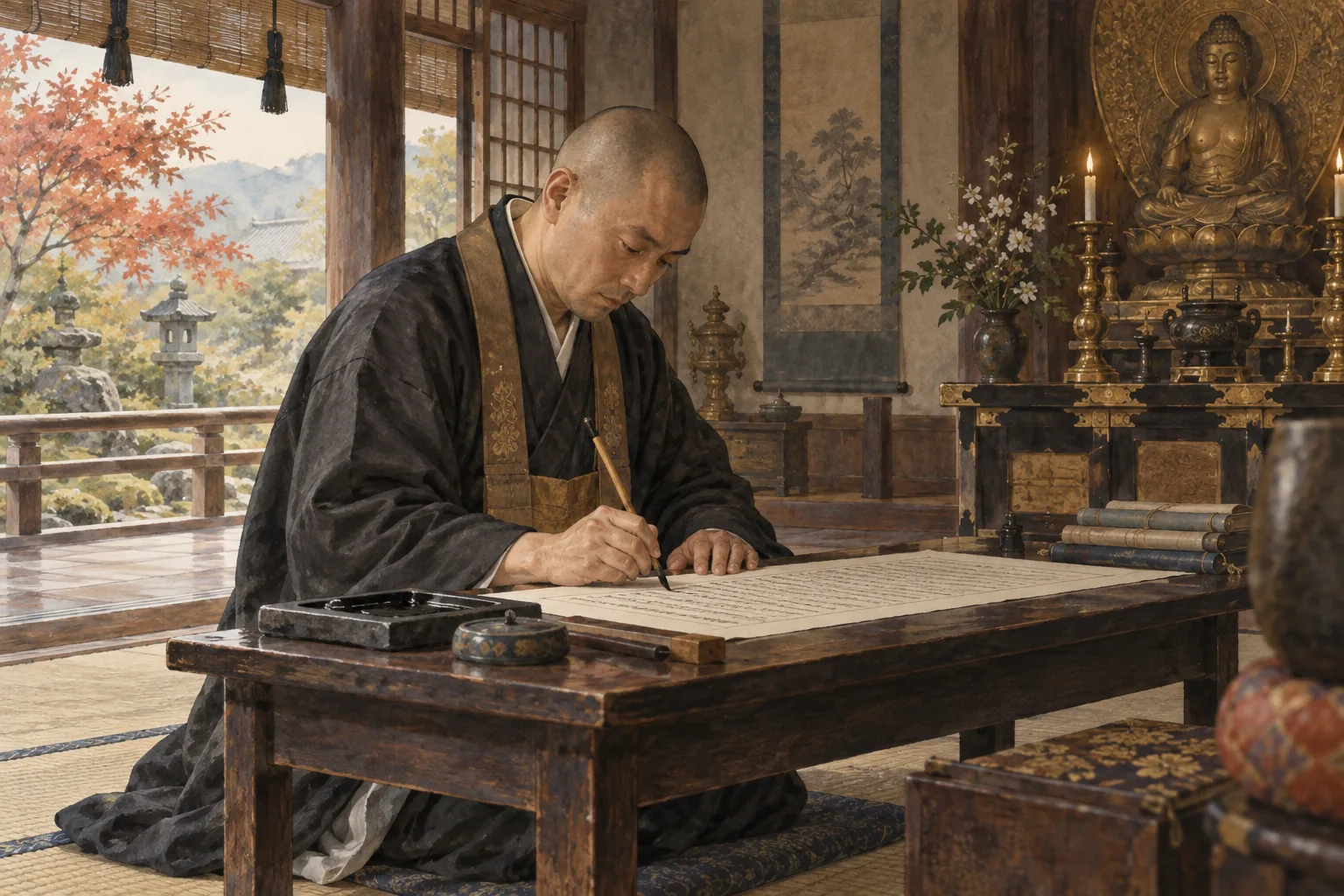
意味が分からなくてもよい。書き写すこと自体が行とされる。
一言で言うと
これだけ覚えれば最低限伝わる一文
Shakyo is the practice of copying a Buddhist sutra by hand with brush and ink.
写経とは、筆と墨で仏教の経典を書き写す行のことです。
30秒で説明する
外国人に説明するときの標準サイズ
Shakyo means copying a sutra by hand. Historically it was done to make copies and to accumulate merit, and it is now offered at many temples as a practice open to anyone. Most sessions use the Heart Sutra, a text of a little over two hundred and sixty characters, traced over a printed guide. Understanding the text is not required.
写経とは経典を手で書き写すことです。もともとは経典を複製するためと、功徳を積むために行われ、今では多くの寺が誰でも参加できる行として受け付けています。使われるのはたいてい般若心経で、二百六十字余りの短い経典を、印刷された手本の上からなぞります。意味を理解していることは求められません。
スピーチ・英作文
通訳案内士の二次口述・大学入試の自由英作文に
Shakyo is the practice of copying a Buddhist sutra by hand, and it is one of the easiest ways for a visitor to take part in something genuinely religious in Japan. Before printing, copying was how sutras were reproduced, and it was also understood to generate merit, which could be dedicated to a dead relative or to a wish.
Today many temples run sessions open to anyone. You sit at a low desk, you are given a brush, ink and a sheet with the text printed faintly so you trace over it, and you copy the Heart Sutra, which is a little over two hundred and sixty characters and takes most people about an hour.
At the end you write your wish and your name, and you can either take the sheet home or leave it at the temple to be dedicated. Nobody checks your calligraphy and nobody asks what you believe. The instruction is simply to write one character at a time.
写経は仏教の経典を手で書き写す行で、訪れた人が本当に宗教的な営みに加わる方法として、最も入りやすいもののひとつです。印刷の前の時代、写すことは経典を複製する手段であり、同時に功徳を生むことと理解されていました。
その功徳は亡くなった家族や願いに向けることができます。今では多くの寺が誰でも参加できる会を開いています。低い机に座り、筆と墨と、文字が薄く刷られた紙を渡され、その上をなぞります。書き写すのは般若心経で、二百六十字余り、たいていの人は一時間ほどかかります。
最後に願い事と名前を書き、その紙は持ち帰ることも、寺に納めて供養してもらうこともできます。字の巧拙を見る人はいませんし、何を信じているか尋ねられることもありません。教えられるのはただ、一字ずつ書きなさいということだけです。
こう聞かれたら
外国人から実際にされる質問と、その答え方。
Do I need to be able to write Japanese?
日本語が書けないとだめですか。
No. The characters are printed faintly on the paper and you trace them, so it works as a drawing exercise if you cannot read them. Temples that take foreign visitors are used to this and will show you how to hold the brush.
必要ありません。文字は紙に薄く刷ってあり、その上をなぞるので、読めなくても描く作業として成り立ちます。外国からの参加者を受け入れている寺は慣れていて、筆の持ち方を教えてくれます。
What happens to the sheet afterward?
書いた紙はそのあとどうするのですか。
You choose. Many people leave it at the temple, where copies are dedicated at the altar and handled ritually, and others take it home. Temples usually charge a modest fee that covers the materials and the dedication.
選べます。多くの人は寺に納め、そこで納経として本堂に供えられます。持ち帰る人もいます。寺はふつう、材料と納経の費用として控えめな金額を受け取ります。
そのまま使えるフレーズ
- You trace over the printed characters.薄く刷られた文字をなぞります。
- It takes about an hour.一時間ほどかかります。
- You don't need to understand the text.意味が分からなくてもかまいません。
- You can leave it at the temple or take it home.寺に納めても持ち帰ってもいいです。
説明に使う語句
- sutra経典
- brush筆
- ink stick / ink墨
- to dedicate納める
動画で見る
YouTube より豆知識
写経は奈良時代に国家の事業として大規模に行われ、写経所が置かれていました。現在最もよく写されるのは般若心経で、短く、内容がよく知られているためです。寺によっては、書き写した経を本堂に納める「納経」の作法が定められています。近年は心を落ち着ける目的で写経に通う人が増え、寺以外に写経のできる施設もあります。書道の練習としてではなく行として行うため、字の上手下手は問われません。
