赤飯せきはん
sekihan
red rice steamed with azuki beans
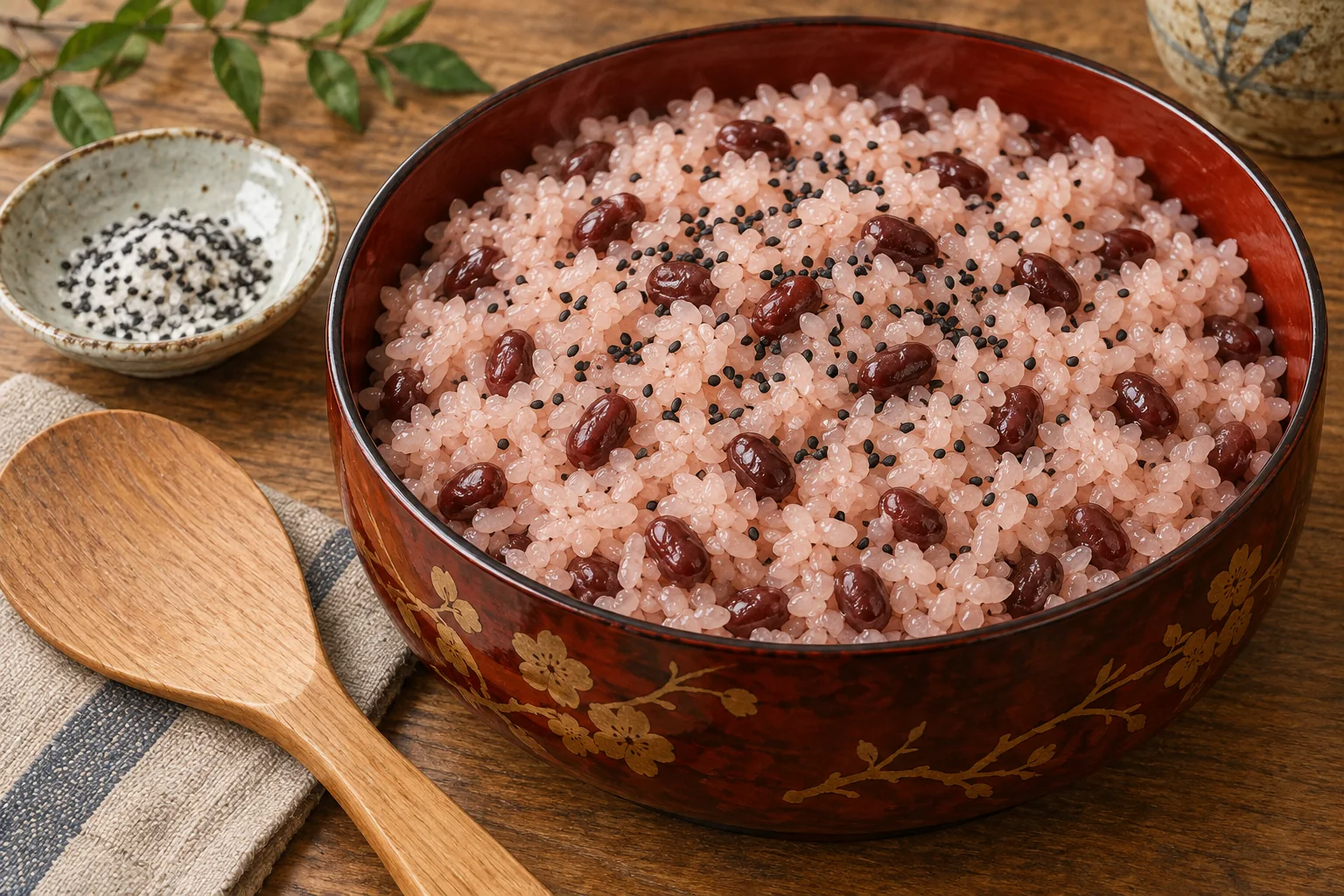
めでたい日に炊く赤いご飯。入学、就職、還暦。祝いの合図としてのごはん。
一言で言うと
これだけ覚えれば最低限伝わる一文
Sekihan is glutinous rice steamed with red beans, cooked for celebrations and turned pink by the beans.
赤飯とは小豆と一緒に蒸したもち米のご飯で、祝い事に炊き、豆の色で赤く染まります。
30秒で説明する
外国人に説明するときの標準サイズ
Sekihan is made by soaking glutinous rice in the cooking liquid from red azuki beans, then steaming the rice and beans together. The liquid dyes the rice a dusty pink. It is eaten at celebrations: a birthday, an entrance ceremony, a new job, a sixtieth birthday. It is lightly salty rather than sweet, and it is usually sprinkled with black sesame and salt. Supermarkets sell it year round.
赤飯は、小豆を煮た汁にもち米を浸してから、米と豆を一緒に蒸して作ります。その汁が米をくすんだ桃色に染めます。誕生日、入学式、就職、還暦といった祝い事のときに食べます。甘くはなく軽く塩気があり、たいてい黒ごまと塩をふります。スーパーでは一年中売っています。
スピーチ・英作文
通訳案内士の二次口述・大学入試の自由英作文に
In Japan a bowl of rice can be an announcement. Sekihan is glutinous rice steamed together with red azuki beans, and the beans' cooking liquid stains the rice a soft pinkish red. It is not a dessert; it is lightly salted and eaten as the rice part of a meal, sprinkled with black sesame mixed with salt.
What matters is when it appears. A family cooks or buys it for an entrance ceremony, a graduation, a first day at a new job, a sixtieth birthday, a safe birth. In some households it is still made when a daughter has her first period, which many young people now find embarrassing.
Red has long been treated as a color that drives off misfortune, and the idea of cooking red rice for auspicious days is old, though explanations of the origin differ. Turn it around and the meaning is just as clear: if someone says they will cook sekihan, they are saying congratulations before they say the word.
日本では、一杯のご飯が知らせになることがあります。赤飯はもち米を小豆と一緒に蒸したもので、豆を煮た汁が米をやわらかな赤みがかった桃色に染めます。菓子ではありません。軽く塩をきかせ、黒ごま塩をふって、食事のご飯として食べます。
大事なのはそれが出てくる時です。入学式、卒業、新しい職場の初日、還暦、無事の出産に、家族が炊くか買ってきます。娘に初潮が来たときに炊く家庭も今なお一部にあり、今の若い人の多くはこれを気恥ずかしく感じます。
赤は古くから災いを払う色とされ、めでたい日に赤い飯を炊く考えは古いものですが、由来の説明には違いがあります。裏返せば意味も同じくらい明らかです。誰かが赤飯を炊くと言ったら、それは「おめでとう」と口にする前に言っているのです。
こう聞かれたら
外国人から実際にされる質問と、その答え方。
Is it sweet, like a dessert?
デザートのように甘いのですか。
No. Azuki beans are used in sweets, so people expect sugar, but sekihan is salted, not sweetened. It is eaten with savory dishes exactly like plain white rice, and the sesame and salt on top make that clear at the first bite.
甘くありません。小豆は菓子に使われるので砂糖を予想されますが、赤飯は甘くせず塩味をつけます。白いご飯とまったく同じようにおかずと一緒に食べ、上のごま塩で一口目にそれと分かります。
Why red?
どうして赤いのですか。
Red has long been regarded in Japan as a color that wards off misfortune, which is why it appears at celebrations along with white. There are several explanations for how red rice came to mark auspicious days, and none is settled, so it is safer to say the custom is old than to give one origin.
赤は日本で古くから災いを払う色とされ、だから白とともに祝いの場に現れます。赤い飯がめでたい日の印になった経緯にはいくつかの説明があり、どれも定まっていないので、一つの由来を挙げるより習慣が古いと言うほうが安全です。
Is it always made with azuki beans?
いつも小豆で作るのですか。
Not everywhere. In the Kanto region and some other areas cowpeas are often used instead, because azuki split more easily when cooked and a split bean was thought unlucky. In some areas of Hokkaido a sweetened version made with candied beans is common, which surprises visitors from elsewhere in the country.
どこでも同じではありません。関東などでは、小豆は煮ると割れやすく、割れた豆は縁起が悪いとされたため、代わりにささげを使うことが多くあります。北海道の一部では甘納豆を使った甘い赤飯が一般的で、よその地域から来た人を驚かせます。
そのまま使えるフレーズ
- We're having red rice tonight; she got into university.今夜は赤飯です。娘が大学に受かったので。
- It's not sweet. It's salted, like normal rice.甘くありません。ふつうのご飯と同じで塩味です。
- The color comes from the beans, not from dye.色は着色料ではなく豆から出たものです。
- Put a little sesame and salt on top.上にごま塩を少しかけてください。
- Cooking sekihan means there's something to celebrate.赤飯を炊くというのは、めでたいことがあるという意味です。
説明に使う語句
- glutinous riceもち米
- azuki beans小豆
- steam蒸す
- sesame and saltごま塩
- celebration祝い事
- ward off misfortune災いを払う
動画で見る
YouTube より豆知識
赤飯はもち米に小豆やささげを合わせ、豆の煮汁で色をつけて蒸した飯で、蒸し器で作る「おこわ」の一種です。赤は災いを払う色とされ、祝い事に紅白を用いる感覚と結びついていますが、由来には諸説あります。関東などではささげを使うことが多く、これは小豆が煮崩れて割れると「腹が切れる」と嫌われたためと説明されます。北海道の一部には甘納豆を使い砂糖で甘くした赤飯があり、食紅で色をつけるのが一般的です。入学・卒業・就職・還暦などの祝いのほか、法事の席で用いる地域もあり、必ずしも慶事専用ではありません。スーパーや惣菜店では通年で売られ、家庭で蒸す機会は減っていますが、炊飯器用の調理セットも広く出回っています。
