ご祝儀ごしゅうぎ
goshugi
the money you give at a wedding
新札で、奇数の額を、専用の袋に入れて渡す。金額には相場がある。
一言で言うと
これだけ覚えれば最低限伝わる一文
Goshugi is cash given at a wedding, in new notes, in a special envelope, in an amount set by custom.
ご祝儀とは結婚式で渡す現金で、新札を専用の袋に入れ、相場に沿った額を包みます。
30秒で説明する
外国人に説明するときの標準サイズ
Guests at a Japanese wedding give money rather than a gift. The amount follows convention, commonly thirty thousand yen for a friend, more for relatives. The notes should be new, the total should not be an even number that divides in two, and the money goes in a decorated envelope handed in at a reception desk.
日本の結婚式では、招かれた側は品物ではなく現金を渡します。額は慣例に従い、友人なら3万円が一般的で、親族はより多くなります。紙幣は新札、合計は二つに割り切れる偶数を避け、飾りのついた袋に入れて受付で渡します。
スピーチ・英作文
通訳案内士の二次口述・大学入試の自由英作文に
At a Japanese wedding you give money, and there are enough conventions around it that getting it wrong is easy. The amount is set by relationship rather than by generosity: thirty thousand yen is the standard for a friend or colleague, more for a relative, less for a young person still studying. The number matters.
Even amounts that split cleanly in two are avoided because division suggests the couple separating, which is why thirty thousand is standard and twenty thousand is awkward, though making twenty thousand from one ten-thousand note and two five-thousand notes, so the number of notes is odd, is a common way around it.
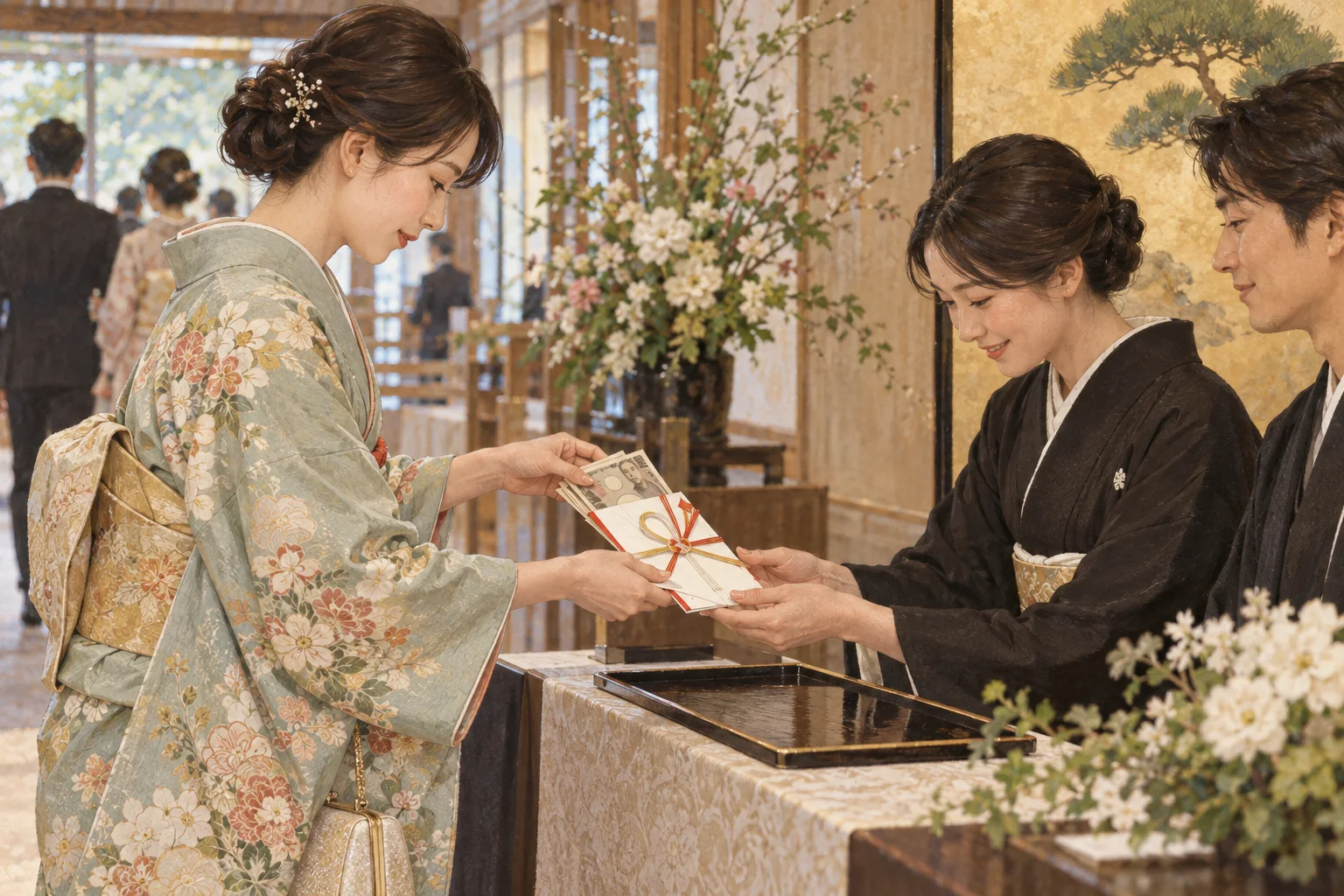
The notes must be new and unfolded, which means a trip to a bank, and the envelope must be the right kind: for a wedding, one with a cord tied in a knot that cannot be undone. You write your name on the front, the amount inside, and hand it over at the reception desk with both hands. In return you get a meal, gifts to take home, and the couple's thanks.
日本の結婚式では現金を渡します。その周りには決まりごとが多く、間違えるのは簡単です。額は気前のよさではなく間柄で決まります。友人や同僚なら3万円が標準、親族はより多く、まだ学生の若い人は少なくなります。数が問題になります。
きれいに二つに割れる偶数は、割れることが二人の別れを連想させるため避けられます。だから3万円が標準で2万円は座りが悪いのですが、一万円札一枚と五千円札二枚の三枚にして二万円を包む、という回避のしかたも広く行われています。
紙幣は折り目のない新札でなければならず、そのために銀行へ行くことになります。袋も正しい種類が要ります。婚礼にはほどけない結び切りの水引がついたものです。表に自分の名を書き、中に金額を記し、受付で両手で渡します。返礼として、食事と持ち帰る品と、二人からの礼を受け取ります。
こう聞かれたら
外国人から実際にされる質問と、その答え方。
What if I can't get new notes?
新札が用意できなかったらどうしますか。
Banks exchange them at the counter or at an exchange machine. If you truly cannot, smooth the notes and choose the cleanest you have; it is noticed but forgiven, especially from a foreign guest.
銀行の窓口や両替機で交換できます。どうしても無理なら、なるべくきれいな紙幣を選んで伸ばしてください。気づかれはしますが許されます。外国からの招待客ならなおさらです。
How do I know how much to give?
いくら包めばいいか、どう判断するのですか。
Ask another guest who knows the couple, which is completely normal and is what Japanese guests do. As a rough guide, thirty thousand for a friend, fifty thousand or more for a close relative, ten thousand for a student.
二人を知っている別の招待客に尋ねてください。まったくふつうのことで、日本人の招待客もそうしています。目安としては、友人は3万円、近い親族は5万円以上、学生は1万円です。
そのまま使えるフレーズ
- Use new, unfolded notes.折り目のない新札を使います。
- Avoid amounts that split evenly in two.二つに割れる額は避けます。
- Hand it in at the reception desk.受付でお渡しします。
- Ask another guest how much to give.いくら包むか他の招待客に聞いてください。
説明に使う語句
- congratulatory moneyご祝儀
- new banknote新札
- gift envelope祝儀袋
- reception desk受付
動画で見る
YouTube より豆知識
祝儀袋は包む金額に応じて選び、豪華な袋に少額を入れるのは不釣り合いとされます。婚礼には結び切りの水引を使い、何度あってもよい祝いに使う蝶結びは用いません。中袋には金額を大字(壱・弐・参など)の漢数字で書く習わしがあり、改ざんを防ぐためとされます。参列できない場合は、式の前に現金書留で送るか、後日渡します。近年は電子決済でご祝儀を受け付ける式場も現れましたが、まだ少数です。
