物は両手で渡すものはりょうてでわたす
mono wa ryote de watasu
why two hands matter
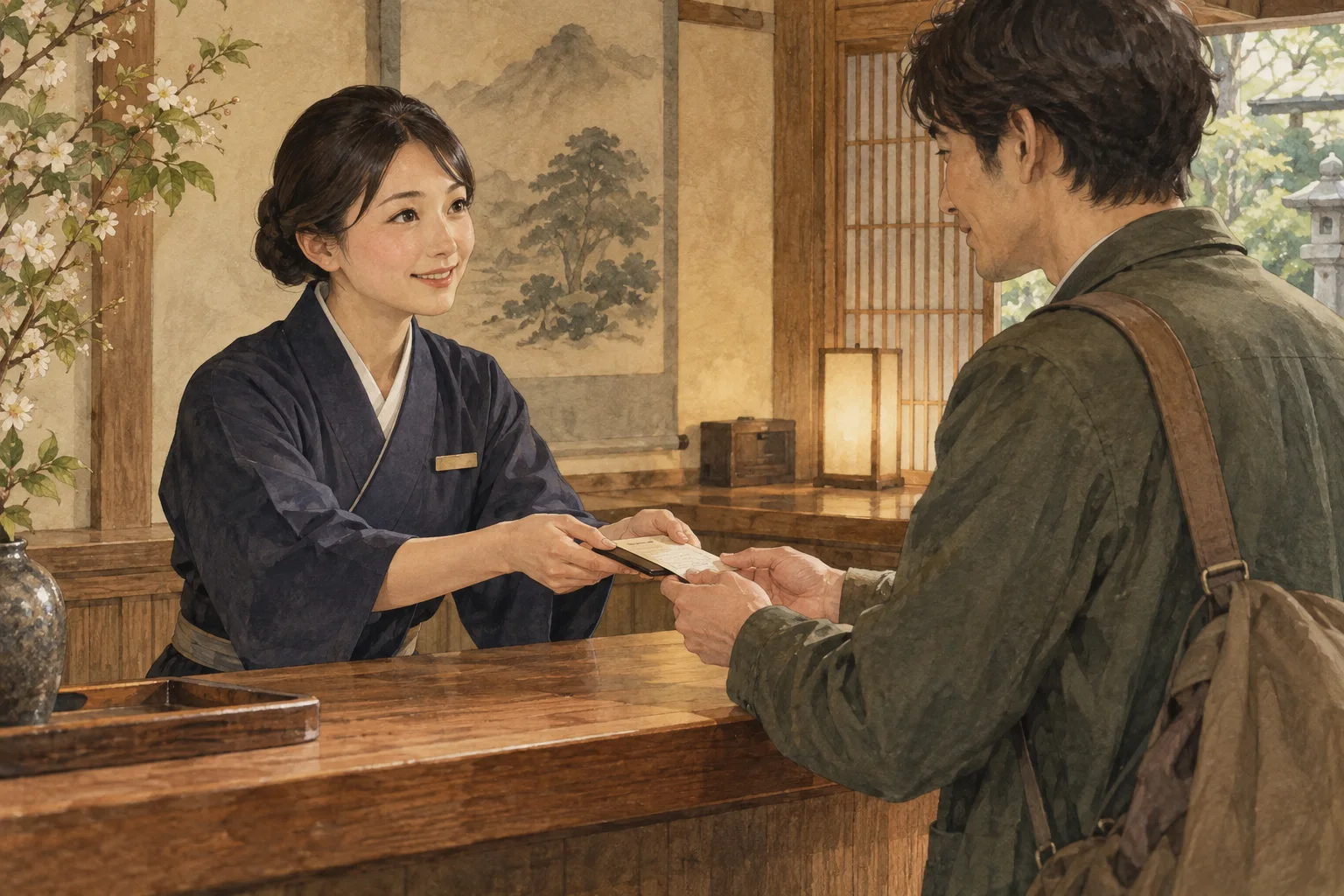
名刺も、お金も、贈り物も。片手で出すと、雑に扱った印象になる。
一言で言うと
これだけ覚えれば最低限伝わる一文
Mono wa ryote de watasu, or handing things with both hands, is a Japanese habit signaling care and respect.
物は両手で渡すとは、丁寧さと敬意の表れとして、物を両手で渡し、両手で受け取る日本の習慣のことです。
30秒で説明する
外国人に説明するときの標準サイズ
Business cards, money, gifts, documents and drinks are passed with both hands, or with one hand supported by the other. Receiving is the same. One hand is not rude in casual situations, but in any formal or commercial exchange two hands are the default, and shops use a small tray for money for the same reason.
名刺、お金、贈り物、書類、飲み物は両手で渡し、片手のときはもう一方の手を添えます。受け取るときも同じです。くだけた場では片手でも失礼ではありませんが、改まった場や商いの場では両手が基本で、店で現金を受け渡すときに小さな盆を使うのも同じ理由です。
スピーチ・英作文
通訳案内士の二次口述・大学入試の自由英作文に
Handing something with both hands is one of the smallest and most useful habits to pick up in Japan. Business cards are the clearest case: you present yours with both hands, turned so the other person can read it, receive theirs with both hands, look at it, and put it on the table rather than into a pocket.
But the same applies to money, a gift, a document, a cup of tea. If you hand something over with one hand, touch your wrist or forearm with the other, which achieves much the same effect. Receiving is symmetrical, and a small bow at the same time is normal.
There is a related detail you will meet immediately in shops: the little tray on the counter. You put your money on the tray rather than into the cashier's hand, and your change and receipt come back on it, which avoids the awkwardness of a direct hand-to-hand exchange and, for a business, makes the count visible to both parties.
物を両手で渡すことは、日本で身につける習慣の中でも、最も小さく、最も役に立つもののひとつです。名刺が最も分かりやすい例です。自分の名刺は両手で、相手が読める向きにして差し出し、相手の名刺は両手で受け、目を落として見て、そのまま懐に入れずに卓の上に置きます。
しかし同じことが、お金にも、贈り物にも、書類にも、茶の一杯にも当てはまります。片手で渡すときは、もう一方の手を手首や前腕に添えれば、ほぼ同じ効果になります。受け取る側も同じで、そのとき軽く頭を下げるのがふつうです。
店に入ればすぐ出会う、関連した細部もあります。カウンターの小さな盆です。お金は店員の手にではなく盆に置き、釣りと領収書も盆で戻ってきます。手から手への受け渡しの気まずさを避けられ、店にとっては、双方に金額が見える形になります。
こう聞かれたら
外国人から実際にされる質問と、その答え方。
Why is there a tray at the register?
レジにあるトレーは何のためですか。
It avoids hand-to-hand contact, makes the amount visible to both sides while it is counted, and stops coins being dropped. Put your money on it rather than handing it over, and take your change from it.
手から手への受け渡しを避けられ、数える間、金額が双方に見え、硬貨を落とさずに済むからです。手渡しではなく盆に置き、釣りも盆から受け取ってください。
What do I do with a business card after receiving it?
名刺を受け取ったあと、どうすればいいですか。
Look at it, say the person's name or something about the company, and place it on the table in front of you for the duration of the meeting, arranged to match where people are sitting. Writing on it or pocketing it immediately is poor form.
目を通し、相手の名や会社について何か一言述べ、会議の間は自分の前の卓に置きます。座っている位置に合わせて並べます。その場で書き込んだり、すぐ懐にしまったりするのは行儀がよくありません。
そのまま使えるフレーズ
- Please take it with both hands.両手でお受け取りください。
- Put the money on the tray.お金はトレーに置いてください。
- I'll pass it to you with both hands.両手でお渡しします。
- Don't put the card straight in your pocket.名刺をすぐしまわないでください。
説明に使う語句
- with both hands両手で
- to hand over手渡す
- money trayカルトン
- business card名刺
動画で見る
YouTube より豆知識
現金の受け渡しに使う小さな盆は「カルトン」と呼ばれ、もとはフランス語で厚紙を意味する語に由来するとされます。名刺交換では、目下の人が先に差し出し、相手より低い位置で渡すのが作法とされます。片手で渡す場合でも、もう一方の手を添えれば丁寧さが伝わります。茶道でも、道具は両手で扱うことが基本です。硬貨をカウンターに直接置く行為は、店によっては雑に見えるため避けられます。
