お食い初めおくいぞめ
okuizome
the first meal ceremony at 100 days
生後百日、まだ食べられない赤ちゃんに鯛と赤飯を「食べさせるふり」。一生食べ物に困らないように。
一言で言うと
これだけ覚えれば最低限伝わる一文
Okuizome is a ceremony at about one hundred days when a baby is pretend-fed a feast so it will never go hungry.
お食い初めとは生後およそ百日に、赤ちゃんにごちそうを食べさせるふりをして、一生食べ物に困らないよう願う儀式です。
30秒で説明する
外国人に説明するときの標準サイズ
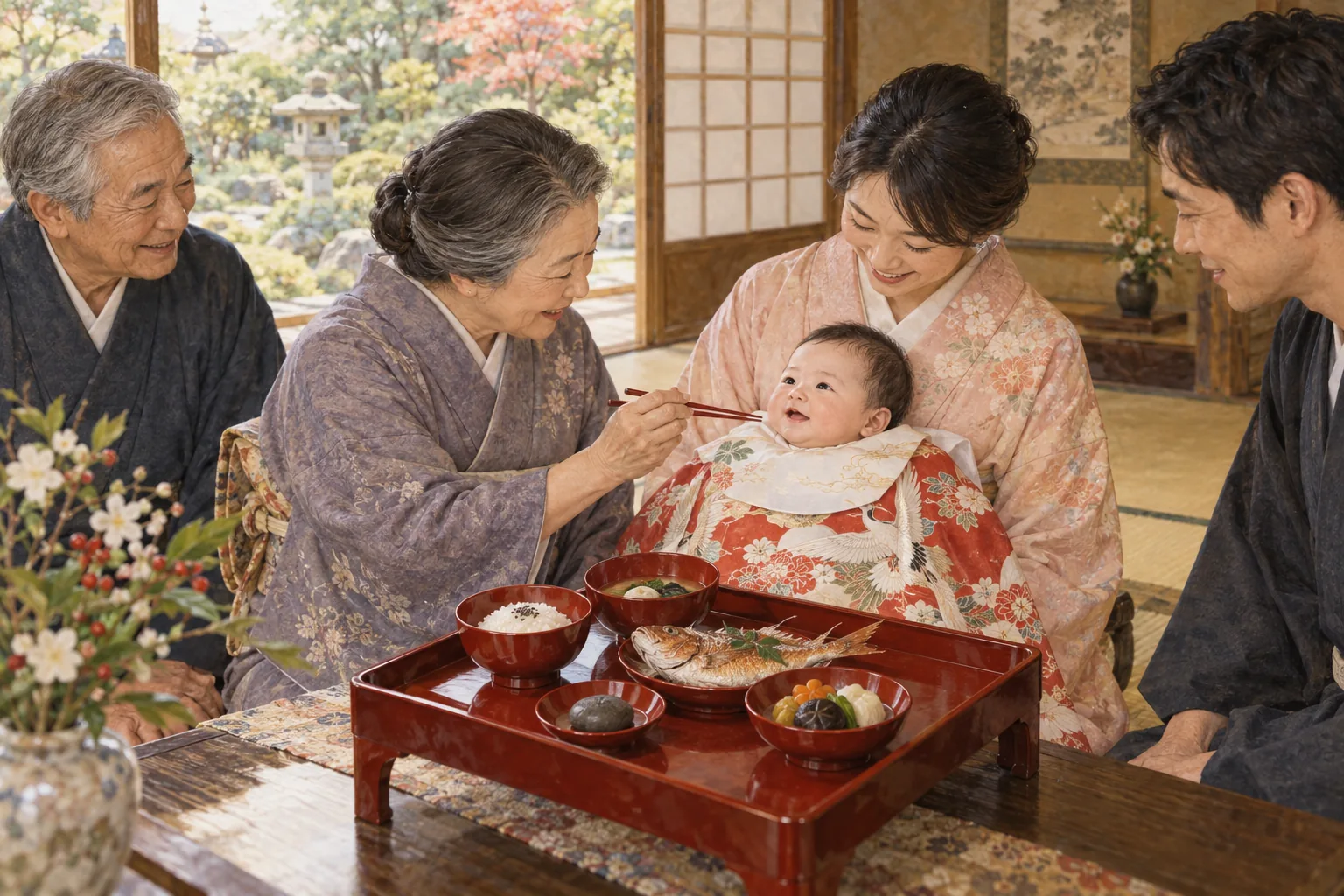
Around the hundredth day after birth, the family prepares a small formal meal: a whole grilled sea bream, red rice, clear soup, simmered vegetables and pickles, set out on lacquered dishes. The oldest relative present touches chopsticks to each dish and then to the baby's lips, in a set order, three times. Chopsticks touched to a pebble from a shrine are then touched to the gums as a wish for strong teeth. The baby eats nothing, and the adults eat everything.
生後百日ごろ、家族は小さな正式の膳を用意します。尾頭つきの焼き鯛、赤飯、吸い物、煮物、香の物を漆の器に並べます。その場でいちばん年長の親族が箸をそれぞれの料理につけ、赤ちゃんの唇にあてる動作を、決まった順番で三回繰り返します。神社の小石にあてた箸を歯茎にあてて、丈夫な歯を願います。赤ちゃんは何も食べず、大人が全部食べます。
スピーチ・英作文
通訳案内士の二次口述・大学入試の自由英作文に
When a Japanese baby is about a hundred days old, the family holds a meal the baby cannot eat. Okuizome, the first eating, is a wish that the child will never lack food. The parents or a restaurant prepare a miniature traditional feast on red or black lacquered dishes: a whole sea bream grilled with its head and tail on, because the fish is a symbol of celebration, red rice cooked with beans, a clear soup with clams, simmered root vegetables and a few pickles.
The oldest relative of the same sex as the baby, ideally a grandparent, sits with the child on their lap and goes through a sequence: chopsticks touch the rice, then the baby's lips, then the soup, then the rice again, then the fish, and so on, repeated three times.
The chopsticks are also touched to a small stone from the shrine grounds and then to the baby's gums, so that the teeth will grow strong. Then the grown-ups eat the fish, photograph everything and go home. I think it says a great deal that the very first ritual about food is about not being hungry.
日本の赤ちゃんが生後百日ほどになると、家族は赤ちゃんが食べられない食事の席を設けます。お食い初め、「初めて食べること」は、子どもが一生食べ物に困らないようにという願いです。両親か料理店が赤や黒の漆の器に小さな伝統的なごちそうを用意します。
祝いの象徴である鯛を頭と尾をつけたまま焼いたもの、豆と炊いた赤飯、はまぐりの吸い物、根菜の煮物、少しの漬物です。赤ちゃんと同性の最年長の親族、できれば祖父母が子どもを膝に乗せ、決まった順序を踏みます。箸をご飯につけ、赤ちゃんの唇にあて、次に吸い物、またご飯、次に魚、というように三回繰り返します。
歯が丈夫に生えるよう、神社の境内の小石に箸をあて、その箸を赤ちゃんの歯茎にあてます。それから大人たちが魚を食べ、写真を撮って帰ります。食べ物についての最初の儀式が「飢えないこと」についてであるのは、多くを物語っていると私は思います。
こう聞かれたら
外国人から実際にされる質問と、その答え方。
Why a whole sea bream?
どうして鯛を一尾まるごと使うのですか。
Sea bream, tai, sounds like the ending of the word for congratulations, medetai, and its red color is festive, so it appears at weddings, New Year and celebrations of every kind. Serving it whole with head and tail means completeness, from beginning to end. It is expensive, which is part of the point.
鯛は「めでたい」の語尾と音が重なり、赤い色も祝いの色なので、結婚式や正月やあらゆる祝いの席に出ます。頭と尾をつけて丸ごと出すのは、初めから終わりまで完全という意味です。高価なことも意味のうちです。
What is the stone for?
あの小石は何のためのものですか。
It is the tooth-hardening stone. A pebble, usually picked up at the shrine during the first shrine visit or received from the priest, is touched with the chopsticks and then the chopsticks touch the baby's gums, as a wish for teeth as strong as stone. Afterward the pebble is returned to the shrine or kept.
「歯固めの石」です。ふつうお宮参りのときに神社で拾うか神職からもらう小石で、箸をその石にあて、次に箸を赤ちゃんの歯茎にあてて、石のように丈夫な歯を願います。あとで石は神社に返すか、記念に取っておきます。
Do people really do this at home?
家庭で本当にやっているのですか。
Many do, and supermarkets sell okuizome sets with a small grilled bream and red rice. Others book a restaurant that provides the meal and the dishes, or a photo studio that stages it. Some families skip it, and some do a simplified version with just the fish and a photo.
多くの家庭がやりますし、スーパーでは小さな焼き鯛と赤飯のお食い初めセットを売っています。料理と器を用意してくれる料理店や、撮影つきで演出してくれる写真館を予約する人もいます。省く家庭もあれば、鯛と写真だけの簡略版にする家庭もあります。
そのまま使えるフレーズ
- We're doing the hundred-day ceremony this weekend.今週末にお食い初めをします。
- The baby doesn't actually eat; we just pretend.赤ちゃんは実際には食べず、ふりだけです。
- Grandpa will do the feeding since he's the eldest.いちばん年長なので祖父が食べさせる役です。
- The whole fish is for good luck.尾頭つきの魚は縁起物です。
- The stone is a wish for strong teeth.石は丈夫な歯が生えるようにという願いです。
説明に使う語句
- sea bream鯛
- red rice赤飯
- lacquered dishes漆の器・お膳
- gums歯茎
- pretend to feed食べさせるふりをする
動画で見る
YouTube より豆知識
お食い初めは「百日祝い」とも呼ばれ、平安時代の宮中で赤ちゃんに餅を含ませた「百日」の儀にさかのぼるとされます。膳は一汁三菜が基本で、尾頭つきの鯛、赤飯、はまぐりなどの吸い物、煮物、香の物を揃え、器は男の子が朱塗り、女の子が外側黒で内側朱の漆器を使う習わしが伝わりますが、今は地域や家庭でさまざまです。食べさせる役は「養い親」と呼ばれ、長寿にあやかって最年長の親族が務めます。歯固めの石は関西などで小石の代わりにたこを使う地域があり、鯛の代わりに地域の魚を用いることもあります。生後百日は首がすわり始める時期で、写真館では寝返り前の記念撮影の機会としても定着しています。宅配で膳一式を届けるサービスも増えています。
