さっぽろ雪まつりさっぽろゆきまつり
Sapporo yuki matsuri
the February festival of giant snow sculptures in Sapporo
始まりは1950年、中高生が公園の雪捨て場に作った六つの雪像。
一言で言うと
これだけ覚えれば最低限伝わる一文
Sapporo yuki matsuri, the Sapporo Snow Festival, is a week of giant snow sculptures in northern Japan every February.
さっぽろ雪まつりとは、毎年2月に北の街で大きな雪像が並ぶ一週間の祭りです。
30秒で説明する
外国人に説明するときの標準サイズ
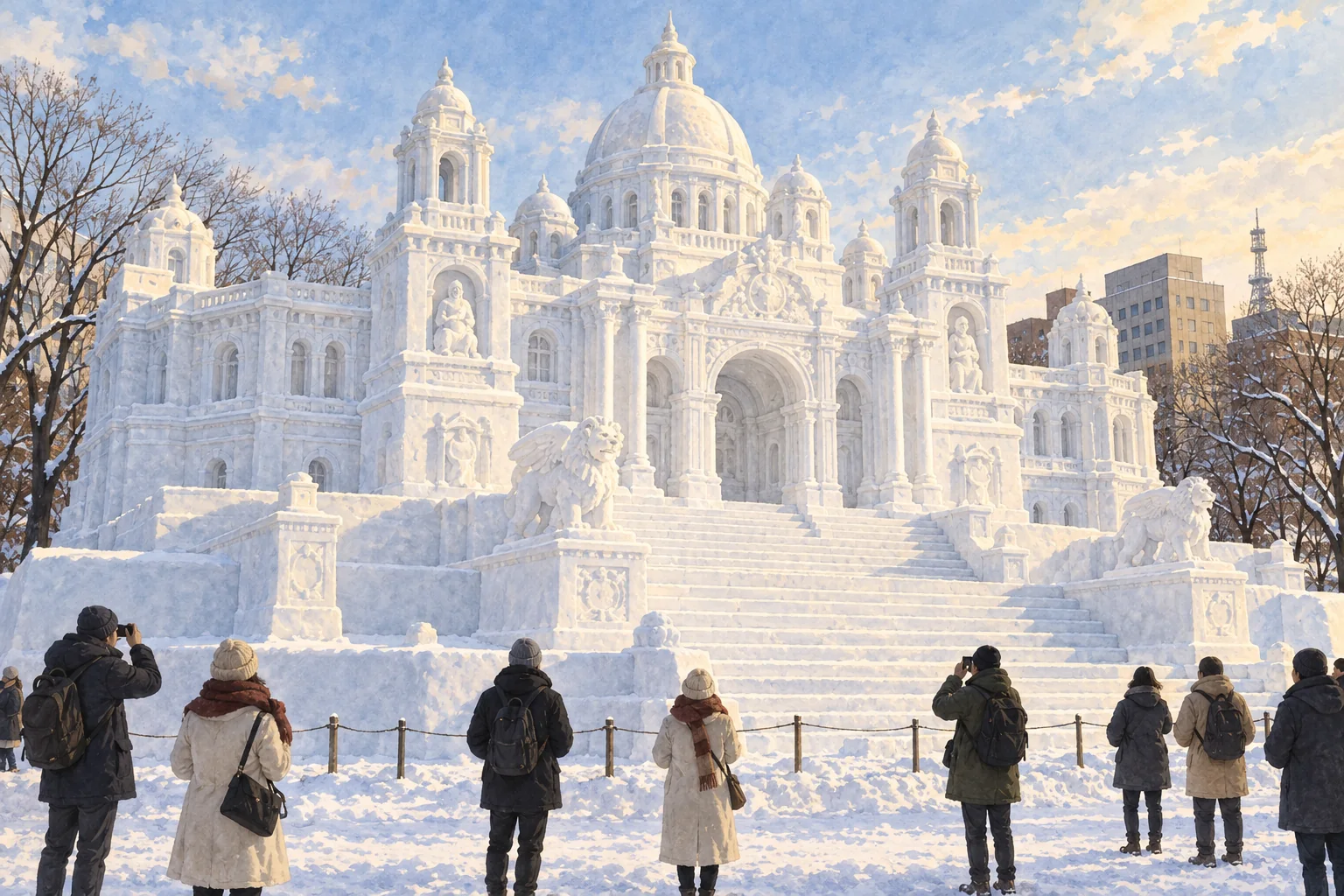
Every February, Sapporo fills a long park in the middle of the city with snow sculptures, some of them as tall as a building. It began in 1950 when local students built six sculptures in a place where snow was being dumped. Now it draws more than two million visitors in about a week. The Self-Defense Forces help build the largest pieces, because moving that much snow needs trucks.
毎年2月、札幌は街の中心を通る細長い公園を雪像で埋めます。建物ほどの高さのものもあります。始まりは1950年、地元の中高生が雪捨て場に六つの雪像を作ったことでした。いまは一週間ほどで200万人以上が訪れます。いちばん大きな像は自衛隊が作るのを手伝います。それだけの雪を運ぶにはトラックが要るからです。
スピーチ・英作文
通訳案内士の二次口述・大学入試の自由英作文に
The Sapporo Snow Festival happens for about a week every February in the biggest city on Japan's northern island. The main site is Odori Park, a strip of green that runs through the center of the city, and in winter it fills with snow sculptures: castles, cartoon characters, whole building facades carved in snow, lit at night.
The origin is modest. In 1950 local junior and senior high school students built six sculptures in the part of the park that was being used to dump snow cleared from the streets, and about fifty thousand people came to look.
The Ground Self-Defense Force joined in 1955, which is how the very large pieces became possible, since a big one takes hundreds of truckloads. Now more than two million people come. Dress properly. Sapporo in February is genuinely cold, and the sidewalks are icy.
さっぽろ雪まつりは、日本の北の島でいちばん大きな街で、毎年2月に一週間ほど開かれます。主な会場は大通公園、街の中心を貫く細長い公園で、冬はそこが雪像で埋まります。
城、漫画の人物、建物の正面をまるごと雪で彫ったもの。夜は光が当てられます。始まりは地味です。1950年、地元の中高生が、除雪した雪を捨てていた一角に六つの雪像を作り、5万人ほどが見に来ました。
1955年に陸上自衛隊が加わり、そこから巨大な雪像ができるようになりました。大きいものは何百台ものトラックの雪を使うからです。いまは200万人以上が訪れます。服装はしっかりと。2月の札幌は本当に寒く、歩道は氷です。
こう聞かれたら
外国人から実際にされる質問と、その答え方。
Where does all the snow come from?
あれだけの雪はどこから来るのですか。
It is trucked in, mostly from the outskirts where the snow is clean. A single large sculpture can take several hundred truckloads, which is why the Self-Defense Forces are involved.
トラックで運びます。多くは、雪のきれいな郊外からです。大きな像一基で何百台分にもなり、だから自衛隊が関わっています。
What happens to the sculptures afterwards?
雪像はそのあとどうなるのですか。
They are knocked down deliberately on the last day, for safety, and the snow is carried away. Nothing is kept. Part of the appeal is that the whole thing is gone within days.
最終日に安全のため意図的に壊し、雪は運び出します。何も残しません。数日で消えてしまうことも、この祭りの持ち味の一つです。
Is there anything to eat there?
そこで食べられるものはありますか。
Yes, and it is a reason to go. Hokkaido food stalls sell grilled scallops, crab, potatoes with butter, corn soup and ramen. Eating something hot while standing in the snow is part of it.
あります。そして、それが行く理由の一つです。北海道の屋台で、焼いたホタテ、カニ、じゃがバター、コーンスープ、ラーメンが出ます。雪の中で立ったまま熱いものを食べるのも祭りのうちです。
そのまま使えるフレーズ
- It's held for about a week every February.毎年2月に一週間ほど開かれます。
- It started in 1950 with six sculptures by students.1950年に、学生が作った六つの雪像から始まりました。
- The Self-Defense Forces help build the big ones.大きな像は自衛隊が作るのを手伝います。
- They're knocked down on the last day.最終日に壊してしまいます。
- Wear boots with grip — the sidewalks are icy.滑らない靴で。歩道は氷です。
説明に使う語句
- snow sculpture雪像
- ice sculpture氷像
- to shovel, to clear snow雪かきをする
- food stall屋台
- sub-zero氷点下の
動画で見る
YouTube より豆知識
第1回は1950年、大通公園7丁目の雪捨て場に、地元の中学生と高校生が高さ3〜5メートルの雪像を六基作ったのが始まりで、約5万人が訪れた。1955年から自衛隊が参加し、規模が一気に大きくなった。1972年の札幌オリンピックで世界に知られるようになった。会場は大通のほかに、氷像の並ぶすすきの、子どもが遊べるつどーむがある。雪像には木の骨組みが入っており、最終日の解体はその骨組みごと重機で崩す。
