電車の定時運行でんしゃのていじうんこう
densha no teiji unko
why Japanese trains run on time
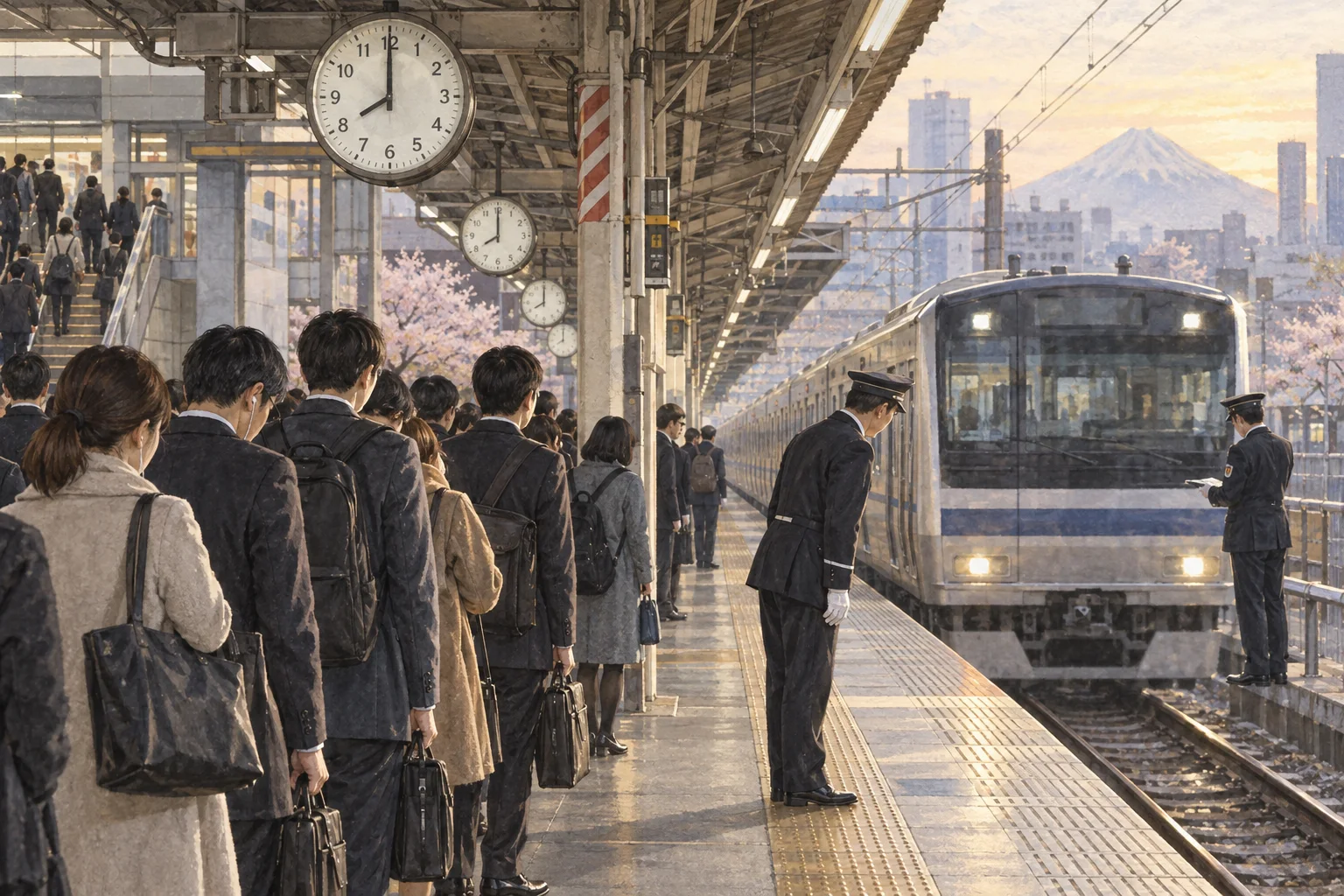
一分遅れて「お詫び」が流れる。遅延証明書という紙まである国の鉄道。
一言で言うと
これだけ覚えれば最低限伝わる一文
Densha no teiji unko, or trains running on time, is Japan's punctuality, where a few minutes' delay brings an apology.
電車の定時運行とは、日本の電車の時間の正確さのことで、数分の遅れでもお詫びの放送が流れるほどです。
30秒で説明する
外国人に説明するときの標準サイズ
Trains in Japan run to the minute, on a timetable that lists departures like 8:03 and 8:07 and means them. Commuters plan connections with no margin. When a train is late, even by a couple of minutes, the conductor apologizes, and for longer delays the station hands out a delay certificate you can show your boss. The punctuality comes from dense scheduling, disciplined staff and heavy investment, not from luck.
日本の電車は分単位で走り、時刻表には8時03分や8時07分といった発車時刻が書かれていて、そのとおりに動きます。通勤客は余裕なしで乗り換えを計画します。電車が遅れると、たとえ二、三分でも車掌が謝り、長い遅れなら駅が上司に見せられる遅延証明書を配ります。この正確さは、密なダイヤ、訓練された職員、多額の投資から来ていて、運ではありません。
スピーチ・英作文
通訳案内士の二次口述・大学入試の自由英作文に
Visitors often mention Japanese train punctuality as if it were a national character trait, but it is better understood as a system. Timetables are written to the minute and in some cases to fifteen-second units, drivers are trained to hit each station within seconds, and the whole network is built so that trains can follow each other two or three minutes apart at rush hour.
Because so many people rely on tight connections, being late has real costs, so railways treat a delay of a minute as a failure and announce an apology. When a delay stretches longer, stations issue delay certificates, small slips that prove to an employer or school that the train, not you, was late.
That said, Tokyo commuter lines are delayed more often than the legend suggests, usually by crowding, weather or accidents involving people on the tracks, and the announcement for those is a familiar, sad sound. I think the honest picture is high reliability with a fragile edge, on a system that is run extremely hard.
外国人はよく日本の電車の正確さを国民性であるかのように語りますが、仕組みとして理解したほうが正しいでしょう。時刻表は分単位、場合によっては15秒単位で組まれ、運転士は各駅に数秒の誤差で着くよう訓練され、路線全体が朝夕には二、三分間隔で列車が続けて走れるように作られています。
多くの人がぎりぎりの乗り換えに頼っているので遅れには本当の代償があり、鉄道会社は一分の遅れを失敗と見なしてお詫びを放送します。遅れが長引けば駅は遅延証明書を発行します。遅れたのはあなたではなく電車だと勤め先や学校に証明する小さな紙です。
とはいえ東京の通勤路線は伝説が言うより頻繁に遅れていて、原因はたいてい混雑、天候、そして線路への人の立ち入りを伴う事故で、その放送は聞き慣れた悲しい音です。正直なところ、極めて過密に運用された仕組みの上に成り立つ、高いけれども壊れやすい信頼性だと私は思います。
こう聞かれたら
外国人から実際にされる質問と、その答え方。
What is a delay certificate?
遅延証明書とは何ですか。
A slip, printed or downloadable, that states which line was delayed and by how long. Companies and schools accept it as proof, so employees who arrive late because of a train are not penalized. Railways publish them online for delays of several minutes or more.
どの路線がどれくらい遅れたかを記した、印刷またはダウンロードできる紙です。会社や学校が証明として認めるので、電車のせいで遅刻した社員は責められません。鉄道会社は数分以上の遅れについてネットで公開しています。
Why does the announcement apologize for one minute?
どうして1分の遅れで謝るのですか。
Because passengers plan around exact minutes, and because the railway culture treats the timetable as a promise. It is not sarcasm. A one-minute delay can break a connection at the next station, so the apology is directed at those people.
乗客が分単位で予定を組んでいるからであり、鉄道の文化が時刻表を約束として扱うからです。皮肉ではありません。一分の遅れが次の駅での乗り換えを壊すこともあるので、お詫びはそういう人たちに向けたものです。
Are the trains really never late, then?
では、電車は本当に遅れないのですか。
No. The Tokaido Shinkansen's average delay per train has been around a minute or less over a year, including bad weather, which is remarkable, but crowded urban lines are delayed fairly often, mostly by a few minutes. The difference from other countries is that delays are treated as abnormal and explained, not shrugged off.
遅れます。東海道新幹線の一列車あたりの平均遅延は、悪天候を含めても年間で一分前後かそれ以下で、驚くべき水準ですが、混雑した都市路線はかなりの頻度で遅れ、多くは数分です。他の国との違いは、遅れが異常事態として扱われ、説明されることで、肩をすくめて済まされないことです。
誤解されやすい
MYTHJapanese trains are never late.
日本の電車は決して遅れない、と思われがちです。
FACTLong-distance trains are astonishingly reliable, but Tokyo commuter lines are delayed regularly; what is different is that every delay is announced, apologized for and documented.
長距離列車は驚くほど正確ですが、東京の通勤路線は日常的に遅れます。違うのは、すべての遅れが放送され、謝罪され、記録されることです。
そのまま使えるフレーズ
- The train leaves at 8:03 on the dot.電車は8時03分ぴったりに出ます。
- We're running about three minutes behind; sorry for the inconvenience.約3分遅れています。ご迷惑をおかけします。
- Get a delay certificate at the gate if you're late for work.仕事に遅れるなら改札で遅延証明書をもらってください。
- There's been an accident on the line, so trains are stopped.路線で事故があって、電車が止まっています。
- I only have a four-minute connection, but that's normal here.乗り換え時間は4分しかないけれど、ここではふつうです。
説明に使う語句
- on time / punctual定時の・時間どおりの
- timetable時刻表・ダイヤ
- delay遅延
- delay certificate遅延証明書
- connection乗り換え
- suspended運転見合わせ
動画で見る
YouTube より豆知識
日本の鉄道の正確さは、秒単位で組まれたダイヤ、停止位置を数十センチの精度で合わせる運転技術、ホームドアや信号設備への投資、そして遅れを「異常」として扱う運用の積み重ねで成り立っています。遅延証明書は今では各社がウェブでも発行し、5分程度以上の遅れが対象になるのが一般的です。一方で首都圏の通勤路線では混雑や人身事故、強風などで日常的に遅れが生じ、車内で「お急ぎのところ」と謝罪の放送が流れる光景は外国人の驚きの種です。過密なダイヤと定時性への強い要求が現場の負担になっているという指摘もあり、2005年の脱線事故を機に「遅れを取り戻すための無理」を避ける運用の見直しが進みました。
