七草がゆななくさがゆ
nanakusa
the seven-herb porridge eaten on January 7th
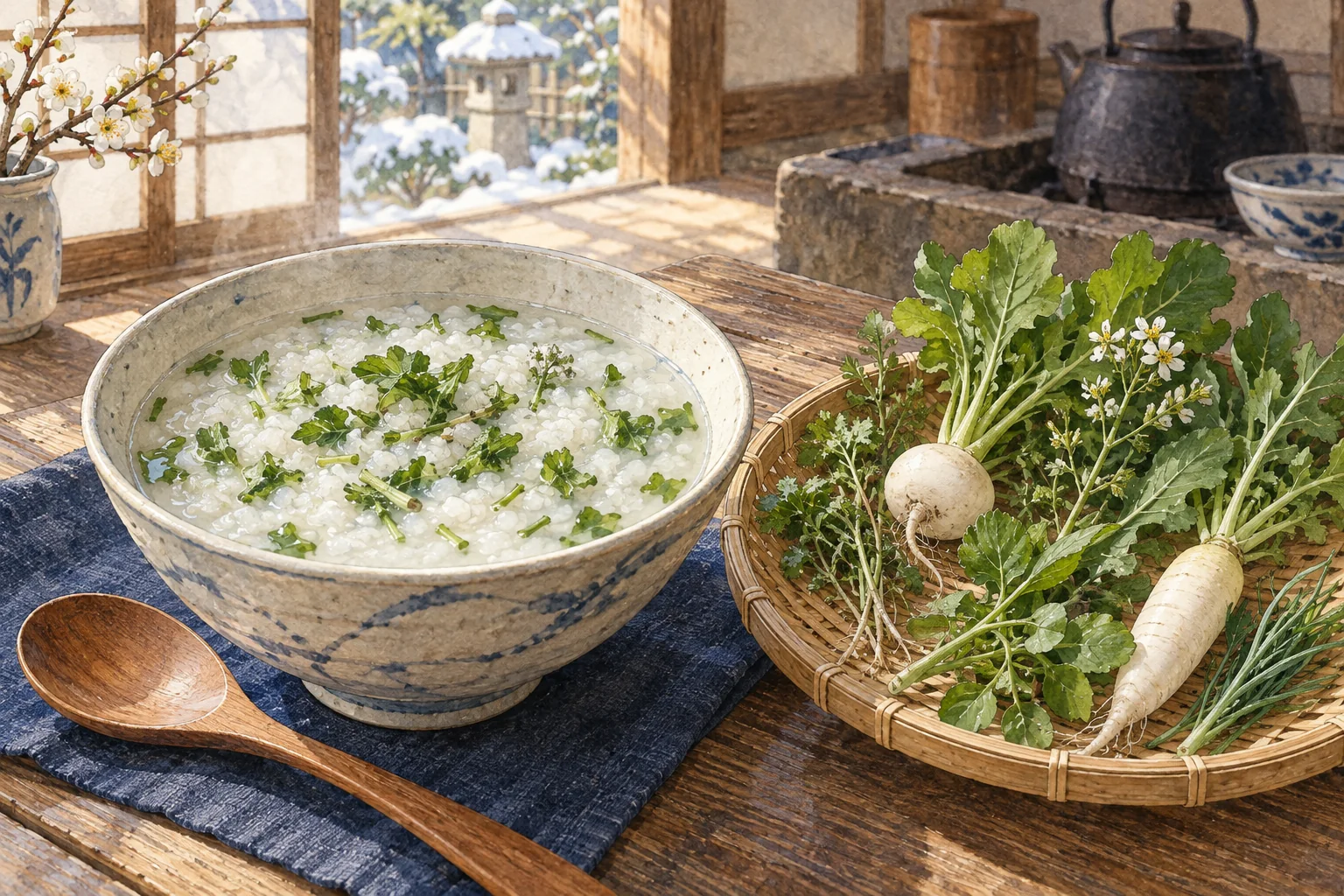
正月で疲れた胃を休める日。スーパーで七草のセットが売られている。
一言で言うと
これだけ覚えれば最低限伝わる一文
Nanakusa, or seven-herb porridge, is a rice dish eaten on January 7th to rest the stomach after New Year.
七草がゆとは、正月で疲れた胃を休めるために1月7日に食べる、春の七草を入れたおかゆです。
30秒で説明する
外国人に説明するときの標準サイズ
On the seventh of January, families eat a plain rice porridge with seven wild spring herbs in it. It follows several days of rich New Year food and drinking, and the stated purpose is to rest the digestive system and pray for health through the year. Supermarkets sell the seven herbs pre-packed for exactly this day.
1月7日、家庭では春の七草を入れた白がゆを食べます。数日続いたごちそうと酒のあとに来る食事で、目的は胃腸を休め、一年の健康を願うことだと説明されます。スーパーはこの日のために、七草をセットで売ります。
スピーチ・英作文
通訳案内士の二次口述・大学入試の自由英作文に
On the seventh of January, Japanese households eat nanakusa-gayu, a plain rice porridge containing seven wild herbs. The timing is the point. By the seventh you have had six days of osechi, rice cakes, and drinking, and this is the meal that resets the stomach.
The seven herbs are specific ones, and many Japanese people cannot name all of them without checking, which is why supermarkets sell a small pre-packed set in the first week of January with the names printed on it.
The custom is tied to one of the five seasonal festivals of the old calendar, and there was a ritual of chopping the herbs while reciting a verse the night before. Beyond the tradition, there is something sensible in it. After a week of preserved, salted and sweetened food, a bowl of plain porridge with bitter green herbs is exactly what the body wants.
1月7日、日本の家庭では七草がゆを食べます。七種の野草を入れた白がゆです。時期にこそ意味があります。7日までに、おせちと餅と酒の6日間を過ごしているわけで、これは胃を元に戻すための食事です。
七草は決まった七種で、見ずに全部は言えない日本人も多いものです。だからこそスーパーは1月の第一週に、名前を印刷した小さなセットを売ります。この習わしは旧暦の五節句のひとつに結びついており、前夜に歌を唱えながら七草を刻む作法もありました。
伝統を離れても、理にかなったところがあります。保存のために塩や砂糖を効かせた料理が一週間続いたあとで、体が求めるのはまさに、苦い青菜の入った白がゆなのです。
こう聞かれたら
外国人から実際にされる質問と、その答え方。
What are the seven herbs?
七草とは何ですか。
Water dropwort, shepherd's purse, cudweed, chickweed, nipplewort, turnip and daikon. Most people buy them as a set rather than identifying them, and the names are printed on the pack.
せり、なずな、ごぎょう、はこべら、ほとけのざ、すずな(かぶ)、すずしろ(大根)です。多くの人は見分けずにセットで買いますし、名前は袋に印刷されています。
Does it taste of anything?
味はするのですか。
Not much, deliberately. It is plain rice porridge with salt and a little of each herb. The herbs are slightly bitter, and that mild bitterness is the whole flavor.
あえて、ほとんどしません。塩だけで炊いた白がゆに、七草を少しずつ入れます。七草はわずかに苦く、その苦みだけが味です。
Is there an autumn version?
秋にも同じようなものがありますか。
There are seven autumn herbs, but they are for looking at rather than eating. They appear in classical poetry as a list of the flowers of the season.
秋の七草もありますが、食べるためではなく見るためのものです。その季節の草花を並べたものとして、古典の歌に出てきます。
そのまま使えるフレーズ
- It's to rest your stomach after New Year.正月で疲れた胃を休めるためです。
- The supermarket sells the herbs as a set.七草はスーパーでセットで売っています。
- It's deliberately plain.あっさりしているのが、そのねらいです。
- The autumn seven are for looking at, not eating.秋の七草は、食べるのではなく見るものです。
- Most people can't name all seven.七つ全部言える人は、そういません。
説明に使う語句
- rice porridgeおかゆ
- herb草、野草
- digestion消化
- bitter苦い
- plain / simpleあっさりした、素朴な
動画で見る
YouTube より豆知識
1月7日は五節句のひとつ「人日(じんじつ)の節句」。中国で、この日に七種の菜を入れた羹(あつもの)を食べる風習があり、日本の若菜摘みの習わしと結びついたとされる。春の七草は「せり なずな ごぎょう はこべら ほとけのざ すずな すずしろ 春の七草」と五七五七七の調子で覚える。前夜に「七草なずな 唐土の鳥が…」と唱えながら包丁で刻む作法が各地に伝わる。秋の七草は『万葉集』の山上憶良の歌に由来し、萩・尾花(すすき)・葛・撫子・女郎花・藤袴・桔梗を指す。こちらは観賞用で、食べる習慣はない。
