国民皆保険こくみんかいほけん
kokumin kaihoken
the public health insurance everyone in Japan is required to join
窓口で払うのは原則3割。残りは保険が持つ。1961年からの仕組み。
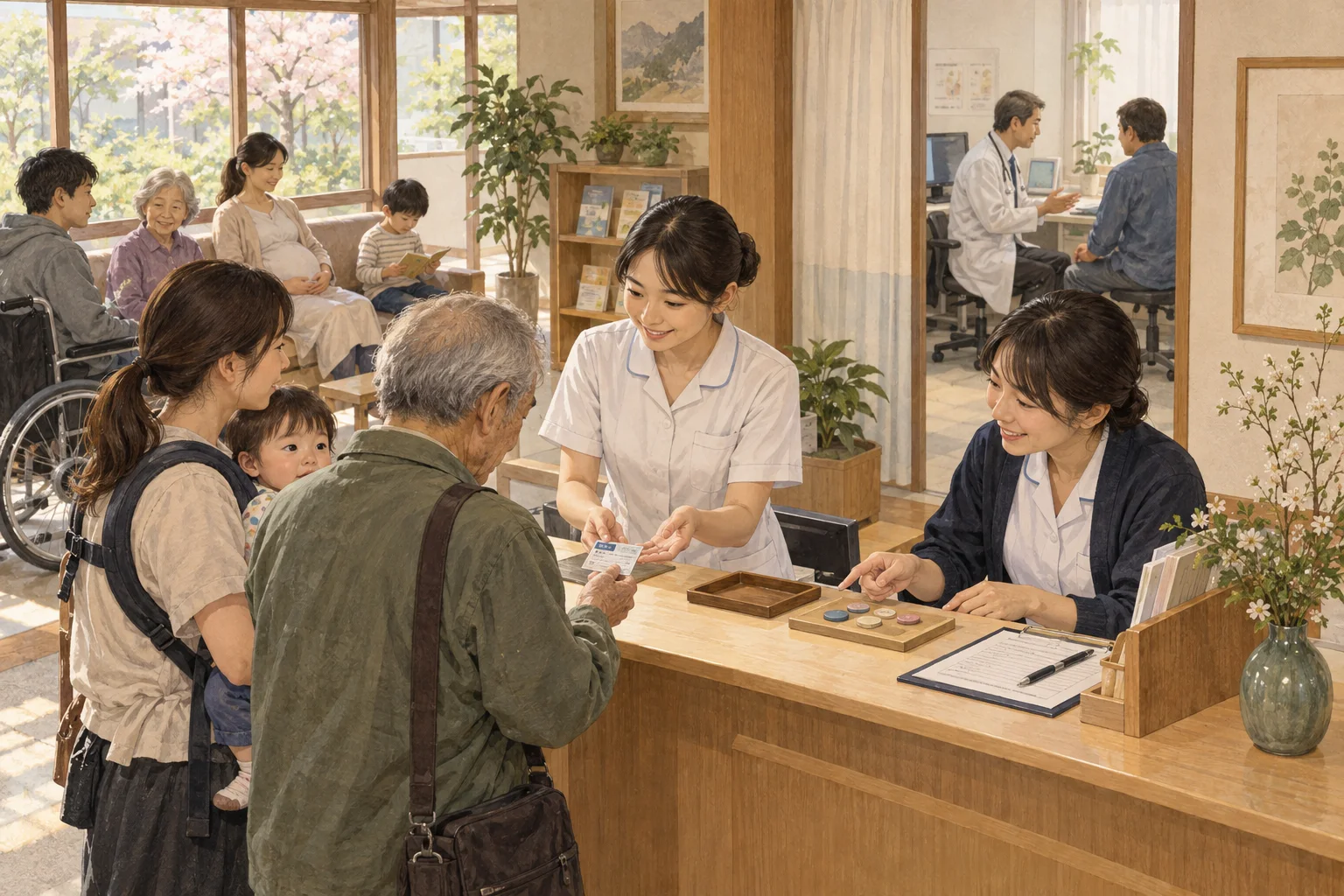
一言で言うと
これだけ覚えれば最低限伝わる一文
Everyone living in Japan must join public health insurance, and normally pays 30 percent of the bill.
日本に住む人は公的医療保険に入ることになっていて、窓口の負担は原則3割です。
30秒で説明する
外国人に説明するときの標準サイズ
Since 1961 everyone in Japan has been required to belong to a public health insurance scheme, either through an employer or through the municipal plan. Patients pay a share at the counter, normally 30 percent, and the insurance covers the rest. There is also a cap: if your monthly bill goes past a limit set by income, the excess is refunded.
1961年以来、日本に住む人は公的医療保険に入ることになっています。勤め先の保険か、市区町村の国民健康保険です。窓口では自己負担分、原則3割を払い、残りは保険が持ちます。上限もあります。ひと月の負担が所得に応じた額を超えると、超えた分は戻ってきます。
スピーチ・英作文
通訳案内士の二次口述・大学入試の自由英作文に
Japan's health system is worth understanding because it works differently from both the American and the British model. Since 1961 everyone living here has to be in a public insurance scheme: employees through their company, everyone else through the municipal plan, and foreign residents staying more than three months are included.
Premiums are based on income. When you go to a clinic you show a card and pay a share of the bill at the counter, normally thirty percent, and you can walk into any hospital or clinic you like without a referral.
There is also a ceiling, the high-cost medical expense system, which refunds anything above a monthly limit set by your income, so a serious illness does not bankrupt a household. The problems are real too: the system is funded by a shrinking working population supporting a growing number of older patients, and how to pay for it is a permanent political argument.
日本の医療制度は、知っておく価値があります。アメリカ型ともイギリス型とも違うからです。1961年以来、ここに住む人は公的な保険に入ることになっています。勤め人は会社の保険、それ以外は市区町村の国民健康保険。
3か月を超えて滞在する外国籍の人も含まれます。保険料は所得に応じて決まります。医療機関では保険証を見せ、窓口で自己負担分、原則3割を払います。紹介状がなくても、どの病院にも診療所にも行けます。上限もあります。
高額療養費制度といって、ひと月の負担が所得に応じた額を超えた分は戻ってくるので、大きな病気で家計が破綻することは避けられます。問題も本物です。支えているのは減り続ける現役世代で、高齢の患者は増えています。誰がどう負担するかは、終わらない政治の論争です。
こう聞かれたら
外国人から実際にされる質問と、その答え方。
Do foreign residents have to join?
外国籍の人も入らなければいけませんか。
Yes, if you are registered as a resident and staying more than three months. That includes students. Premiums for someone with little income are low, and there are reductions you can apply for.
住民登録があり、3か月を超えて滞在するなら入ります。留学生も含まれます。収入の少ない人の保険料は低く、減額の申請もできます。
Can I choose any hospital?
どの病院でも選べるのですか。
Yes, there is no gatekeeper and no assigned doctor. Going straight to a large hospital without a referral now adds an extra fee, to push people toward local clinics first.
選べます。紹介制でも、かかりつけ医が決められているわけでもありません。ただし紹介状なしに大きな病院へ行くと追加の料金がかかります。まず地域の診療所へ、という誘導です。
What if the bill is enormous?
医療費が高額になった場合はどうなりますか。
The high-cost medical expense system caps what you actually pay in a month according to your income. Above that, the insurer refunds the difference, and you can arrange it in advance so you never pay the full amount.
高額療養費制度があり、ひと月に実際に払う額が所得に応じて上限で止まります。超えた分は戻りますし、前もって手続きをすれば、そもそも全額を払わずに済みます。
誤解されやすい
MYTHHealthcare in Japan is free.
日本の医療は無料だ、と思われがちです。
FACTPatients pay premiums and normally thirty percent of each bill at the counter. What the system guarantees is that everyone is covered and that costs are capped, not that care is free.
保険料を払い、窓口でも原則3割を払います。制度が保証しているのは、全員が保険に入っていることと、負担に上限があることであって、無料であることではありません。
そのまま使えるフレーズ
- Everyone in Japan has to be in public health insurance.日本に住む人は、公的医療保険に入ることになっています。
- You normally pay thirty percent at the counter.窓口の負担は原則3割です。
- It isn't free — there are premiums too.無料ではありません。保険料もかかります。
- You can go to any clinic without a referral.紹介状なしで、どの診療所にも行けます。
- There's a monthly cap if the bill gets large.高額になった場合は、ひと月の上限があります。
説明に使う語句
- public health insurance公的医療保険
- premium保険料
- co-payment, out-of-pocket share自己負担
- referral letter紹介状
- cap on monthly costs高額療養費制度
動画で見る
YouTube より豆知識
国民健康保険法の全面改正を経て、昭和36年(1961年)に全市町村で国保事業が始まり、国民皆保険が実現した。自己負担の割合は時代によって変わっており、当初は被用者本人の負担がない時期もあった。現在は年齢と所得に応じて1割から3割で、小学校入学前と一定の所得未満の高齢者は低く抑えられている。高額療養費制度は昭和48年(1973年)に導入された。医療機関の受診回数は国際的に見ても多く、その一方で1回あたりの診察時間は短い傾向がある。
